Was the 1938 to 1974 Bank of Canada policy based significantly on Lincoln Greenbacks?

Was the 1938 to 1974 Bank of Canada policy based on the Lincoln Greenbacks Experiment?

  • No

    Votes: 0 0.0%
  • Yes

    Votes: 0 0.0%
  • I would rather like to think so, economists in Canada should learn from what is happening in the USA

    Votes: 1 50.0%
  • I certainly do hope NOT, we Canadians must not emulate the USA in any way!

    Votes: 1 50.0%
  • Other answer, please be specific in a reply.

    Votes: 0 0.0%

  • Total voters
    2
Exec-utive Order 11110, which further amended Executive Order 10289 of September 19th, 1951. This gave Kennedy, as President of the United States, legal clearance to create his own money to run the country, money that would belong to the people, an Interest and debt-free money. He had printed United States Notes, completely ignoring the Federal Reserve Notes from the private banks of the Federal Reserve.

Actually, he gave the Fed authorization to print $1s and $5s and eliminated silver certificates.

It is interesting to note that, only one day after Kennedy's assassination, all the United States notes, which Kennedy had issued, were called out of circulation.

Damn. Another thing that didn't happen. US Notes were printed until 1971.

Thank you for that detail about the elimination of those silver certificates. I did not know that.

That calling out of circulation may have taken place from 1963 to 1971. I am not certain exactly what the author fully meant?
 
True, inflation was high which was almost impossible to avoid when you decrease productivity of consumer good by taking your most productive worker off of farms and the types of factories that existed at that time, and pass them muzzle loaders and cannons to fight in the Civil War.

A mere five hundred dollars per month for each citizen and legal resident in both Canada and the USA would prove that this is possible. It would set a precedent and Economist Milton Friedman Ph. D. had the right idea because he wanted it to be equal to all citizens and legal residents so that the amount of bureaucracy could be minimized.

The Welfare Bureaucracy is costly in so many ways but an "Unconditional but Taxable Basic Minimum Income" frees people up who were stuck with the Welfare Bureaucracy and gives them an incentive to work. The productivity of USA workers is what makes the USA dollar valuable. The productivity of Canadian workers makes the value of the Canadian dollar valuable.


A mere five hundred dollars per month for each citizen and legal resident in both Canada and the USA would prove that this is possible.


Prove that what is possible?
More deficit spending?
 
Thank you for that detail about the elimination of those silver certificates. I did not know that.

That calling out of circulation may have taken place from 1963 to 1971. I am not certain exactly what the author fully meant?

The author lied. I'm certain.
 
A mere five hundred dollars per month for each citizen and legal resident in both Canada and the USA would prove that this is possible.

Prove that what is possible?
More deficit spending?

No, if the total sum is created without creating any interest owing as Lincoln did.....

that money will assist citizens to begin to pay down their debts and their taxes.

Here is where I feel that this will lead. This was a prediction from the rather gifted Pastor David Wilkerson in a visionary dream that was given to him back in 1973.
"There will be a sudden rush to buy farms, ranches, and homes in the country.

Thousands will attempt to flee from cities, hoping that a return to the land and
nature will provide security. There will be a growing urge to "get away from it
all"---and much money will be invested in land and acreage in rural areas by
people who have secret dreams of raising their own food and cattle and of
becoming self-supporting. The price of open rural land will continue to soar.

Acreage within 100 miles of most major cities will skyrocket out of reach to
all but syndicates." (David Wilkerson, The Vision, page 18,19).


When a higher percentage of Canadians and Americans can afford a home or cottage in a rural area they will invest in that second home. One of the motives will be to have a garden and move toward being more self sufficient and less dependent on stores and on the amount of money coming in each month.
 
No, if the total sum is created without creating any interest owing as Lincoln did.....

that money will assist citizens to begin to pay down their debts and their taxes.

Here is where I feel that this will lead. This was a prediction from the rather gifted Pastor David Wilkerson in a visionary dream that was given to him back in 1973.


When a higher percentage of Canadians and Americans can afford a home or cottage in a rural area they will invest in that second home. One of the motives will be to have a garden and move toward being more self sufficient and less dependent on stores and on the amount of money coming in each month.

No, if the total sum is created without creating any interest owing as Lincoln did.....

that money will assist citizens to begin to pay down their debts and their taxes.


Right. Cause inflation instead.

When a higher percentage of Canadians and Americans can afford a home or cottage in a rural area they will invest in that second home.

Why does higher inflation make homes affordable?
 
No, if the total sum is created without creating any interest owing as Lincoln did.....

that money will assist citizens to begin to pay down their debts and their taxes.


Right. Cause inflation instead.

When a higher percentage of Canadians and Americans can afford a home or cottage in a rural area they will invest in that second home.

Why does higher inflation make homes affordable?
If an extra twenty billion dollars per month is added to the Canadian economy but if at the same time Canadian workers become more productive and add twenty five billion dollars worth of products to the economy, we do not necessarily have inflation. [At least not in the areas where productivity is increasing].

The bottom line is the amount of disposable income after taxes and expenses that is in the hands of households. I am talking about increasing the amount of after taxation and after expenses household income, [partly in order to prevent the Bear Market that a lot of influential people seem to have want]ed over this past decade.
 
If an extra twenty billion dollars per month is added to the Canadian economy but if at the same time Canadian workers become more productive and add twenty five billion dollars worth of products to the economy, we do not necessarily have inflation. [At least not in the areas where productivity is increasing].

The bottom line is the amount of disposable income after taxes and expenses that is in the hands of households. I am talking about increasing the amount of after taxation and after expenses household income, [partly in order to prevent the Bear Market that a lot of influential people seem to have want]ed over this past decade.

Printing money doesn't add to GDP.
 
Printing money doesn't add to GDP.
True but Canadians and American are in debt to the point where household disposable income after all expenses is at an all time low. This is one possible way to address that issue. Canadian and Americans buying a cottage or second home would tend to boost the GDP.
 
True but Canadians and American are in debt to the point where household disposable income after all expenses is at an all time low. This is one possible way to address that issue. Canadian and Americans buying a cottage or second home would tend to boost the GDP.

Adding to inflation doesn't help GDP and doesn't make second homes affordable.
 
Canada was (and still is) stuck in a weird loyalty to the convoluted British political and monetary system while it's neighbor to the south evolved into the world's financial powerhouse.
 
Canada was (and still is) stuck in a weird loyalty to the convoluted British political and monetary system while it's neighbor to the south evolved into the world's financial powerhouse.
The information that I gave in the opening post tends to be somewhat common knowledge in the Canadian province of Alberta due to what was accomplished by Alberta's Premier [Bible] Bill Aberhart. This information tends to be significantly less well known throughout the rest of Canada.

William Aberhart (December 30, 1878 – May 23, 1943), also known as "Bible Bill" for his radio sermons about the Bible, was a Canadian politician and the seventh premier of Alberta from 1935 to his death in 1943.<a href="William Aberhart - Wikipedia"><span>[</span>1<span>]</span></a> He was the founder and first leader of the Alberta Social Credit Party, which believed the Great Depression was caused by ordinary people not having enough to spend. Therefore, Aberhart argued that the government should give each Albertan $25 per month ($565.97 in 2025) to spend to stimulate the economy, by providing needed purchasing power to allow needy customers to buy from waiting businesses.

During his premiership, Aberhart campaigned for and instituted several anti-poverty and debt relief programs, and other governmental reforms, such as consolidation of Alberta's numerous small school districts into centralized school divisions, and natural resources conservation. His attempts at banking reform met with less success, facing strong opposition from the federal government, the courts, privately owned newspapers and a coalition of the Liberal and Conservative parties. Aberhart's government did successfully establish the Alberta Treasury Branches (now ATB Financial), a government-owned financial institution to provide an alternative to existing banks, which continues to operate as a Crown corporation of the Alberta government.

Many influential people do not want it to be common knowledge about the Worgl Austria Local Money Experiment that was promoted to over one thousand USA communities by economist Irving Fisher. Many people do not want it to be known how this experiment in Alternative Currencies played a role in setting up FDR to do The New Deal.

[The Truth About Money: The Money SystemIsnt There a Better Way?
by Francis and Lia Ayley] :

"City in Austria Printed Local Currency
Worgl, like many other European towns and cities, was hit hard by the Great Depression. There was mass unemployment; four of the five local factories had closed, and the people were starving in the streets. Nobody had any money to buy anything. One of the features of an economic depression is that there is not enough money in circulation to ensure that people can meet their basic needs, and in the 1930s, the shortage of currency in many countries of the world became catastrophic.

The mayor of Worgl, together with local businessmen, decided to try to break this economic impasse by creating their own local currency. They printed and issued 60,000 Austrian shillings worth of local currency. These shillings could only be spent in Worgl, so they remained in the local community and were exchanged over and over again.

The positive impact was immediate and surprising to everyone. In only six weeks, unemployment disappeared, all the factories had reopened and everyone had food. For the inhabitants of Worgl, the economic depression was gone. This dramatic transformation became known as the “miracle of Worgl.” Surrounding towns, inspired by the success of Worgl, immediately started printing their own local currencies.

Sadly, the miracle did not last long. When the Austrian Central Bank heard about Worgl’s local currency, they initiated legal proceedings against the mayor and local businessmen. According to Austrian banking law, it was illegal for anyone except the Austrian Central Bank to issue money. The bank won the court case, and the mayor was ordered to shut down the local currency, which he did, under threat of imprisonment. The town then returned to the devastating economic depression of the 1930s, with all the human pain and suffering associated with this catastrophe. Factories closed, and once again, the people starved.

Alternative Currency in the U.S.
Irving Fisher, an American professor of economics at Yale University, visited Worgl before the local currency was suppressed and witnessed the ‘miracle’ firsthand. When he returned to the United States, Fisher spread the word by traveling and lecturing across the country, advocating the use of the Worgl ‘scrip’ everywhere. Inspired by his vision, hundreds of communities began issuing their own currency, and by 1934 there were over 1,000 local communities using ‘scrip’ throughout the U.S.

Every one of these communities experienced a tremendous rejuvenation of their local economies. They thrived while others suffered. Fisher then met with President Franklin D. Roosevelt, proposing the implementation of government-sanctioned local ‘scrip’ in every community in America. When FDR consulted with his top financial advisors and bankers, however, he was advised to shut all the ‘scrip’ systems down, which he did. Instead, he borrowed large amounts of money from bankers, at interest, and used it to pay for the Reconstruction Finance Corporation and the other work-creation projects, which collectively came to be known as the ‘New Deal.’ So ended the last widespread use of a local currency within the U.S.

This pattern of economic collapse and re-emergence of local currencies has occurred thousands of times in many parts of the world. When these currencies have failed or have been suppressed, banks have not always been to blame. Sometimes, local currencies fail because they have been badly designed or implemented. Sometimes, people lose interest in them when the mainstream economy recovers. But they have always returned in one form or another during times of economic failure.

Our present world situation is uniquely different. Despite a relatively prosperous and stable world economy, a quiet monetary revolution has been occurring around the globe over the last 20 years. Awareness is growing about the flaws in our current monetary system, and people are re-creating viable alternatives. We are witnessing for the first time the worldwide creation of money systems designed by the people who use them, instead of by central banks.

Time Dollars in Whatcom County"

[ The Truth About Money: The Money SystemIsnt There a Better Way?
by Francis and Lia Ayley}
I could be wrong and I admit that I am biased but it seems to me that President Donald J. Trump has focused so much attention on the Canadian province of Alberta that we may soon see Premier Danielle Smith of Alberta in the news even more than P. M. Mark Carney?
 
Exec-utive Order 11110, which further amended Executive Order 10289 of September 19th, 1951. This gave Kennedy, as President of the United States, legal clearance to create his own money to run the country, money that would belong to the people, an Interest and debt-free money. He had printed United States Notes, completely ignoring the Federal Reserve Notes from the private banks of the Federal Reserve.

Actually, he gave the Fed authorization to print $1s and $5s and eliminated silver certificates.

It is interesting to note that, only one day after Kennedy's assassination, all the United States notes, which Kennedy had issued, were called out of circulation.

Damn. Another thing that didn't happen. US Notes were printed until 1971.
That is an interesting detail considering that I have read that since 1974, here in Canada virtually the only money that is created without putting taxpayers into debt, is the printed currency notes and the minted coins.

The statistic that I read was that about ninety percent of the money supply here in Canada since 1974 was created in a way that put taxpayers into debt. There are powerful people who did not like the fact that the Bank of Canada was being used in a highly logical manner from 1938 to 1974, [because it meant that they Big Banks that they were working for could not make those loans themselves].
 
That is an interesting detail considering that I have read that since 1974, here in Canada virtually the only money that is created without putting taxpayers into debt, is the printed currency notes and the minted coins.

The statistic that I read was that about ninety percent of the money supply here in Canada since 1974 was created in a way that put taxpayers into debt. There are powerful people who did not like the fact that the Bank of Canada was being used in a highly logical manner from 1938 to 1974, [because it meant that they Big Banks that they were working for could not make those loans themselves].

That is an interesting detail considering that I have read that since 1974, here in Canada virtually the only money that is created without putting taxpayers into debt, is the printed currency notes and the minted coins.

If you borrow money, you should pay interest.
If the government borrows money, the government should pay interest.

You've never shown any evidence that 98% of the money was created by the central bank from 1938-1974.

Sounds like a bullshit claim. If it were possible, you're correct, there would have been no good reason to stop doing it.
If it didn't happen, or if it happened at a much, much lower level and caused high inflation, then Trudeau didn't
screw up by starting to borrow from banks or by selling bonds.

Big banks don't create money out of thin air; they lend out customer deposits.
If central bank money creation creates inflation, that's the reason banks are against it, not because they want to make the loans.
 
That is an interesting detail considering that I have read that since 1974, here in Canada virtually the only money that is created without putting taxpayers into debt, is the printed currency notes and the minted coins.

If you borrow money, you should pay interest.
If the government borrows money, the government should pay interest.

You've never shown any evidence that 98% of the money was created by the central bank from 1938-1974.

Sounds like a bullshit claim. If it were possible, you're correct, there would have been no good reason to stop doing it.
If it didn't happen, or if it happened at a much, much lower level and caused high inflation, then Trudeau didn't
screw up by starting to borrow from banks or by selling bonds.

Big banks don't create money out of thin air; they lend out customer deposits.
If central bank money creation creates inflation, that's the reason banks are against it, not because they want to make the loans.
Thank you for this excellent question. Your theory may be correct in some instances when perhaps a provincial or state government borrows money that will greatly benefit the people of that state or province by financing a local infrastructure project.

But if the federal government of Canada or the federal government of the United States were to borrow the money to finance an "Unconditional but Taxable Basic Minimum Income Supplement" of five hundred dollars per person per month, then it LUDICROUS for our elected officials to borrow that money from BigBanks when it could create that money virtually free of any interest costs whatsoever.


by Harold Chorney, John Hotson, and Mario Seccareccia

“Governments these days find it easy to defend cuts in services and programs. All they have to do is point to their annual deficits and their total accumulated debts. (As of March, 1994, Canada's public debt was about $546 billion.) This public debt provides the politicians with a convenient excuse for cutting spending or raising taxes. Or both. «We're broke,» they tell us plaintively. «We can't afford to increase public services, or even keep them at their present level.»​

A lesson of war​

...
...
...

he creation of money​

“One of the most pervasive myths about the government deficit is that governments which spend more than they receive in revenue must borrow the difference, thus increasing the public debt.

“In fact, a government can choose to create the needed additional money instead of borrowing it from the banks, the public, or foreigners.

“Business and the conservatives in politics and the media are horrified by the suggestion that the government exercise its right to create more money. They claim it would precipitate another ruinous bout of inflation.

“But money creation is money creation — whether by a private bank or the Bank of Canada. And a government in debt only to the government's own bank is not really in debt at all. If it wants to go through the rigamarole of having the Treasury «borrow» from the central bank and later pay interest, that is a minor matter of bookkeeping. As long as the central bank's profits are returned to the Treasury, the results are much the same as if the Treasury had created the money itself.

“There is no reason why the growth of Canada's money supply (averaging about $22 billion annually in recent years) could not be more substantially created by the Bank of Canada. If that policy had been followed, the federal government would not have been obliged to add to its debts to pay interest on old debts. Instead, the Bank of Canada has produced barely 2% of the money added in recent years, while the chartered banks added the rest as they made loans to households, businesses, and all levels of government. At the very least, the Bank of Canada and the chartered banks should share the privilege of creating money on a 50-50 basis.

“Those who dismiss such a proposal as «inflationary» should be required to explain why it would be more inflationary for the government's bank to create $11 billion and the private banks $11 billion, rather than the present practice of having the government's bank create $0.7 billion and the private banks $21.3 billion!

“Clearly the current problem of the Canadian government's deficit is not its absolute size, or its size relative to the GDP, but the insane way it is being financed. A return to the policies of the World War II era, when the Bank of Canada produced almost one-half of the new money at near-zero interest, would do wonders for the economy, while greatly shrinking the deficit... The first order of business for a post-Mulroney-era government must be to regain effective control of the Bank of Canada and make it the primary source of money creation.


“It is ludicrous for the government to put billions of dollars into circulation by borrowing from the private banks, when it can create the extra money it needs, virtually free.


by Harold Chorney, John Hotson, and Mario Seccareccia
 
did they once have the old system pound/shilling/pence?

I haven't looked into this in a while but my guess is that before 1867 when Canada was Created by the British North America Act, we would almost certainly be using the coins and notes of Great Britain.
 
15th post
Thank you for this excellent question. Your theory may be correct in some instances when perhaps a provincial or state government borrows money that will greatly benefit the people of that state or province by financing a local infrastructure project.

But if the federal government of Canada or the federal government of the United States were to borrow the money to finance an "Unconditional but Taxable Basic Minimum Income Supplement" of five hundred dollars per person per month, then it LUDICROUS for our elected officials to borrow that money from BigBanks when it could create that money virtually free of any interest costs whatsoever.

But if the federal government of Canada or the federal government of the United States were to borrow the money to finance an "Unconditional but Taxable Basic Minimum Income Supplement" of five hundred dollars per person per month, then it LUDICROUS for our elected officials to borrow that money from BigBanks when it could create that money virtually free of any interest costs whatsoever.

A bad idea isn't improved by paying for it with inflationary printing.
 
But if the federal government of Canada or the federal government of the United States were to borrow the money to finance an "Unconditional but Taxable Basic Minimum Income Supplement" of five hundred dollars per person per month, then it LUDICROUS for our elected officials to borrow that money from BigBanks when it could create that money virtually free of any interest costs whatsoever.

A bad idea isn't improved by paying for it with inflationary printing.

Good point but are we not looking at a massive increase in the average level of productivity of well trained workers in the USA and Canada due to robotics and Artificial Intelligence?

The USA Dollar is backed up by the productivity of the American workers.

The Canadian Dollar is backed up by the productivity of Canadian workers.

An increase in productivity may not necessarily lead to an increase in the real economy if THE SUPPLY OF MONEY IS DECREASED OR NOT INCREASED at the level that reflects how much more productive workers can now be?

Look at what happened after President Lincoln died:

[Alain Pilote]

“I have two great enemies, the Southern army in front of me and the bankers in the rear. And of the two, the bankers are my greatest foe.”
Lincoln was re-elected President in 1864, and he made it quite clear that he would attack the power of the bankers, once the war was over. The war ended on April 9, 1865, but Lincoln was assassinated five days later, on April 14. A tremendous restriction of credit followed, organized by the banks: the currency in circulation in the country, which was, in 1866, $1,907 million, representing $50.46 for each American citizen, had been reduced to $605 million in 1876, representing $14.60 per capita. The result: in ten years, 56,446 business failures, representing a loss of $2 billion. And as if this was not enough, the bankers reduced the per capita currency in circulation to $6.67 in 1887!
William Jennings Bryan: “The banks ought to get out”
bryan.jpg
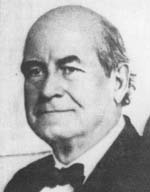
William Jennings Bryan
Lincoln's example nevertheless remained in several minds, as far along as 1896. That year, the Presidential candidate for the Democrats was William Jennings Bryan, and once again, history textbooks tell us that it was a good thing that he did not succeed in his bid for the Presidency, since he was against the bankers' “sound money”, the money issued as a debt, and against the gold standard. Bryan said:
“We say in our platform that we believe that the right to coin and issue money is a function of Government. We believe it. Those who are opposed to it tell us that the issue of paper money is a function of the bank, and that the Government ought to get out of the banking business. I tell them that the issue of money is a function of Government, and that the banks ought to get out of the Government business... When we have restored the money of the Constitution, all other necessary reforms will be possible, but until this is done, there is no other reform that can be accomplished.”
The Fed: The most gigantic trust
 
Thank you for this excellent question. Your theory may be correct in some instances when perhaps a provincial or state government borrows money that will greatly benefit the people of that state or province by financing a local infrastructure project.

But if the federal government of Canada or the federal government of the United States were to borrow the money to finance an "Unconditional but Taxable Basic Minimum Income Supplement" of five hundred dollars per person per month, then it LUDICROUS for our elected officials to borrow that money from BigBanks when it could create that money virtually free of any interest costs whatsoever.

“There is no reason why the growth of Canada's money supply (averaging about $22 billion annually in recent years) could not be more substantially created by the Bank of Canada.

There is a reason to not print too much. Inflation.

If that policy had been followed, the federal government would not have been obliged to add to its debts to pay interest on old debts. Instead, the Bank of Canada has produced barely 2% of the money added in recent years,

I've seen no evidence that 2% isn't the proper amount.

“Those who dismiss such a proposal as «inflationary» should be required to explain why it would be more inflationary for the government's bank to create $11 billion and the private banks $11 billion, rather than the present practice of having the government's bank create $0.7 billion and the private banks $21.3 billion!

Because central bank money is high-powered money. Banks loans are not.
 
Good point but are we not looking at a massive increase in the average level of productivity of well trained workers in the USA and Canada due to robotics and Artificial Intelligence?

The USA Dollar is backed up by the productivity of the American workers.

The Canadian Dollar is backed up by the productivity of Canadian workers.

An increase in productivity may not necessarily lead to an increase in the real economy if THE SUPPLY OF MONEY IS DECREASED OR NOT INCREASED at the level that reflects how much more productive workers can now be?

Look at what happened after President Lincoln died:

Yes, a return to gold backed money and the retirement of the greenbacks was deflationary.
It would have happened even if Lincoln finished his term.
 
Back
Top Bottom