...losses due to burglaries are greater for wealthier rather than poorer neighborhoods. Neighborhoods wealth and their losses due to burglaries generally rise or fall together with each other...
That may or may not be true considering crime rates are much worse in poor than in wealthy neighborhoods; but we digress.
...trade surpluses ALWAYS contribute and trade deficits are ALWAYS detrimental to their nations GDPs]...
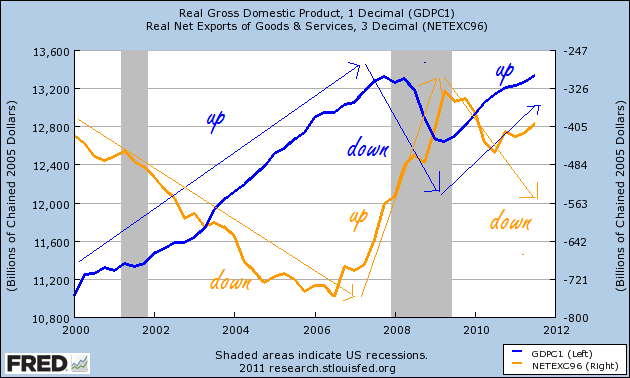
--and GDP's increase when 'trade deficits' get 'worse' and economies go into recession when the 'trade deficit' gets 'better'. Any way we word it, trade wars cause economic contractions and human suffering on a massive scale, so when we set policy we have to remember both foreign trade's expected negative formula effect
and trade's observed positive empirical effect.
ExPan_Panama, your transcripts are effectively modifying my messages to fit your own positions.
Within message #84 I wrote of monetary volumes of losses due to burglaries and losses due to burglaries.
I never wrote of numbers or incidences of burglaries.
Within that same message I wrote Regardless of nations GDP amounts, due to trade surpluses their GDPs are ALWAYS more or due to trade deficits their GDPs are ALWAYS less than OTHERWISE.
When you eliminate the qualifying word, OTHERWISE, youre effectively modifying the messages meaning.
Transcript of message #84:
ExPan_Panama, we observe the monetary volumes of losses due to burglaries are greater for wealthier rather than poorer neighborhoods.
Neighborhoods wealth and their losses due to burglaries generally rise or fall together with each other.
Applying your method of logic with regard to nations trade balances correlations with changes of their GDPs, would you conclude that we could increase the wealth of our neighborhoods by encouraging burglars?
USAs domestic markets sales volumes and their nations GDPs generally rise or fall together with each other. This logically occurs because domestic and imported product sales within the same markets are being driven by the same economic forces.
Regardless of nations GDP amounts, due to trade surpluses their GDPs are ALWAYS more or due to trade deficits their GDPs are ALWAYS less than OTHERWISE.
[I.e. trade surpluses ALWAYS contribute and trade deficits are ALWAYS detrimental to their nations GDPs].
Respectfully, Supposn