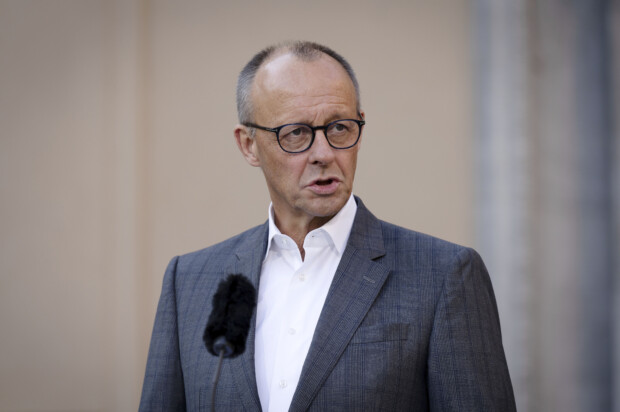
The German Chancellor Merz addressed the changing security situation in a talk with German newspaper Rheinische Post. He said security has the highest priority as "we are not at war but also not in peace times".
"Europe is in a dangerous interim phase – somewhere between war and peace. This was the assessment made by Chancellor Friedrich Merz (CDU) in an interview with the Rheinische Post newspaper in Düsseldorf. "We are not at war, but we are no longer at peace either," Merz explained. The statement was deliberately worded so drastically to emphasize the changed geopolitical situation.
Merz painted a picture of a radically shifting world order. "The rules-based order is increasingly being replaced by pure power politics," the Chancellor said. Military means have long since become a normal instrument for state representation. For Germany and Europe, this means a new reality in which security policy and defense readiness must have the highest priority.
Merz was particularly concerned about recent drone overflights that had been recorded in Denmark and even over Schleswig-Holstein. "These appear to be unarmed drones equipped with surveillance technology, with a wingspan of up to eight meters," he said. Their origin is still unclear, but "it's reasonable to assume they're from Russia."
Merz on drone overflights: “Carefully consider how to react”
This poses a delicate question for Germany: How to deal with such overflights? Shooting them down is anything but easy, Merz warned. "Germany is a densely populated country. Taking down an eight-meter-long drone means it could land in a front yard, a kindergarten, or a hospital." Therefore, careful consideration must be given before taking military action. The best approach, Merz said, would be to prevent these drones from entering European airspace in the first place.
His statements fit into a picture of growing concern within Western states. Since the beginning of the war in Ukraine, the security situation in Europe has changed dramatically. While Eastern Europe is massively rearming, Germany is also discussing higher defense spending and a stronger NATO presence. Merz himself had previously emphasized that the Bundeswehr must once again become "the strongest conventional army in Europe" – a statement that sparked international debate.
In addition to major political discussions, the Chancellor also offered personal insights. Merz said the office had changed him. He now "practically no longer drinks alcohol." The job demands so much of him that there's little room for private habits.
With his statements about the risk of war, Merz is apparently trying to prepare the population for tougher times ahead. Security and defense could become a permanent political issue in the coming years. And the question of how Germany can remain capable of acting in a "gray zone between war and peace" is likely to dominate the political agenda – and somewhat displace massive domestic problems."
Die Sicherheitspolitik müsse nun höchste Priorität haben - Kanzler Friedrich Merz zeigt wenig Optimismus für die nähere Zukunft.

www.tichyseinblick.de


 www.fr.de