Voting By Phone Is Already Here. Meet The Democratic-Linked Group Trying To Take It National.

Doc7505

Diamond Member
Joined
Feb 16, 2016
Messages
24,492
Reaction score
43,517
Points
2,430

Voting By Phone Is Already Here.​

Meet The Democratic-Linked Group Trying To Take It National.​

The Vote-By-Phone Machine Comes For Minnesota
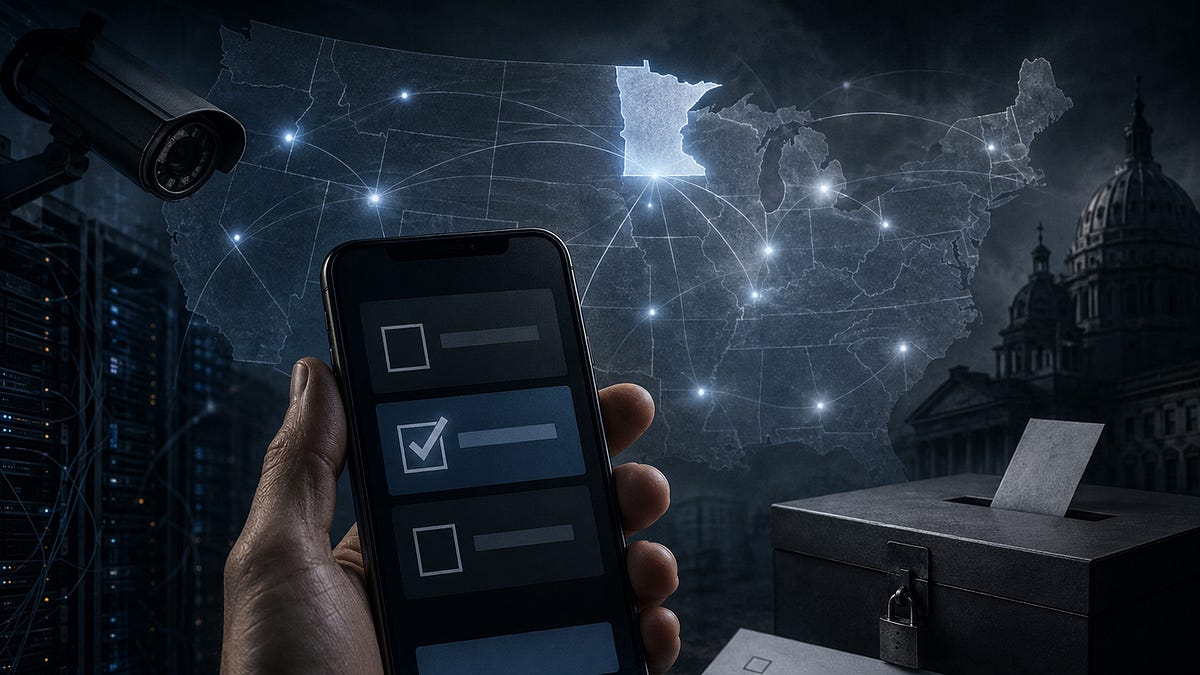
15 Kan 2026 ~~ By Natalie Winters

A bill introduced in the Minnesota House this spring, HF4962, would write “mobile voting technology” into state election law, defining it as an application on a mobile device used to “complete and submit a ballot” in a secure and encrypted manner. It would also allow voters in jurisdictions that authorize the technology to receive ballots, instructions, and certificates of voter eligibility electronically, then return the ballot electronically through the same system.
Translated out of legislative jargon, Minnesota lawmakers are being asked to open the door to app-based ballot return.
This is not an isolated local reform. It is part of a national campaign.
The Mobile Voting Project, the group pushing this agenda, openly lists active campaigns in Colorado, Maryland, Minnesota, New Jersey, Vermont, and New York City. Its own materials say 330 jurisdictions have piloted mobile voting since 2018, while 13 additional states permit voters with disabilities to return ballots over the internet.
Bradley Tusk, the founder of the Mobile Voting Project, is a venture capitalist and political operative. He has deep ties to Democratic politics, including managing Michael Bloomberg’s 2009 mayoral re-election campaign in New York City and serving as communications director for Senator Chuck Schumer.
~Snip~
In New Jersey, the political network is even more direct. A bill sponsored by State Senator Brian Stack, S4163, and its Assembly counterpart, A4960, would create a municipal mobile voting pilot program. Tusk is the brother-in-law of Rep. Josh Gottheimer, one of the state’s highest-profile Democratic members of Congress. Gottheimer is married to Marla Tusk, who serves as general counsel at Tusk Strategies, the consulting firm founded by Bradley Tusk.
The case being sold in New Jersey is the same case being sold in Minnesota and elsewhere. Low turnout. Local elections. Accessibility. Modernization. Trust the app.
The security case is much weaker.
In February, more than 20 computer scientists published a rebuke of the Mobile Voting Project and VoteSecure, arguing that claims about the technology’s security are “untrue and dangerous.” The review stated that “VoteSecure isn’t a complete, usable product, it’s just a ‘cryptographic core’ that someone might someday incorporate into a usable product.”
Andrew Appel, professor emeritus of computer science at Princeton and the lead author of the review, said the scientific consensus has been clear for decades.
“For the last 20 years, it is a well established scientific consensus that internet voting is too insecure for public elections, unless some miraculous new technology is invented. People have been working for 30+ years on such technologies, and no such breakthrough has arrived, or is likely to arrive any time soon. Mr. Tusk should not use VoteSecure as a pretext to promote unsafe internet voting.”
That warning is not coming from election-integrity activists. It is coming from computer scientists.
~Snip~
Richer made the political stakes explicit when he argued that cellphone voting would “fix the parade of horribles that many fear from the Trump administration this fall.”
“ICE at polling places doesn’t matter if people vote on their phones,” he wrote. “If there are no mail ballots to disrupt, then it hardly matters that Trump might test the independence of the United States Post Office. It no longer matters if Tulsi Gabbard seizes ballot tabulators in Puerto Rico, the FBI takes election materials in Georgia, or Sheriff Chad Bianco seizes ballots in Riverside, California.”
That is the real argument. Cellphone voting does not simply make voting easier. It routes around polling places, mail ballots, ballot tabulators, election materials, and local conflicts over physical election infrastructure.
For election integrity advocates, that is precisely the problem. The features being treated as outdated friction are the same features that make elections tangible, local, audit-able, and observable.
The public has seen this sequence before. Mass mail-in voting was sold in 2020 as an emergency pandemic measure. In many states, it became permanent infrastructure.
Now the same political class is asking Americans to accept a far more radical premise: ballots cast through phones, transmitted through internet-connected systems, and secured by technical assurances the average voter cannot meaningfully inspect.
The question is why a Democratic-linked political operation is pushing to move American elections deeper into the custody of software vendors, election-technology nonprofits, political consultants, cryptographic experts, and elite institutions that have spent years dismissing election-integrity concerns as illegitimate.


Commentary:
Just another way to steal the vote...
Making the vote fraud friendly is the Democratic way. You can’t prove they cheated if they set up the system to make proof of theft impossible.
Democrats are always figuring out ways to cheat. Ranked choice voting, now cell phones? All aliens get free cell phones in Oregon because it’s against their rights to make them pay for phone service. Do burner phones get to vote too?
If Minnesota and New Jersey intend to use this as a form of voting, their Congressional delegation can be refused seats in the House and Senate, and their Electoral Votes for President can be tossed out.
 

Voting By Phone Is Already Here.​

Meet The Democratic-Linked Group Trying To Take It National.​

The Vote-By-Phone Machine Comes For Minnesota

15 Kan 2026 ~~ By Natalie Winters

A bill introduced in the Minnesota House this spring, HF4962, would write “mobile voting technology” into state election law, defining it as an application on a mobile device used to “complete and submit a ballot” in a secure and encrypted manner. It would also allow voters in jurisdictions that authorize the technology to receive ballots, instructions, and certificates of voter eligibility electronically, then return the ballot electronically through the same system.
Translated out of legislative jargon, Minnesota lawmakers are being asked to open the door to app-based ballot return.
This is not an isolated local reform. It is part of a national campaign.
The Mobile Voting Project, the group pushing this agenda, openly lists active campaigns in Colorado, Maryland, Minnesota, New Jersey, Vermont, and New York City. Its own materials say 330 jurisdictions have piloted mobile voting since 2018, while 13 additional states permit voters with disabilities to return ballots over the internet.
Bradley Tusk, the founder of the Mobile Voting Project, is a venture capitalist and political operative. He has deep ties to Democratic politics, including managing Michael Bloomberg’s 2009 mayoral re-election campaign in New York City and serving as communications director for Senator Chuck Schumer.
~Snip~
In New Jersey, the political network is even more direct. A bill sponsored by State Senator Brian Stack, S4163, and its Assembly counterpart, A4960, would create a municipal mobile voting pilot program. Tusk is the brother-in-law of Rep. Josh Gottheimer, one of the state’s highest-profile Democratic members of Congress. Gottheimer is married to Marla Tusk, who serves as general counsel at Tusk Strategies, the consulting firm founded by Bradley Tusk.
The case being sold in New Jersey is the same case being sold in Minnesota and elsewhere. Low turnout. Local elections. Accessibility. Modernization. Trust the app.
The security case is much weaker.
In February, more than 20 computer scientists published a rebuke of the Mobile Voting Project and VoteSecure, arguing that claims about the technology’s security are “untrue and dangerous.” The review stated that “VoteSecure isn’t a complete, usable product, it’s just a ‘cryptographic core’ that someone might someday incorporate into a usable product.”
Andrew Appel, professor emeritus of computer science at Princeton and the lead author of the review, said the scientific consensus has been clear for decades.
“For the last 20 years, it is a well established scientific consensus that internet voting is too insecure for public elections, unless some miraculous new technology is invented. People have been working for 30+ years on such technologies, and no such breakthrough has arrived, or is likely to arrive any time soon. Mr. Tusk should not use VoteSecure as a pretext to promote unsafe internet voting.”
That warning is not coming from election-integrity activists. It is coming from computer scientists.
~Snip~
Richer made the political stakes explicit when he argued that cellphone voting would “fix the parade of horribles that many fear from the Trump administration this fall.”
“ICE at polling places doesn’t matter if people vote on their phones,” he wrote. “If there are no mail ballots to disrupt, then it hardly matters that Trump might test the independence of the United States Post Office. It no longer matters if Tulsi Gabbard seizes ballot tabulators in Puerto Rico, the FBI takes election materials in Georgia, or Sheriff Chad Bianco seizes ballots in Riverside, California.”
That is the real argument. Cellphone voting does not simply make voting easier. It routes around polling places, mail ballots, ballot tabulators, election materials, and local conflicts over physical election infrastructure.
For election integrity advocates, that is precisely the problem. The features being treated as outdated friction are the same features that make elections tangible, local, audit-able, and observable.
The public has seen this sequence before. Mass mail-in voting was sold in 2020 as an emergency pandemic measure. In many states, it became permanent infrastructure.
Now the same political class is asking Americans to accept a far more radical premise: ballots cast through phones, transmitted through internet-connected systems, and secured by technical assurances the average voter cannot meaningfully inspect.
The question is why a Democratic-linked political operation is pushing to move American elections deeper into the custody of software vendors, election-technology nonprofits, political consultants, cryptographic experts, and elite institutions that have spent years dismissing election-integrity concerns as illegitimate.


Commentary:
Just another way to steal the vote...
Making the vote fraud friendly is the Democratic way. You can’t prove they cheated if they set up the system to make proof of theft impossible.
Democrats are always figuring out ways to cheat. Ranked choice voting, now cell phones? All aliens get free cell phones in Oregon because it’s against their rights to make them pay for phone service. Do burner phones get to vote too?
If Minnesota and New Jersey intend to use this as a form of voting, their Congressional delegation can be refused seats in the House and Senate, and their Electoral Votes for President can be tossed out.

Voting on your cell phone half the planet is gonna vote.

Good god man.We need a simple voting act

Paper ballots, legal id, and no two weeks to count the vote
The results that night

You're never getting any s*** bags out

Democratic socialism we're gonna have to shoot our way out


States With Some Form of Telephone Voting (Accessibility Only)​

1. Oregon — “Accessible Vote‑by‑Phone”

  • Voters with disabilities can mark their ballot by phone with election staff.
  • The ballot is then printed and counted like any other ballot.
  • Not available to the general public.

2. Washington State — “Accessible Telephone Voting”

  • Blind and low‑vision voters can vote using a telephone keypad system.
  • The system produces a paper ballot for tabulation.

3. Colorado — “Phone‑Based Accessible Ballot”

  • Voters with disabilities can request a phone‑assisted ballot marking session.
  • An election worker helps mark the ballot over a secure line.

4. Alaska — “By‑Phone Voting for Disabled Voters”

  • Voters with disabilities may vote by phone with an election official.
  • Alaska also briefly allowed phone voting for COVID‑isolated voters in 2020.

5. West Virginia — Limited Past Use

  • West Virginia piloted mobile/phone voting for overseas voters (2018–2020).
  • The program was discontinued due to security concerns.
  • Today, only disability‑related accommodations remain.
"From copilot"

Looks like Minnesota wasn't first and they aren't taking it national.
 

Voting By Phone Is Already Here.​

Meet The Democratic-Linked Group Trying To Take It National.​

The Vote-By-Phone Machine Comes For Minnesota

Deport the whole Democratic Party to the Democratic People's Republic of Korea.
 

States With Some Form of Telephone Voting (Accessibility Only)​

1. Oregon — “Accessible Vote‑by‑Phone”

  • Voters with disabilities can mark their ballot by phone with election staff.
  • The ballot is then printed and counted like any other ballot.
  • Not available to the general public.

2. Washington State — “Accessible Telephone Voting”

  • Blind and low‑vision voters can vote using a telephone keypad system.
  • The system produces a paper ballot for tabulation.

3. Colorado — “Phone‑Based Accessible Ballot”

  • Voters with disabilities can request a phone‑assisted ballot marking session.
  • An election worker helps mark the ballot over a secure line.

4. Alaska — “By‑Phone Voting for Disabled Voters”

  • Voters with disabilities may vote by phone with an election official.
  • Alaska also briefly allowed phone voting for COVID‑isolated voters in 2020.

5. West Virginia — Limited Past Use

  • West Virginia piloted mobile/phone voting for overseas voters (2018–2020).
  • The program was discontinued due to security concerns.
  • Today, only disability‑related accommodations remain.
"From copilot"

Looks like Minnesota wasn't first and they aren't taking it national.
limited exceptions for disabled people.It's fine, but you can't open it up to the general public
Democrats will exploit it beyond belief
 

States With Some Form of Telephone Voting (Accessibility Only)​

1. Oregon — “Accessible Vote‑by‑Phone”

  • Voters with disabilities can mark their ballot by phone with election staff.
  • The ballot is then printed and counted like any other ballot.
  • Not available to the general public.

2. Washington State — “Accessible Telephone Voting”

  • Blind and low‑vision voters can vote using a telephone keypad system.
  • The system produces a paper ballot for tabulation.

3. Colorado — “Phone‑Based Accessible Ballot”

  • Voters with disabilities can request a phone‑assisted ballot marking session.
  • An election worker helps mark the ballot over a secure line.

4. Alaska — “By‑Phone Voting for Disabled Voters”

  • Voters with disabilities may vote by phone with an election official.
  • Alaska also briefly allowed phone voting for COVID‑isolated voters in 2020.

5. West Virginia — Limited Past Use

  • West Virginia piloted mobile/phone voting for overseas voters (2018–2020).
  • The program was discontinued due to security concerns.
  • Today, only disability‑related accommodations remain.
"From copilot"

Looks like Minnesota wasn't first and they aren't taking it national.
Indeed, uses limited for the disabled. In the case of Minnesota and New Jersy disabilities are not mentioned.


Commentary:
Just another way to steal the vote...
Making the vote fraud friendly is the Democratic way. You can’t prove they cheated if they set up the system to make proof of theft impossible.
Democrats are always figuring out ways to cheat. Ranked choice voting, now cell phones? All aliens get free cell phones in Oregon because it’s against their rights to make them pay for phone service. Do burner phones get to vote too?
If Minnesota and New Jersey intend to use this as a form of voting, their Congressional delegation can be refused seats in the House and Senate, and their Electoral Votes for President can be tossed out.
You're just inventing things to be scared of now.
 
Why don't the dumocrap voters just let the party automatically vote for them? They already choose their candidates for them. This way all the dumocrap voters will have to do is stay on the Internet all day and trash Trump. And I guarantee the dumocraps never lose an election ever again. My guess is the dumocrap voters would be thrilled with this enhanced form of Democracy.
 
The insanity and DESPERATION of the demented LEFT knows no bounds.
There obviously needs to be STRICT election LAWS legislated NATIONALLY to prevent this madness.
Sure, vote by phone for your local dog catcher, but elections that affect the whole COUNTRY?
GTFOH!!!!! :evil:
 
The Democrat want to burn down America.
It's just that simple.
 
Among many other things.

IN PERSON, ELECTION DAY VOTING WITH AN AUTHENTIC STATE ISSUED PHOTO ID IS THE ONLY SECURE WAY TO CAST VOTES.

Counting those votes fairly is another hurdle.
Yeah... I get your point, but it's not fair to the dumocraps because without cheating they will never, ever win another election. Think about our Democracy!!!
 
15th post
All the moonbats in Minnesota: "Where my Obama phone at? Where my Obama phone at?"
 
Last edited:

States With Some Form of Telephone Voting (Accessibility Only)​

1. Oregon — “Accessible Vote‑by‑Phone”

  • Voters with disabilities can mark their ballot by phone with election staff.
  • The ballot is then printed and counted like any other ballot.
  • Not available to the general public.

2. Washington State — “Accessible Telephone Voting”

  • Blind and low‑vision voters can vote using a telephone keypad system.
  • The system produces a paper ballot for tabulation.

3. Colorado — “Phone‑Based Accessible Ballot”

  • Voters with disabilities can request a phone‑assisted ballot marking session.
  • An election worker helps mark the ballot over a secure line.

4. Alaska — “By‑Phone Voting for Disabled Voters”

  • Voters with disabilities may vote by phone with an election official.
  • Alaska also briefly allowed phone voting for COVID‑isolated voters in 2020.

5. West Virginia — Limited Past Use

  • West Virginia piloted mobile/phone voting for overseas voters (2018–2020).
  • The program was discontinued due to security concerns.
  • Today, only disability‑related accommodations remain.
"From copilot"

Looks like Minnesota wasn't first and they aren't taking it national.
Thats an interesting summary. I never knew.
 
Voting on your cell phone half the planet is gonna vote.

Good god man.We need a simple voting act

Paper ballots, legal id, and no two weeks to count the vote
The results that night

You're never getting any s*** bags out

Democratic socialism we're gonna have to shoot our way out

View attachment 1269626
Lol, you can have paper ballots or counting in a single day but ya can't have both. Many metropolitan areas have millions of people. That's millions plural. Count to a million and then get back to me then you will understand. There has to be some sort of machine involved to count that many votes.
 
Back
Top Bottom