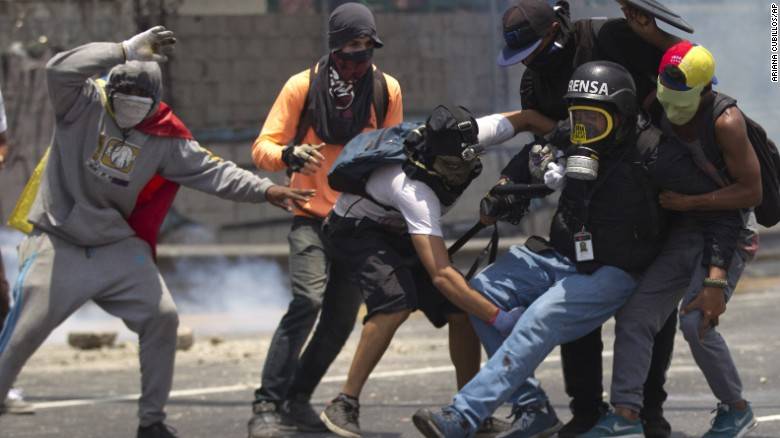
Opposition leaders in Venezuela have called protesters to the streets for what they hope will be one of Venezuela's largest marches on Wednesday, a national holiday marking the beginning of the struggle for Venezuela to gain independence from Spain. President Nicolas Maduro and his supporters have called for a countermarch on the same day. Maduro also deployed the Venezuelan armed forces to the street on Sunday night, where they will stay for the duration of the marches. Ahead of the protests, here is what you need to know.
Why are they protesting?
In short, the opposition says Maduro has created a dictatorship in the last few years. The government has repeatedly blocked any attempts by the opposition to oust Maduro from power by a referendum vote. It has also delayed local and state elections. The last election held in Venezuela, the parliamentary election of 2015, gave the opposition a majority. Critics say any elections since have been delayed because Maduro is afraid of the outcome. Then, on March 29, the Venezuelan Supreme Court dissolved the Parliament, transferring all legislative powers to itself.
Venezuela turmoil escalates
By doing away with the opposition-controlled legislative branch, the move effectively meant the remaining two branches of Venezuelan government were controlled by the ruling United Socialist Party. The opposition was outraged and called the move a coup. The decision was reversed three days later, but by that time protests had already erupted. The protests have been bloody. Six people have died and countless others, many journalists, have been injured. The opposition call became even stronger when, on April 7, the government notified main opposition leader Henrique Capriles that he had been banned from doing any political work for 15 years. The 44-year-old governor, who has run for president twice, said the government was again acting like a dictatorship.
What is Maduro's response?
Maduro, 54, is defiant. Instead of taking steps to reduce tensions with the opposition, he has taken a confrontational tone with members of the opposition and protesters, whom he calls "vandals and terrorists." "We're after and will capture the very last of the attackers," Maduro said Saturday on national TV. "You all know that I don't fool around. When I go after criminals, I get them and I will capture all of these criminals who are getting their orders from the right-wingers." In a show of force on Monday, Maduro paraded the streets of Caracas surrounded by men and women in uniform. The military has also vowed its full support to Maduro.
Venezuela protests: What you need to know - CNN.com