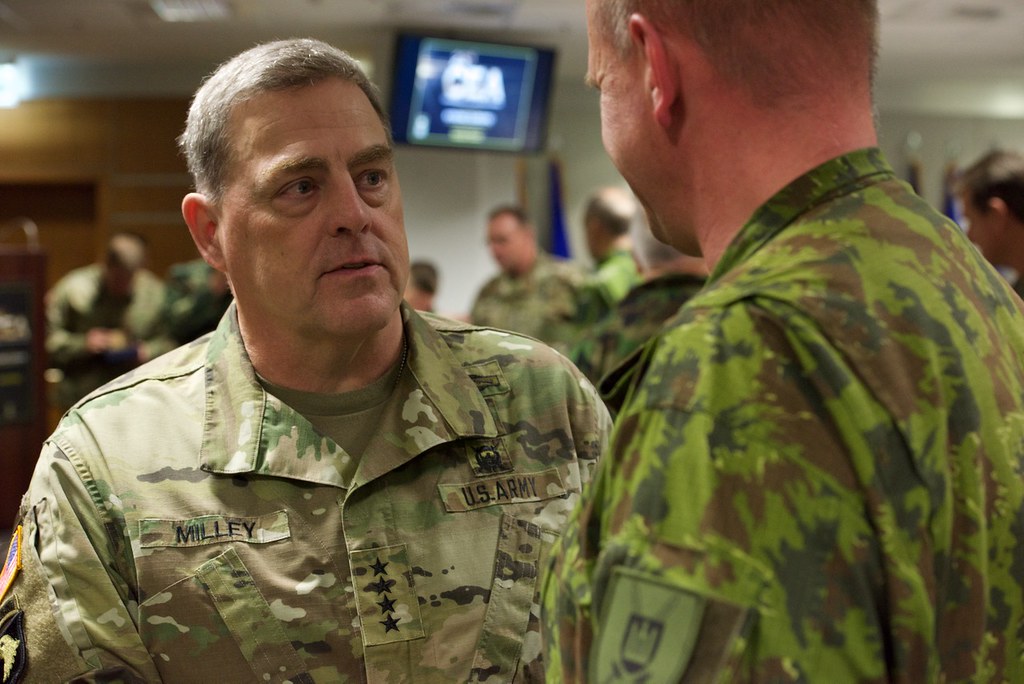
RE: US Generals Lied, Lost Wars, And Looted Those They Claimed To Serve
SUBTOPIC: Objective and Outcomes in Conflicts
※→ el al,
BLUF: The concepts behind the terminology → "war" → "Win 'vs' Losses" → Victory and Strategy are all antiquated concepts along with the baggage and perceptions they carry with them has disappointment written all over them.
(COMMENT)
.
Actually, the term "war" is an idealization. In the big picture, the proper terms are: (QUOTATION SOURCE: ICRC & International Humanitarian Law)
◈ International humanitarian law distinguishes two types of armed conflicts, namely:
✦ international armed conflicts, opposing two or more States, and
✦ non-international armed conflicts, between governmental forces and non-
governmental armed groups, or between such groups only. IHL treaty law also establishes a distinction between non-international armed conflicts in the meaning of common Article 3 of the Geneva Conventions of 1949 and non-international armed conflicts falling within the definition provided in Art. 1 of Additional Protocol II.
◈ Legally speaking, no other type of armed conflict exists. It is nevertheless important to underline that a situation can evolve from one type of armed conflict to another, depending on the facts prevailing at a certain moment.
Terms like "Win 'vs' Losses" → "Victory and Strategy" romanticized notions and political hype use to camouflage the latent objectives and hidden agendas. In terms of the Big Picture, the antiquated term "war" is not actually defined in the
DOD Dictionary of Military and Associated Terms [Short title: DOD Dictionary] does not actually define either "War or Victory." What most people mean by "war" is:
objective —
1. The clearly defined, decisive, and attainable goal toward which an operation is directed.
2. The specific goal of the action taken which is essential to the commander’s plan.
Now you do see the term "war" as part of a descriptive term or in the phrase of description:
◈ As examples of Phrases: explosive remnants of war - law of war - peacetime, crises or emergencies, or war - etc
◈ As examples of modifiers: irregular warfare - prescribed for war materiel - requirements of a war or other national emergency, etc
Now there are some cases in which the term "war" becomes essential for international consumption:
◈ theater of war
◈ Treatment of Prisoners of War
◈ War Crimes
◈ War potential or combat effectiveness
But again, these have variable meanings depending on the entity using the terms and applying them to the events of the real-time world.
Similarly, "to win" is a battlefield outcome, not a conditional outcome based on the "absolute" political objective. An objective → to "break the will of the people to continue the conflict" cannot be achieved through conventional means. Why, because of the Customary and International Humanitarian Law (IHL) like (but not limited to) Rule 2: Acts or threats of violence the primary purpose of which is to spread terror among the civilian population are prohibited. To even tell a country that you are going to hurt them to the point that to continue to support hostilities will become such an unbearable agony → is a violation of IHL.
The only time that "to win" is an objective is when (politically speaking) it is designated a no-holds-barred war - with the unconditional support of Congress, a Declaration of War and grant Letters of Marque and Reprisal in support of total war.
Speak Softly and Carry a Big Stick.
................................Teddy Roosevelt
......26th president of the United States
But if all you are going to do is carry a twig, then stay at home. If you really don't have a stick, then don't speak in opposition of an action by a people that WILL give it their all. The United States is not the country of President Roosevelt's day.
Most Respectfully,
R