This is the list of references for Wikipedia's article on the Greenhouse Effect. I see quite a bit of work here SIGNIFICANTLY more recent than the 19th century.
"Annex II Glossary". Intergovernmental Panel on Climate Change. Retrieved 15 October 2010.
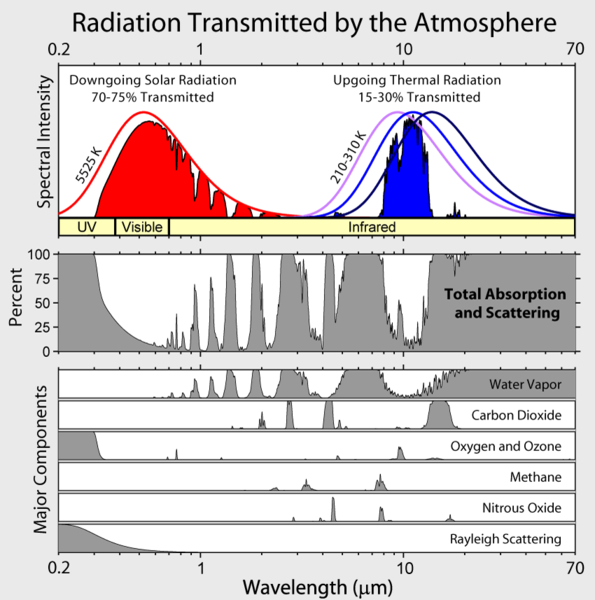
A concise description of the greenhouse effect is given in the Intergovernmental Panel on Climate Change Fourth Assessment Report, "What is the Greenhouse Effect?" FAQ 1.3 - AR4 WGI Chapter 1: Historical Overview of Climate Change Science, IIPCC Fourth Assessment Report, Chapter 1, page 115: "To balance the absorbed incoming [solar] energy, the Earth must, on average, radiate the same amount of energy back to space. Because the Earth is much colder than the Sun, it radiates at much longer wavelengths, primarily in the infrared part of the spectrum (see Figure 1). Much of this thermal radiation emitted by the land and ocean is absorbed by the atmosphere, including clouds, and reradiated back to Earth. This is called the greenhouse effect."
Stephen H. Schneider, in Geosphere-biosphere Interactions and Climate, Lennart O. Bengtsson and Claus U. Hammer, eds., Cambridge University Press, 2001, ISBN 0-521-78238-4, pp. 90-91.
E. Claussen, V. A. Cochran, and D. P. Davis, Climate Change: Science, Strategies, & Solutions, University of Michigan, 2001. p. 373.
A. Allaby and M. Allaby, A Dictionary of Earth Sciences, Oxford University Press, 1999, ISBN 0-19-280079-5, p. 244.
Wood, R.W. (1909). "Note on the Theory of the Greenhouse". Philosophical Magazine 17: 319320. doi:10.1080/14786440208636602. "When exposed to sunlight the temperature rose gradually to 65 °C., the enclosure covered with the salt plate keeping a little ahead of the other because it transmitted the longer waves from the Sun, which were stopped by the glass. In order to eliminate this action the sunlight was first passed through a glass plate." "it is clear that the rock-salt plate is capable of transmitting practically all of it, while the glass plate stops it entirely. This shows us that the loss of temperature of the ground by radiation is very small in comparison to the loss by convection, in other words that we gain very little from the circumstance that the radiation is trapped."
Schroeder, Daniel V. (2000). An introduction to thermal physics. San Francisco, California: Addison-Wesley. pp. 3057. ISBN 0-321-27779-1. "... this mechanism is called the greenhouse effect, even though most greenhouses depend primarily on a different mechanism (namely, limiting convective cooling)."
"NASA Earth Fact Sheet". Nssdc.gsfc.nasa.gov. Retrieved 2010-10-15.
"Introduction to Atmospheric Chemistry, by Daniel J. Jacob, Princeton University Press, 1999. Chapter 7, "The Greenhouse Effect"". Acmg.seas.harvard.edu. Retrieved 2010-10-15.
"Solar Radiation and the Earth's Energy Balance". Eesc.columbia.edu. Retrieved 2010-10-15.
Intergovernmental Panel on Climate Change Fourth Assessment Report. Chapter 1: Historical overview of climate change science page 97
The elusive "absolute surface air temperature," see GISS discussion
Vaclav Smil (2003). The Earth's Biosphere: Evolution, Dynamics, and Change. MIT Press. p. 107. ISBN 978-0-262-69298-4.
IPCC AR4 WG1 (2007), Solomon, S.; Qin, D.; Manning, M.; Chen, Z.; Marquis, M.; Averyt, K.B.; Tignor, M.; and Miller, H.L., ed., Climate Change 2007: The Physical Science Basis, Contribution of Working Group I to the Fourth Assessment Report of the Intergovernmental Panel on Climate Change, Cambridge University Press, ISBN 978-0-521-88009-1 (pb: 978-0-521-70596-7)
Isaac M. Held and Brian J. Soden (Nov 2000). "Water Vapor Feedback and Global Warming". Annual Review of Energy and the Environment (Annual Reviews) 25: 441475. doi:10.1146/annurev.energy.25.1.441.
John Tyndall, Heat considered as a Mode of Motion (500 pages; year 1863, 1873).
Bell, Alexander Graham, Dictionary of Canadian Biography Online, 19211930 (Volume XV), University of Toronto and Université Laval, 2000. Retrieved March 1, 2013.
Grosvenor, Edwin S. and Morgan Wesson. Alexander Graham Bell: The Life and Times of the Man Who Invented the Telephone. New York: Harry N. Abrahms, Inc., 1997, p. 274, ISBN 0-8109-4005-1.
Grosvenor and Wesson, 1997, p. 269.
"The HITRAN Database". Atomic and Molecular Physics Division, Harvard-Smithsonian Center for Astrophysics. Retrieved August 8, 2012. "HITRAN is a compilation of spectroscopic parameters that a variety of computer codes use to predict and simulate the transmission and emission of light in the atmosphere."
"Hitran on the Web Information System". Harvard-Smithsonian Center for Astrophysics (CFA), Cambridge, MA, USA; V.E. Zuev Insitute of Atmosperic Optics (IAO), Tomsk, Russia. Retrieved August 11, 2012.
Mitchell, John F. B. (1989). "THE "GREENHOUSE" EFFECT AND CLIMATE CHANGE". Reviews of Geophysics (American Geophysical Union) 27 (1): 115139. Bibcode:1989RvGeo..27..115M. doi:10.1029/RG027i001p00115. Retrieved 2008-03-23.
"Solar Radiation and Climate Experiment (SOURCE)". NASA.Gov. Retrieved 15 October 2010.
"Water vapour: feedback or forcing?". RealClimate. 6 April 2005. Retrieved 2006-05-01.
Kiehl, J. T.; Kevin E. Trenberth (February 1997). "Earth's Annual Global Mean Energy Budget" (PDF). Bulletin of the American Meteorological Society 78 (2): 197208. Bibcode:1997BAMS...78..197K. doi:10.1175/1520-0477(1997)078<0197:EAGMEB>2.0.CO;2. ISSN 1520-0477. Archived from the original on 2006-03-30. Retrieved 2006-05-01.
"NASA: Climate Forcings and Global Warming". January 14, 2009.
"Enhanced greenhouse effect Glossary". Nova. Australian Academy of Scihuman impact on the environment. 2006.
"Enhanced Greenhouse Effect". Ace.mmu.ac.uk. Retrieved 2010-10-15.
IPCC Fourth Assessment Report Synthesis Report: Summary for Policymakers (p. 5)
IPCC Fourth Assessment Report, Working Group I Report "The Physical Science Basis" Chapter 7
"Atmospheric Carbon Dioxide Mauna Loa". NOAA.
Climate Milestone: Earth's CO2 Level Nears 400 ppm
Hansen J. (February 2005). "A slippery slope: How much global warming constitutes "dangerous anthropogenic interference"?". Climatic Change 68 (333): 269279. doi:10.1007/s10584-005-4135-0.
"Deep ice tells long climate story". BBC News. 2006-09-04. Retrieved 2010-05-04.
Hileman B (2005-11-28). "Ice Core Record Extended". Chemical & Engineering News 83 (48): 7.
Bowen, Mark; Thin Ice: Unlocking the Secrets of Climate in the World's Highest Mountains; Owl Books, 2005.
Temperature change and carbon dioxide change, U.S. National Oceanic and Atmospheric Administration
Brian Shmaefsky (2004). Favorite demonstrations for college science: an NSTA Press journals collection. NSTA Press. p. 57. ISBN 978-0-87355-242-4.
Oort, Abraham H.; Peixoto, José Pinto (1992). Physics of climate. New York: American Institute of Physics. ISBN 0-88318-711-6. "...the name water vapor-greenhouse effect is actually a misnomer since heating in the usual greenhouse is due to the reduction of convection"
McKay, C.; Pollack, J.; Courtin, R. (1991). "The greenhouse and antigreenhouse effects on Titan". Science 253 (5024): 11181121. doi:10.1126/science.11538492. PMID 11538492. edit
"Titan: Greenhouse and Anti-greenhouse :: Astrobiology Magazine - earth science - evolution distribution Origin of life universe - life beyond :: Astrobiology is study of earth". Astrobio.net. Retrieved 2010-10-15.
"Pluto Colder Than Expected". SPACE.com. 2006-01-03. Retrieved 2010-10-15.
Kasting, James F. (1991). "Runaway and moist greenhouse atmospheres and the evolution of Earth and Venus.". Planetary Sciences: American and Soviet Research/Proceedings from the U.S.-U.S.S.R. Workshop on Planetary Sciences. Commission on Engineering and Technical Systems (CETS). pp. 234245. Retrieved 2009.
Rasool, I.; De Bergh, C. (Jun 1970). "The Runaway Greenhouse and the Accumulation of CO2 in the Venus Atmosphere". Nature 226 (5250): 10371039. Bibcode:1970Natur.226.1037R. doi:10.1038/2261037a0. ISSN 0028-0836. PMID 16057644. edit