The uneven rise points to disparate forces affecting food prices. Drought in Oklahoma and Texas is driving up cattle prices. A disease known as porcine epidemic diarrhea virus has killed millions of piglets and contributed to higher hog prices. A disease known as citrus greening is killing Florida's orange and grapefruit trees, driving up citrus prices. Most of the shrimp eaten in the U.S. comes from Southeast Asia, where a bacterial infection has devastated stocks. Coffee prices have risen this year due to a drought in Brazil.
U.S. food prices are increasing, raising a sensitive question: When the cost of a hamburger patty soars, does it count as inflation? WSJ chief economic correspondent Jon Hilsenrath joins the News Hub with Simon Constable to discuss. Photo: Getty
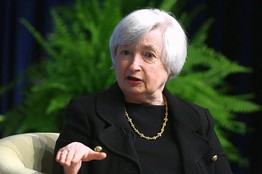
Fed Chairwoman Janet Yellen plans to take her time in raising interest rates. Getty Images
These factors suggest recent food inflation springs from special factors constraining supplies in a few areas, as opposed to broad increases in demand, which might propel the kind of across-the-board consumer prices increases that the Fed tries to stem.