Perrier? Dude, San Pellegrino is the way to go. But those wedges sound good.. ok now I have to cook.They can make lunch. Buying a school lunch is entirely optional.
Taxpayers have already paid for those school lunches, moron. That part isn't optional. what you're saying is that parents have the option of paying twice.
Liberals are mentally retarded. That's the only explanation for such idiocies. You have to talk to them like they are children.
And what you're saying is you're too lazy to get off your fat ass and make your kid's lunches. Gotcha.
What I'm saying is that you and your Komrades are a gang of assholes who want to impose your "standards" on people who don't want them. Parents paid for school lunches with their taxes. They are the only ones who should determine what they contain.
Ok. Go ahead and call your kid's school and tell them you want your kids served peanut butter and jelly sandwiches every day. They'll tell you the same thing I did:
Good. Make them or STFU.
And be ready to be liable for their fellow students deaths from peanut allergies because your kids traded away that nasty shit for something else.
I packed lunches this morning, it was an " I don't wanna eat cafeteria food" day
Almond butter and honey on artisan bread with rosemary and sea salt potato wedges,with a wedge of chocolate pie and a bottled water (Perrier of course)
******* poor people.
Navigation
Install the app
How to install the app on iOS
Follow along with the video below to see how to install our site as a web app on your home screen.
Note: This feature may not be available in some browsers.
More options
Style variation
You are using an out of date browser. It may not display this or other websites correctly.
You should upgrade or use an alternative browser.
You should upgrade or use an alternative browser.
The School Lunches Malia And Sasha Eat Vs. The Crap Michelle Obama Has Foisted On America
- Thread starter Freewill
- Start date

SmarterThanTheAverageBear
Gold Member
- Aug 22, 2014
- 29,410
- 4,281
- 280
- Banned
- #282
Perrier? Dude, San Pellegrino is the way to go. But those wedges sound good.. ok now I have to cook.Taxpayers have already paid for those school lunches, moron. That part isn't optional. what you're saying is that parents have the option of paying twice.
Liberals are mentally retarded. That's the only explanation for such idiocies. You have to talk to them like they are children.
And what you're saying is you're too lazy to get off your fat ass and make your kid's lunches. Gotcha.
What I'm saying is that you and your Komrades are a gang of assholes who want to impose your "standards" on people who don't want them. Parents paid for school lunches with their taxes. They are the only ones who should determine what they contain.
Ok. Go ahead and call your kid's school and tell them you want your kids served peanut butter and jelly sandwiches every day. They'll tell you the same thing I did:
Good. Make them or STFU.
And be ready to be liable for their fellow students deaths from peanut allergies because your kids traded away that nasty shit for something else.
I packed lunches this morning, it was an " I don't wanna eat cafeteria food" day
Almond butter and honey on artisan bread with rosemary and sea salt potato wedges,with a wedge of chocolate pie and a bottled water (Perrier of course)
******* poor people.
LOL does it matter what brand I buy, I just refill the bottle out of the tap anyway LOL
My wife is all the time "just throw the bottles away, you know we can afford more" as if that is the point.
Down-riggers, outriggers, and two behind the boat.Yeah well on the other issues, I never had a leg to stand on... I was playing the part of public defender of guilty parties.Remember this place?Why should liberty be balanced with what's best for the community? I don't get that. Why is the desire of certain members of the community to force others to bend to their will more important than the minority to choose to live other ways?
Yes you can have mandatory education without funding it. For example, you can't speed, if you do speed you pay a fine the fine goes to pay for law enforcement officers to police more speeders.
In this example, if you mandate education for children then the parents have to put their kids through school, any which way they can. Beg, borrow, receive donations, home-school, pay it, start a school, or other means.
Are you SERIOUSLY suggesting that you believe ANY police department generates enough revenue from speeding tickets alone to pay for the measures used to stop those speeders in the first place? I would highly doubt that is true.
Ferguson, Missouri, collects around $2 million annually in fines and fees, mostly from traffic tickets -- a 44 percent increase from three years ago, the city's annual budget shows.How about GA:
According to data compiled by Better Together, an economic-development group in St. Louis, fines for speeding and other violations account for more than 14 percent of Ferguson's municipal revenue. The town of 21,203 is too small and too poor to support itself with taxes, so police help the city's bottom line by ticketing drivers aggressively
Doraville, a city of 10,600, took in nearly $9 million in traffic fines between 2008 and 2012; Jonesboro, with 4,700 people, netted $3 million during the same period.
Roswell: 94,000 people, $9 million in fines;
Doraville: 10,600 people, $9 million in fines
What about this town:
Randolph, Mo., is a tiny town with a common problem: money is tight.
To keep afloat, the Kansas City outpost apparently did what many little towns on big highways do. It came to rely on passing motorists filling its municipal coffers one traffic ticket at a time.
The problem came last year when, 15 years after Missouri passed a law capping certain ticket collections at 35% of a town's revenue, the state decided to actually enforce the law.
It's unclear why state auditors suddenly opened the town's books, but upon doing so they discovered that Randolph--population 47--had collected more than three-quarters of its $270,000 budget the year before from traffic fines issued on state and federal roads. By law, money that exceeds the 35% limit must be turned over to county schools
There are a number of small towns along highways that fund their police force from tickets. It's actually quite common.
Now this is going to blow your mind Mike , because you are clearly incapable of doing this when necessary , but you proved me wrong on this point.
IE trolling

SmarterThanTheAverageBear
Gold Member
- Aug 22, 2014
- 29,410
- 4,281
- 280
- Banned
- #284
Down-riggers, outriggers, and two behind the boat.Yeah well on the other issues, I never had a leg to stand on... I was playing the part of public defender of guilty parties.Remember this place?Are you SERIOUSLY suggesting that you believe ANY police department generates enough revenue from speeding tickets alone to pay for the measures used to stop those speeders in the first place? I would highly doubt that is true.
Ferguson, Missouri, collects around $2 million annually in fines and fees, mostly from traffic tickets -- a 44 percent increase from three years ago, the city's annual budget shows.How about GA:
According to data compiled by Better Together, an economic-development group in St. Louis, fines for speeding and other violations account for more than 14 percent of Ferguson's municipal revenue. The town of 21,203 is too small and too poor to support itself with taxes, so police help the city's bottom line by ticketing drivers aggressively
Doraville, a city of 10,600, took in nearly $9 million in traffic fines between 2008 and 2012; Jonesboro, with 4,700 people, netted $3 million during the same period.
Roswell: 94,000 people, $9 million in fines;
Doraville: 10,600 people, $9 million in fines
What about this town:
Randolph, Mo., is a tiny town with a common problem: money is tight.
To keep afloat, the Kansas City outpost apparently did what many little towns on big highways do. It came to rely on passing motorists filling its municipal coffers one traffic ticket at a time.
The problem came last year when, 15 years after Missouri passed a law capping certain ticket collections at 35% of a town's revenue, the state decided to actually enforce the law.
It's unclear why state auditors suddenly opened the town's books, but upon doing so they discovered that Randolph--population 47--had collected more than three-quarters of its $270,000 budget the year before from traffic fines issued on state and federal roads. By law, money that exceeds the 35% limit must be turned over to county schools
There are a number of small towns along highways that fund their police force from tickets. It's actually quite common.
Now this is going to blow your mind Mike , because you are clearly incapable of doing this when necessary , but you proved me wrong on this point.
IE trolling
I will say this,you did reel in some keepers in the Brown thread

mdk
Diamond Member
- Sep 6, 2014
- 40,558
- 14,048
- 2,630
Perrier? Dude, San Pellegrino is the way to go. But those wedges sound good.. ok now I have to cook.Taxpayers have already paid for those school lunches, moron. That part isn't optional. what you're saying is that parents have the option of paying twice.
Liberals are mentally retarded. That's the only explanation for such idiocies. You have to talk to them like they are children.
And what you're saying is you're too lazy to get off your fat ass and make your kid's lunches. Gotcha.
What I'm saying is that you and your Komrades are a gang of assholes who want to impose your "standards" on people who don't want them. Parents paid for school lunches with their taxes. They are the only ones who should determine what they contain.
Ok. Go ahead and call your kid's school and tell them you want your kids served peanut butter and jelly sandwiches every day. They'll tell you the same thing I did:
Good. Make them or STFU.
And be ready to be liable for their fellow students deaths from peanut allergies because your kids traded away that nasty shit for something else.
I packed lunches this morning, it was an " I don't wanna eat cafeteria food" day
Almond butter and honey on artisan bread with rosemary and sea salt potato wedges,with a wedge of chocolate pie and a bottled water (Perrier of course)
******* poor people.
Pshaw. You two can fight over which hoity-toity sparkling water is better while I sip on my Springbank scotch. Cheers! lol

tinydancer
Diamond Member
Hey michelle has given us Republicans for forever.
Have any of you seen what horrid it is. It is so bad I can barely breathe.
Have any of you seen what horrid it is. It is so bad I can barely breathe.
My tap comes from a hole I drilled 1000 feet down here in the austin hill country perfect water once I drip it through the ceramic filters in my berkey system.Perrier? Dude, San Pellegrino is the way to go. But those wedges sound good.. ok now I have to cook.And what you're saying is you're too lazy to get off your fat ass and make your kid's lunches. Gotcha.
What I'm saying is that you and your Komrades are a gang of assholes who want to impose your "standards" on people who don't want them. Parents paid for school lunches with their taxes. They are the only ones who should determine what they contain.
Ok. Go ahead and call your kid's school and tell them you want your kids served peanut butter and jelly sandwiches every day. They'll tell you the same thing I did:
Good. Make them or STFU.
And be ready to be liable for their fellow students deaths from peanut allergies because your kids traded away that nasty shit for something else.
I packed lunches this morning, it was an " I don't wanna eat cafeteria food" day
Almond butter and honey on artisan bread with rosemary and sea salt potato wedges,with a wedge of chocolate pie and a bottled water (Perrier of course)
******* poor people.
LOL does it matter what brand I buy, I just refill the bottle out of the tap anyway LOL
My wife is all the time "just throw the bottles away, you know we can afford more" as if that is the point.
touchePerrier? Dude, San Pellegrino is the way to go. But those wedges sound good.. ok now I have to cook.And what you're saying is you're too lazy to get off your fat ass and make your kid's lunches. Gotcha.
What I'm saying is that you and your Komrades are a gang of assholes who want to impose your "standards" on people who don't want them. Parents paid for school lunches with their taxes. They are the only ones who should determine what they contain.
Ok. Go ahead and call your kid's school and tell them you want your kids served peanut butter and jelly sandwiches every day. They'll tell you the same thing I did:
Good. Make them or STFU.
And be ready to be liable for their fellow students deaths from peanut allergies because your kids traded away that nasty shit for something else.
I packed lunches this morning, it was an " I don't wanna eat cafeteria food" day
Almond butter and honey on artisan bread with rosemary and sea salt potato wedges,with a wedge of chocolate pie and a bottled water (Perrier of course)
******* poor people.
Pshaw. You two can fight over which hoity-toity sparkling water is better while I sip on my Springbank scotch. Cheers! lol

Freewill
Platinum Member
- Oct 26, 2011
- 31,158
- 5,094
- 1,130
- Thread starter
- #289
What is wrong with you people? Jake, there is a vast difference between what the Obama's get and the slop shown in the pictures.
Do you think school lunches looked more like the Sidwell school lunches before Obama became President?
If the pictures are correct then yes, only by degree.
Do you think what they are serving our children now is appealing? If the pictures are true.
SmarterThanTheAverageBear
Gold Member
- Aug 22, 2014
- 29,410
- 4,281
- 280
- Banned
- #290
Perrier? Dude, San Pellegrino is the way to go. But those wedges sound good.. ok now I have to cook.And what you're saying is you're too lazy to get off your fat ass and make your kid's lunches. Gotcha.
What I'm saying is that you and your Komrades are a gang of assholes who want to impose your "standards" on people who don't want them. Parents paid for school lunches with their taxes. They are the only ones who should determine what they contain.
Ok. Go ahead and call your kid's school and tell them you want your kids served peanut butter and jelly sandwiches every day. They'll tell you the same thing I did:
Good. Make them or STFU.
And be ready to be liable for their fellow students deaths from peanut allergies because your kids traded away that nasty shit for something else.
I packed lunches this morning, it was an " I don't wanna eat cafeteria food" day
Almond butter and honey on artisan bread with rosemary and sea salt potato wedges,with a wedge of chocolate pie and a bottled water (Perrier of course)
******* poor people.
Pshaw. You two can fight over which hoity-toity sparkling water is better while I sip on my Springbank scotch. Cheers! lol
bleh another scotch drinker
SmarterThanTheAverageBear
Gold Member
- Aug 22, 2014
- 29,410
- 4,281
- 280
- Banned
- #291
My tap comes from a hole I drilled 1000 feet down here in the austin hill country perfect water once I drip it through the ceramic filters in my berkey system.Perrier? Dude, San Pellegrino is the way to go. But those wedges sound good.. ok now I have to cook.What I'm saying is that you and your Komrades are a gang of assholes who want to impose your "standards" on people who don't want them. Parents paid for school lunches with their taxes. They are the only ones who should determine what they contain.
Ok. Go ahead and call your kid's school and tell them you want your kids served peanut butter and jelly sandwiches every day. They'll tell you the same thing I did:
Good. Make them or STFU.
And be ready to be liable for their fellow students deaths from peanut allergies because your kids traded away that nasty shit for something else.
I packed lunches this morning, it was an " I don't wanna eat cafeteria food" day
Almond butter and honey on artisan bread with rosemary and sea salt potato wedges,with a wedge of chocolate pie and a bottled water (Perrier of course)
******* poor people.
LOL does it matter what brand I buy, I just refill the bottle out of the tap anyway LOL
My wife is all the time "just throw the bottles away, you know we can afford more" as if that is the point.
My tap is well water now but it wasn't always so. I've been stationed some places where you drank bottled water or no water.
mdk
Diamond Member
- Sep 6, 2014
- 40,558
- 14,048
- 2,630
Perrier? Dude, San Pellegrino is the way to go. But those wedges sound good.. ok now I have to cook.What I'm saying is that you and your Komrades are a gang of assholes who want to impose your "standards" on people who don't want them. Parents paid for school lunches with their taxes. They are the only ones who should determine what they contain.
Ok. Go ahead and call your kid's school and tell them you want your kids served peanut butter and jelly sandwiches every day. They'll tell you the same thing I did:
Good. Make them or STFU.
And be ready to be liable for their fellow students deaths from peanut allergies because your kids traded away that nasty shit for something else.
I packed lunches this morning, it was an " I don't wanna eat cafeteria food" day
Almond butter and honey on artisan bread with rosemary and sea salt potato wedges,with a wedge of chocolate pie and a bottled water (Perrier of course)
******* poor people.
Pshaw. You two can fight over which hoity-toity sparkling water is better while I sip on my Springbank scotch. Cheers! lol
bleh another scotch drinker
And whiskey, and rum, and gin, and vodka...
When my son was in high school he'd eat about 4-6 of those plates for lunch. Starting defensive back.What's so bad about this?
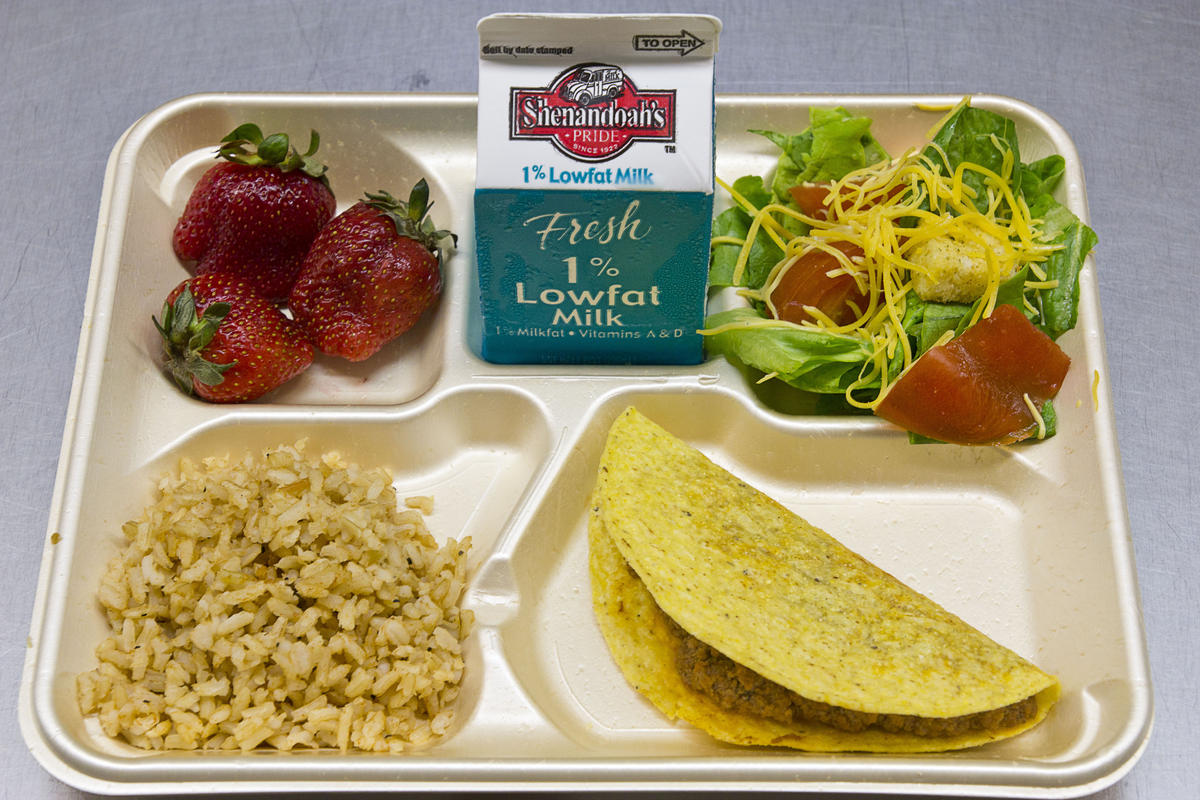
1%milk? Ick.
I spent some time in India... finding food and drink there that won't kill you is lots of funMy tap comes from a hole I drilled 1000 feet down here in the austin hill country perfect water once I drip it through the ceramic filters in my berkey system.Perrier? Dude, San Pellegrino is the way to go. But those wedges sound good.. ok now I have to cook.Ok. Go ahead and call your kid's school and tell them you want your kids served peanut butter and jelly sandwiches every day. They'll tell you the same thing I did:
Good. Make them or STFU.
And be ready to be liable for their fellow students deaths from peanut allergies because your kids traded away that nasty shit for something else.
I packed lunches this morning, it was an " I don't wanna eat cafeteria food" day
Almond butter and honey on artisan bread with rosemary and sea salt potato wedges,with a wedge of chocolate pie and a bottled water (Perrier of course)
******* poor people.
LOL does it matter what brand I buy, I just refill the bottle out of the tap anyway LOL
My wife is all the time "just throw the bottles away, you know we can afford more" as if that is the point.
My tap is well water now but it wasn't always so. I've been stationed some places where you drank bottled water or no water.

Gonna be a Capt'n Morgan night I think.Perrier? Dude, San Pellegrino is the way to go. But those wedges sound good.. ok now I have to cook.Ok. Go ahead and call your kid's school and tell them you want your kids served peanut butter and jelly sandwiches every day. They'll tell you the same thing I did:
Good. Make them or STFU.
And be ready to be liable for their fellow students deaths from peanut allergies because your kids traded away that nasty shit for something else.
I packed lunches this morning, it was an " I don't wanna eat cafeteria food" day
Almond butter and honey on artisan bread with rosemary and sea salt potato wedges,with a wedge of chocolate pie and a bottled water (Perrier of course)
******* poor people.
Pshaw. You two can fight over which hoity-toity sparkling water is better while I sip on my Springbank scotch. Cheers! lol
bleh another scotch drinker
And whiskey, and rum, and gin, and vodka...
SmarterThanTheAverageBear
Gold Member
- Aug 22, 2014
- 29,410
- 4,281
- 280
- Banned
- #296
When my son was in high school he'd eat about 4-6 of those plates for lunch. Starting defensive back.What's so bad about this?
1%milk? Ick.
I was the starting free safety for my high school team.
Hard to believe I know, but I loved contact.

Luddly Neddite
Diamond Member
- Sep 14, 2011
- 63,975
- 9,999
- 2,040
Perrier? Dude, San Pellegrino is the way to go. But those wedges sound good.. ok now I have to cook.Ok. Go ahead and call your kid's school and tell them you want your kids served peanut butter and jelly sandwiches every day. They'll tell you the same thing I did:
Good. Make them or STFU.
And be ready to be liable for their fellow students deaths from peanut allergies because your kids traded away that nasty shit for something else.
I packed lunches this morning, it was an " I don't wanna eat cafeteria food" day
Almond butter and honey on artisan bread with rosemary and sea salt potato wedges,with a wedge of chocolate pie and a bottled water (Perrier of course)
******* poor people.
Pshaw. You two can fight over which hoity-toity sparkling water is better while I sip on my Springbank scotch. Cheers! lol
bleh another scotch drinker
And whiskey, and rum, and gin, and vodka...
That'll cost you extra and the RWs don't want to pay.
They want it all, they want it now and they want the blue states to pay for it. Just lie always.

NYcarbineer
Diamond Member
[
This menu is SOOOOOOOOOOOO disgusting and pathetic. **** YOU MOOOCHELLE
Food Services Primary Elementary Menu
.
The full price for those lunches is $1.70
SmarterThanTheAverageBear
Gold Member
- Aug 22, 2014
- 29,410
- 4,281
- 280
- Banned
- #299
[
This menu is SOOOOOOOOOOOO disgusting and pathetic. **** YOU MOOOCHELLE
Food Services Primary Elementary Menu
.
The full price for those lunches is $1.70
And?

rightwinger
Award Winning USMB Paid Messageboard Poster
- Aug 4, 2009
- 310,473
- 269,957
- 3,615
Then why don't you?Business also profits from an educated workforceI guess that depends on where you live. Property is taxed here yes, but it's not like business property isn't owned by people. Thus what is being taxed is property. Yes, it's not right that property taxes are used to fund schools.No that's not true. Parents are forced to fund public schools. Thus only parents that can afford to fund public and private schools have the choice. Most parents don't have the luxury to throw the money away that they are forced to pay for public schools.
Further, parents can and most certainly do demand schools accommodate their child. Not sure what schools your kids went to but our schools are pretty accommodating to the parents.
Not true,very few - if any - parents actually fund their children's public education. Most of that is paid for with property taxed, the bulk of which are paid for by businesses.
Right, but I mean a businesses property is worth FAR more than any personal property tax. I know very few people who pay enough in property tax to fund their child's education. But a large business on the other hand probably pays enough to fund the educaton of SEVERAL children.
I own a restaurant.
I could hire 10 sixteen year olds who never had a day of public education in their lives., and with one year have them trained for various jobs in my business for FAR less than what I pay in combined taxes to "educate" those kids
Will you teach them to read? Do math?
Similar threads

- Replies
- 311
- Views
- 15K


- Replies
- 10
- Views
- 1K


- Replies
- 24
- Views
- 3K

- Replies
- 599
- Views
- 19K
N

- Replies
- 5
- Views
- 2K
S
New Topics
-
-
 U.S. DEA threat assessment points to fentanyl ‘super laboratories’ in Canada
- Started by shockedcanadian
- Replies: 3
-
3 Canadians isolating in Ontario, Quebec after hantavirus ship outbreak
- Started by shockedcanadian
- Replies: 0
-
 Chicago judge releases cop killer because he 'may be on the path to making better decisions'
- Started by excalibur
- Replies: 2


