The Lie of 9-11 and it's after effects

The Ti-6Al-4V alloy is most commonly used in the manufacture of Jet Air Liner frames, & engines. It's "Melting point" is 3,011 degrees Fahrenheit, which can only be obtained by specialized equipment.


The "Open air" burning temperature of Jet Fuel is 1890 degrees Fahrenheit.

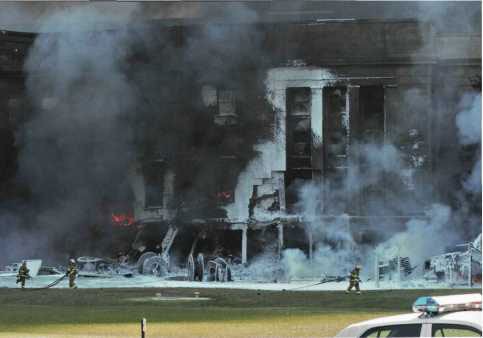
The temperature, of the Pentagon Fires, never had the capability to melt the Air Liner's Engines, frame, nor any other component made of the "Ti-6Al-4V alloy".

And yet,....... The American Public was told that the Air Liner Frame, & Engines burned up in the fire.

I have to ask,.... Where are the pictures of the alleged "Melted down Engines, Frames, etc."?

===========================================================

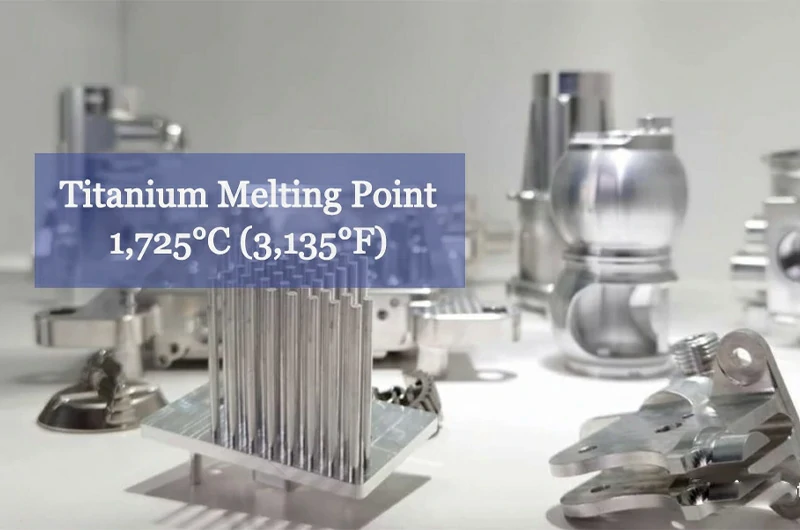
"Titanium Melting Point Guide​

Updated : Jul. 9, 2025

The titanium melting point is a key factor in aerospace, medical, and industrial applications.
Many buyers and engineers focus on its strength and corrosion resistance—but often overlook how a high melting point affects casting, welding, and processing costs.
Understanding titanium's melting point helps you choose the right material, optimize production, and reduce risks.

What is the melting point of titanium?​

The titanium melting point is around 1,725°C (3,135°F). This exceptionally high temperature reflects its strong metallic bonds and explains why titanium remains stable under extreme heat.
Understanding how different titanium grades melt helps engineers and buyers make better material choices.
Here's a quick reference table of titanium and alloy melting points:
MaterialMelting Point (°C)Melting Point (°F)Notes
Pure Titanium (Grade 1–4)1,6683,034Grades 1–4: higher strength comes with lower ductility
Ti-6Al-4V (Grade 5)1,6553,011Most used alloy; great strength and weldability
Ti-6Al-4V ELI (Grade 23)1,6553,011Preferred for medical implants
Ti-3Al-2.5V (Grade 9)1,6503,002Easy to form; ideal for titanium tubing
Ti-5Al-2.5Sn1,6452,993Alpha alloy with good high-temp stability
Ti-10V-2Fe-3Al1,6753,047Beta alloy; high strength and good hardenability
Ti-6Al-2Sn-4Zr-2Mo (Ti 6242)1,6503,002Alpha-beta alloy; excellent high-temp performance
Ti-6Al-2Sn-4Zr-6Mo (Ti 6246)1,6603,020Stronger beta stability; used in high-stress parts
Ti-15V-3Cr-3Sn-3Al1,6603,020Superplastic alloy; good for forming complex shapes
Ti-8Al-1Mo-1V1,6503,002Great resistance to high-temp creep
melting point of titanium

Why is the titanium melting point so high?​

Titanium melts at 1,725°C (3,135°F)—much higher than most common metals. Several factors contribute to this:

Strong metallic bonding​

Titanium atoms form tight metallic bonds by sharing electrons in a "sea of electrons.” These bonds require high temperatures to break.
Dense crystal structure
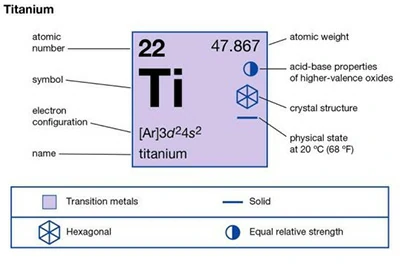
Titanium has a hexagonal close-packed (hcp) structure at room temperature, shifting to body-centered cubic (bcc) at high heat. Both are tightly packed, boosting stability and melting point.

High lattice energy​

Strong atomic attraction creates a stable lattice. More energy is needed to overcome this and melt the metal.
Unique electron configuration
Titanium's d-electrons strengthen atomic bonding, making the structure harder to break apart.
Alloying effects
Adding elements can stabilize the atomic structure, sometimes raising the melting point further.
While titanium itself melts at a high temperature, real-world applications may show variation depending on alloying and processing conditions.
High lattice energy

High lattice energy

Does the titanium melting point change?​

Standard titanium melts at about 1,668 °C (3,034 °F), yet this number isn't fixed in the field.
Several factors can shift the titanium melting point:

Purity​

  • Higher purity keeps the melting point close to the textbook figure.
  • Impurities such as oxygen, nitrogen, or carbon weaken metallic bonds and lower the melting point.
  • Industrial titanium often carries trace impurities, so its melting point sits slightly lower.

Alloying elements​

  • Titanium is routinely alloyed; each added metal nudges the melting range.
  • Ti-6Al-4V, for example, melts around 1,655 °C, just below pure titanium.
  • Aluminum, vanadium, tin, and molybdenum all influence where melting starts.

Microstructure and phase composition​

  • Titanium switches between dense α-phase (hcp) and high-temperature β-phase (bcc).
  • α is stable at lower heat; β forms at high heat and can be stabilized with vanadium.
  • These phase shifts dictate how—and when—an alloy begins to melt.
Microstructure and phase composition

Pressure​

Under high pressure, the titanium melting point increases. The greater the pressure, the harder it is for atoms to shift from solid to liquid—making the metal more resistant to melting.

Heating atmosphere​

The surrounding environment during heating also matters.
In oxygen- or nitrogen-rich conditions, titanium can form surface layers of titanium oxide or nitride.
These compounds alter how titanium melts and impact thermal behavior.

How to raise titanium's melting point​

The titanium melting point can be raised by improving purity, refining crystal structure, adding high-melting-point alloying elements, and using advanced melting techniques—enhancing its stability and performance in high-temperature environments.

Titanium's high melting point empowers high-temperature applications​

With a melting point of 1,668°C (3,034°F), titanium outperforms stainless steel, aluminum, and many common metals.

Combined with its high strength, low density, corrosion resistance, and biocompatibility, titanium excels in extreme and high-heat environments.

Aerospace​

Titanium retains its strength and structural integrity at high temperatures, making it ideal for critical aerospace components.
  • Turbine blades and engine casings
  • Landing gear and structural frames
  • Heat shields and fasteners"


"Processing challenges of titanium's high melting point


Melting is energy-intensive​


Titanium must be melted using high-temperature systems like vacuum arc remelting (VAR).


Maintaining such heat demands massive energy and raises operating costs."


"FAQ: titanium melting point and high-temperature questions

What can melt titanium?​


Titanium melts at 1,725°C (3,135°F). Melting typically requires high-temperature heat sources like electric arc furnaces, induction furnaces, or plasma arc welding systems."


"Can titanium be melted and reused?

Yes. Titanium scrap can be remelted and recycled using arc or induction melting, especially in high-value industries like aerospace and medical."


"Would titanium melt in lava?​


No. Lava typically reaches 1,100–1,200°C, well below titanium's melting point of 1,660–1,725°C. Titanium remains solid in molten lava.

Titanium Melting Point Guide | Chalco Titanium

=====================================================


Temperature of Burning Jet Fuel [The Thermodynamics Secret]​


April 10, 2026 · 9 minutes read


Jet fuel typically burns at temperatures ranging from 800°F to 1500°F (427°C to 815°C) in open-air environments, but can reach nearly 3,500°F under ideal stoichiometric conditions within a jet engine. This massive temperature delta is governed by oxygen availability and atmospheric pressure. Understanding these thermal boundaries is the first step in mastering aviation thermodynamics.
Diagram of jet fuel combustion temperatures in a turbine engine

Image taken from the YouTube channel Animagraffs , from the video titled How Jet Engines Work .

"Open-Air vs. Pressurized Combustion​

Key Takeaway: Temperature is a variable of environment rather than a fixed property of the fuel itself.
Jet fuel does not possess a singular, static burning temperature. The thermal output of Jet A-1 is a direct function of its surrounding thermodynamics and the available oxygen supply.

In a stagnant environment at Atmospheric pressure, jet fuel behaves like a standard hydrocarbon fire. Without mechanical intervention, the fuel cannot achieve the rapid oxidation required for high-intensity heat.

According to the NIST Fire Research Division, unconfined fuel fires are characterized by massive heat loss to the environment. This dissipation prevents the flame from ever approaching its theoretical maximum."


"Hydrocarbon Chains in Jet A-1​


The length and structure of the carbon chains within the fuel dictate its burning characteristics. Longer chains provide higher energy density but require more oxygen for complete stoichiometric combustion.


In a high-pressure turbine, these chains undergo rapid thermal decomposition. This process releases intense heat that far exceeds the temperatures observed in open-air spills or atmospheric smoldering."


The Ti-6Al-4V alloy is most commonly used in the manufacture of Jet Air Liner frames, & engines. It's "Melting point" is 3,011 degrees Fahrenheit, which can only be obtained by specialized equipment.


The "Open air" burning temperature of Jet Fuel is 1890 degrees Fahrenheit.

The temperature, of the Pentagon Fires, never had the capability to melt the Air Liner's Engines, frame, nor any other component made of the "Ti-6Al-4V alloy".

And yet,....... The American Public was told that the Air Liner Frame, & Engines burned up in the fire.

I have to ask,.... Where are the pictures of the alleged "Melted down Engines, Frames, etc."?

===========================================================

"Titanium Melting Point Guide​

Updated : Jul. 9, 2025

The titanium melting point is a key factor in aerospace, medical, and industrial applications.
Many buyers and engineers focus on its strength and corrosion resistance—but often overlook how a high melting point affects casting, welding, and processing costs.
Understanding titanium's melting point helps you choose the right material, optimize production, and reduce risks.

What is the melting point of titanium?​

The titanium melting point is around 1,725°C (3,135°F). This exceptionally high temperature reflects its strong metallic bonds and explains why titanium remains stable under extreme heat.
Understanding how different titanium grades melt helps engineers and buyers make better material choices.
Here's a quick reference table of titanium and alloy melting points:
MaterialMelting Point (°C)Melting Point (°F)Notes
Pure Titanium (Grade 1–4)1,6683,034Grades 1–4: higher strength comes with lower ductility
Ti-6Al-4V (Grade 5)1,6553,011Most used alloy; great strength and weldability
Ti-6Al-4V ELI (Grade 23)1,6553,011Preferred for medical implants
Ti-3Al-2.5V (Grade 9)1,6503,002Easy to form; ideal for titanium tubing
Ti-5Al-2.5Sn1,6452,993Alpha alloy with good high-temp stability
Ti-10V-2Fe-3Al1,6753,047Beta alloy; high strength and good hardenability
Ti-6Al-2Sn-4Zr-2Mo (Ti 6242)1,6503,002Alpha-beta alloy; excellent high-temp performance
Ti-6Al-2Sn-4Zr-6Mo (Ti 6246)1,6603,020Stronger beta stability; used in high-stress parts
Ti-15V-3Cr-3Sn-3Al1,6603,020Superplastic alloy; good for forming complex shapes
Ti-8Al-1Mo-1V1,6503,002Great resistance to high-temp creep
melting point of titanium

Why is the titanium melting point so high?​

Titanium melts at 1,725°C (3,135°F)—much higher than most common metals. Several factors contribute to this:

Strong metallic bonding​

Titanium atoms form tight metallic bonds by sharing electrons in a "sea of electrons.” These bonds require high temperatures to break.
Dense crystal structure
Titanium has a hexagonal close-packed (hcp) structure at room temperature, shifting to body-centered cubic (bcc) at high heat. Both are tightly packed, boosting stability and melting point.

High lattice energy​

Strong atomic attraction creates a stable lattice. More energy is needed to overcome this and melt the metal.
Unique electron configuration
Titanium's d-electrons strengthen atomic bonding, making the structure harder to break apart.
Alloying effects
Adding elements can stabilize the atomic structure, sometimes raising the melting point further.
While titanium itself melts at a high temperature, real-world applications may show variation depending on alloying and processing conditions.
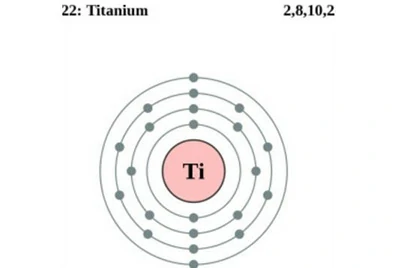
High lattice energy

High lattice energy

Does the titanium melting point change?​

Standard titanium melts at about 1,668 °C (3,034 °F), yet this number isn't fixed in the field.
Several factors can shift the titanium melting point:

Purity​

  • Higher purity keeps the melting point close to the textbook figure.
  • Impurities such as oxygen, nitrogen, or carbon weaken metallic bonds and lower the melting point.
  • Industrial titanium often carries trace impurities, so its melting point sits slightly lower.

Alloying elements​

  • Titanium is routinely alloyed; each added metal nudges the melting range.
  • Ti-6Al-4V, for example, melts around 1,655 °C, just below pure titanium.
  • Aluminum, vanadium, tin, and molybdenum all influence where melting starts.

Microstructure and phase composition​

  • Titanium switches between dense α-phase (hcp) and high-temperature β-phase (bcc).
  • α is stable at lower heat; β forms at high heat and can be stabilized with vanadium.
  • These phase shifts dictate how—and when—an alloy begins to melt.
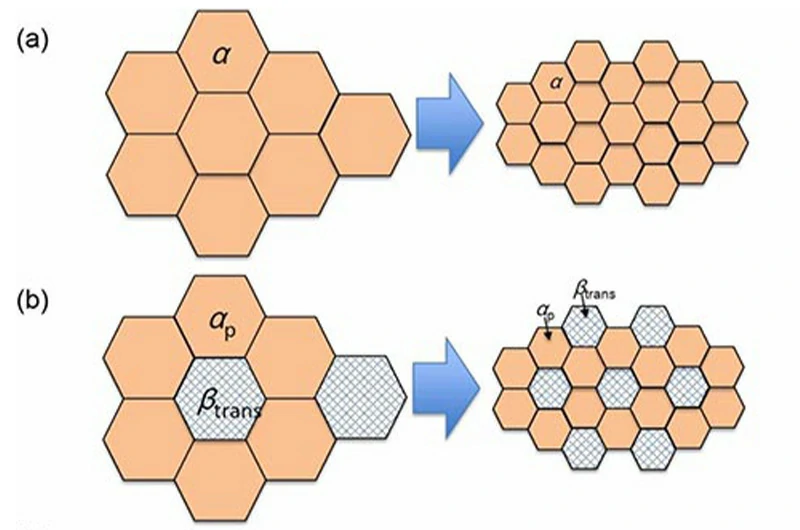
Microstructure and phase composition

Pressure​

Under high pressure, the titanium melting point increases. The greater the pressure, the harder it is for atoms to shift from solid to liquid—making the metal more resistant to melting.

Heating atmosphere​

The surrounding environment during heating also matters.
In oxygen- or nitrogen-rich conditions, titanium can form surface layers of titanium oxide or nitride.
These compounds alter how titanium melts and impact thermal behavior.

How to raise titanium's melting point​

The titanium melting point can be raised by improving purity, refining crystal structure, adding high-melting-point alloying elements, and using advanced melting techniques—enhancing its stability and performance in high-temperature environments.

Titanium's high melting point empowers high-temperature applications​

With a melting point of 1,668°C (3,034°F), titanium outperforms stainless steel, aluminum, and many common metals.

Combined with its high strength, low density, corrosion resistance, and biocompatibility, titanium excels in extreme and high-heat environments.

Aerospace​

Titanium retains its strength and structural integrity at high temperatures, making it ideal for critical aerospace components.
  • Turbine blades and engine casings
  • Landing gear and structural frames
  • Heat shields and fasteners"


"Processing challenges of titanium's high melting point


Melting is energy-intensive​


Titanium must be melted using high-temperature systems like vacuum arc remelting (VAR).


Maintaining such heat demands massive energy and raises operating costs."


"FAQ: titanium melting point and high-temperature questions

What can melt titanium?​


Titanium melts at 1,725°C (3,135°F). Melting typically requires high-temperature heat sources like electric arc furnaces, induction furnaces, or plasma arc welding systems."


"Can titanium be melted and reused?

Yes. Titanium scrap can be remelted and recycled using arc or induction melting, especially in high-value industries like aerospace and medical."


"Would titanium melt in lava?​


No. Lava typically reaches 1,100–1,200°C, well below titanium's melting point of 1,660–1,725°C. Titanium remains solid in molten lava.

Titanium Melting Point Guide | Chalco Titanium

=====================================================


Temperature of Burning Jet Fuel [The Thermodynamics Secret]​


April 10, 2026 · 9 minutes read


Jet fuel typically burns at temperatures ranging from 800°F to 1500°F (427°C to 815°C) in open-air environments, but can reach nearly 3,500°F under ideal stoichiometric conditions within a jet engine. This massive temperature delta is governed by oxygen availability and atmospheric pressure. Understanding these thermal boundaries is the first step in mastering aviation thermodynamics.
Diagram of jet fuel combustion temperatures in a turbine engine

Image taken from the YouTube channel Animagraffs , from the video titled How Jet Engines Work .

"Open-Air vs. Pressurized Combustion​


Jet fuel does not possess a singular, static burning temperature. The thermal output of Jet A-1 is a direct function of its surrounding thermodynamics and the available oxygen supply.

In a stagnant environment at Atmospheric pressure, jet fuel behaves like a standard hydrocarbon fire. Without mechanical intervention, the fuel cannot achieve the rapid oxidation required for high-intensity heat.

According to the NIST Fire Research Division, unconfined fuel fires are characterized by massive heat loss to the environment. This dissipation prevents the flame from ever approaching its theoretical maximum."


"Hydrocarbon Chains in Jet A-1​


The length and structure of the carbon chains within the fuel dictate its burning characteristics. Longer chains provide higher energy density but require more oxygen for complete stoichiometric combustion.


In a high-pressure turbine, these chains undergo rapid thermal decomposition. This process releases intense heat that far exceeds the temperatures observed in open-air spills or atmospheric smoldering."


What does any of that have to do with flight #77 mostly disintegrating from being flown into reinforced concrete at over 500 MPH?

Have you explained yet what caused about 140 feet of damage to the first floor of the exterior of the Pentagon?

1438613556905.jpg


Or have you explained what caused this wide path of flames?

01748r.jpg


Have you explained how a lamppost speared through a taxi?

Taxi-damaged-by-felled-and-severed-light-pole.webp


Well, if you can't explain it, this gentleman can.

 
Last edited:
What does any of that have to do with flight #77 mostly disintegrating from being flown into reinforced concrete at over 500 MPH?

Have you explained yet what caused about 140 feet of damage to the first floor of the exterior of the Pentagon?

1438613556905.jpg


Or have you explained what caused this wide path of flames?

01748r.jpg


Have you explained how a lamppost speared through a taxi?

View attachment 1269456

Well, if you can't explain it, this gentleman can.


"What does any of that have to do with flight #77 mostly disintegrating from being flown into reinforced concrete at over 500 MPH?"

What caused the Engines, Air Frame, and any other Titanium Alloyed Component to, as You say, "Disintegrate" Political?

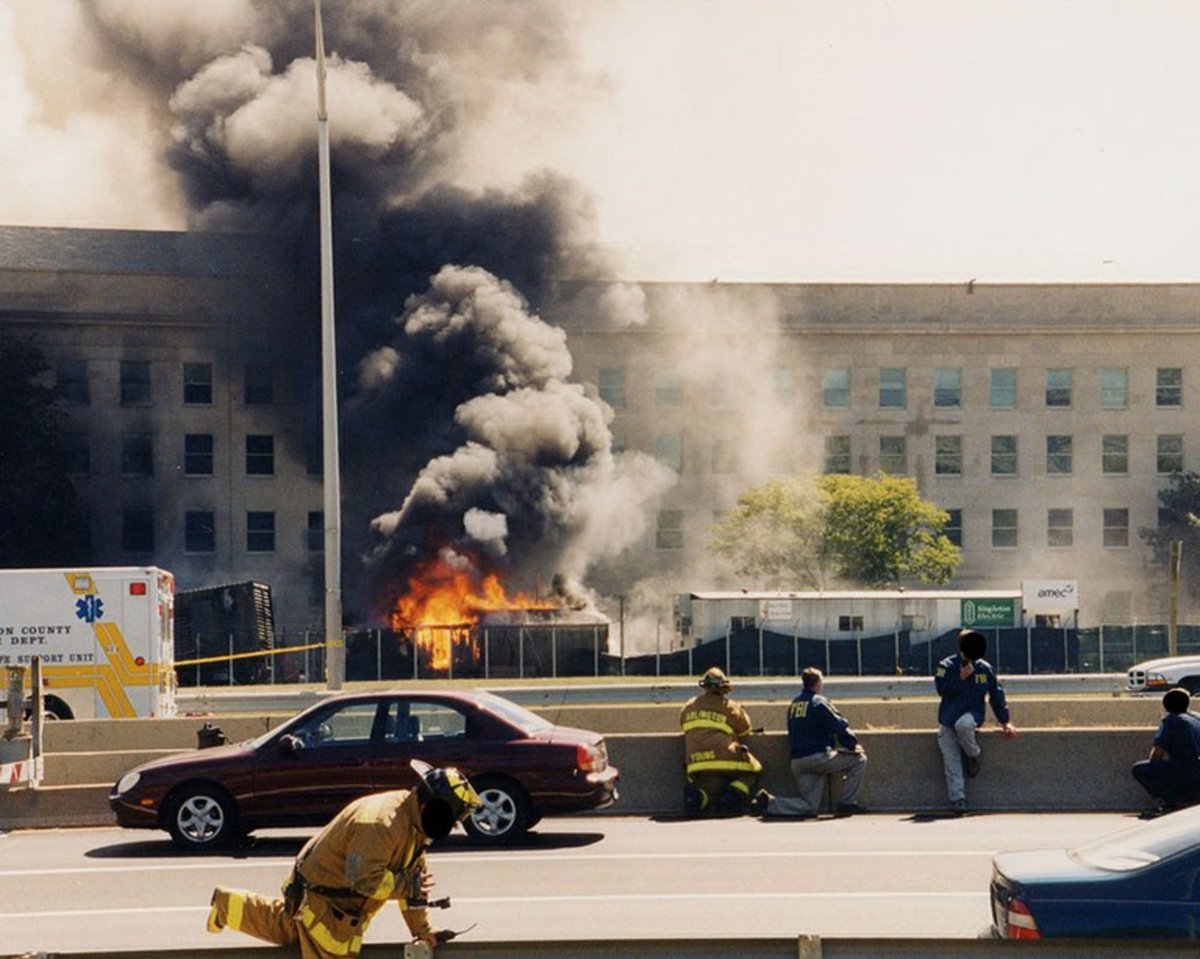
And,... Do You see the clouds of "Black Smoke" pouring out of the Pentagon? That's an obvious indicator of Poor Combustion, which means that the Fire never reached the high temps required to "Melt the Titanium Alloyed materials.

Hey! Why we are at it,....... How did the BBC publicly present the collapse of WTC 7 before it happened?
 
"What does any of that have to do with flight #77 mostly disintegrating from being flown into reinforced concrete at over 500 MPH?"

What caused the Engines, Air Frame, and any other Titanium Alloyed Component to, as You say, "Disintegrate" Political?

And,... Do You see the clouds of "Black Smoke" pouring out of the Pentagon? That's an obvious indicator of Poor Combustion, which means that the Fire never reached the high temps required to "Melt the Titanium Alloyed materials.

Hey! Why we are at it,....... How did the BBC publicly present the collapse of WTC 7 before it happened?

the Fire never reached the high temps required to "Melt the Titanium Alloyed materials.

Who claimed the fire in the Pentagon was melting titanium? Link?

How did the BBC publicly present the collapse of WTC 7 before it happened?

Because the structural damage from the North Tower debris and the long burning fire was causing the
building to bulge in the southwest corner.

They pulled everyone out and warned it was only a matter of time before it collapsed.

Now, how did those light poles get knocked down again?
 
I found 3 images. What about them?

The wheel you showed is not even close in size to the actual wheel of a Boeing.
 
"What does any of that have to do with flight #77 mostly disintegrating from being flown into reinforced concrete at over 500 MPH?"

What caused the Engines, Air Frame, and any other Titanium Alloyed Component to, as You say, "Disintegrate" Political?

And,... Do You see the clouds of "Black Smoke" pouring out of the Pentagon? That's an obvious indicator of Poor Combustion, which means that the Fire never reached the high temps required to "Melt the Titanium Alloyed materials.

Hey! Why we are at it,....... How did the BBC publicly present the collapse of WTC 7 before it happened?
Engine parts were found. You ignore them.

Still, have you explained yet what caused about 140 feet of damage to the first floor of the exterior of the Pentagon?

No, you haven't.

Have you explained what caused this wide path of flames?

No, you haven't.

Have you explained how a lamppost speared through a taxi?

No, you haven't.
 
Engine parts were found. You ignore them.

Still, have you explained yet what caused about 140 feet of damage to the first floor of the exterior of the Pentagon?

No, you haven't.

Have you explained what caused this wide path of flames?

No, you haven't.

Have you explained how a lamppost speared through a taxi?

No, you haven't.
"Engine Parts"? ...... Not "Engines"? Specifically what is the Source of this Data, and include links, etc.?

"140 feet of damage",....... Where are You getting this from? The Office of Naval Intelligence was destroyed, & yet to the left & right, & above, The Office of Naval Intelligence, the "bulk of the damage", left many windows intact,............. Meaning, there was no impact indicated of a Jet Air Liner's wings hitting those windows!

"Have you explained what caused this wide path of flames?" :auiqs.jpg: :auiqs.jpg: :auiqs.jpg: Nope, that has not been part of this discussion.

You and a few others have this "Obsessive Fixation" on those poles,..... Is this a Doctor Phil Moment?
 
"Engine Parts"? ...... Not "Engines"? Specifically what is the Source of this Data, and include links, etc.?

"140 feet of damage",....... Where are You getting this from? The Office of Naval Intelligence was destroyed, & yet to the left & right, & above, The Office of Naval Intelligence, the "bulk of the damage", left many windows intact,............. Meaning, there was no impact indicated of a Jet Air Liner's wings hitting those windows!

"Have you explained what caused this wide path of flames?" :auiqs.jpg: :auiqs.jpg: :auiqs.jpg: Nope, that has not been part of this discussion.

You and a few others have this "Obsessive Fixation" on those poles,..... Is this a Doctor Phil Moment?

Doctor Phil said you're a retard.
 
From Post#26

All Four Floors are intact, with the majority of windows intact!


"Engine Parts"? ...... Not "Engines"? Specifically what is the Source of this Data, and include links, etc.?

"140 feet of damage",....... Where are You getting this from? The Office of Naval Intelligence was destroyed, & yet to the left & right, & above, The Office of Naval Intelligence, the "bulk of the damage", left many windows intact,............. Meaning, there was no impact indicated of a Jet Air Liner's wings hitting those windows!
What windows do you see intact on the first floor where the plane went in?

1438613556905.jpg


"Have you explained what caused this wide path of flames?" :auiqs.jpg: :auiqs.jpg: :auiqs.jpg: Nope, that has not been part of this discussion.
Actually, I introduced it into this discussion. Like the lampposts, you don't want to talk about it because you can't explain it.

You and a few others have this "Obsessive Fixation" on those poles,..... Is this a Doctor Phil Moment?
Asking you to explain how 2 rows of lampposts were taken out, if not by a plane with sufficient wing span, is an "obsessive fixation?" How so when the only reason you're being asked about it repeatedly by multiple posters is on you for flat out refusing to address the elephant in the room. And I'm fully confident when I say everyone here, including you, knows the reason you can't address it is because the only possible answer is it had to be a plane with a wide enough wingspan capable of both wings reaching out far enough to take them out. And that sole possibility completely destroys your denials.

images
 
1781593502524.webp


A B52 has 8 jet engines and is larger than a 757.

Strange how many of the same characteristics are mimicked in the crash above and AA77....thus proving what the moronic truthers think about how there should be engines, wings, bodies, etc... all laying around is pure fiction.
 
15th post
What windows do you see intact on the first floor where the plane went in?

1438613556905.jpg


Actually, I introduced it into this discussion. Like the lampposts, you don't want to talk about it because you can't explain it.


Asking you to explain how 2 rows of lampposts were taken out, if not by a plane with sufficient wing span, is an "obsessive fixation?" How so when the only reason you're being asked about it repeatedly by multiple posters is on you for flat out refusing to address the elephant in the room. And I'm fully confident when I say everyone here, including you, knows the reason you can't address it is because the only possible answer is it had to be a plane with a wide enough wingspan capable of both wings reaching out far enough to take them out. And that sole possibility completely destroys your denials.

images
So, You ignore Posts# 1289 -1292 that show there was no damage from a Jet Air Liner's wings, engines, nor Tail Fin.

You Obviously can not handle The Truth, or You are Zealous for supporting the Treasonous Lie.


"And I'm fully confident when I say everyone here, including you, knows the reason you can't address it is because the only possible answer is it had to be a plane with a wide enough wingspan capable of both wings reaching out far enough to take them out." :auiqs.jpg::auiqs.jpg::auiqs.jpg::auiqs.jpg:
 
So, You ignore Posts# 1289 -1292 that show there was no damage from a Jet Air Liner's wings, engines, nor Tail Fin.

You Obviously can not handle The Truth, or You are Zealous for supporting the Treasonous Lie.


"And I'm fully confident when I say everyone here, including you, knows the reason you can't address it is because the only possible answer is it had to be a plane with a wide enough wingspan capable of both wings reaching out far enough to take them out." :auiqs.jpg::auiqs.jpg::auiqs.jpg::auiqs.jpg:
And yet the fact remains....you can't explain the physical evidence....so it's you who can't handle the truth little boy.
 
So, You ignore Posts# 1289 -1292 that show there was no damage from a Jet Air Liner's wings, engines, nor Tail Fin.

You Obviously can not handle The Truth, or You are Zealous for supporting the Treasonous Lie.


"And I'm fully confident when I say everyone here, including you, knows the reason you can't address it is because the only possible answer is it had to be a plane with a wide enough wingspan capable of both wings reaching out far enough to take them out." :auiqs.jpg::auiqs.jpg::auiqs.jpg::auiqs.jpg:
That's pretty deceptive of you. You post some images of the Pentagon, but in each one, the first floor is obscured so you don't see the magnitude of the damage, which was clearly caused by a plane, which in turn explains the lampposts you won't touch with a 10 foot light poles.

1438613556905.jpg
 
Last edited:
Back
Top Bottom