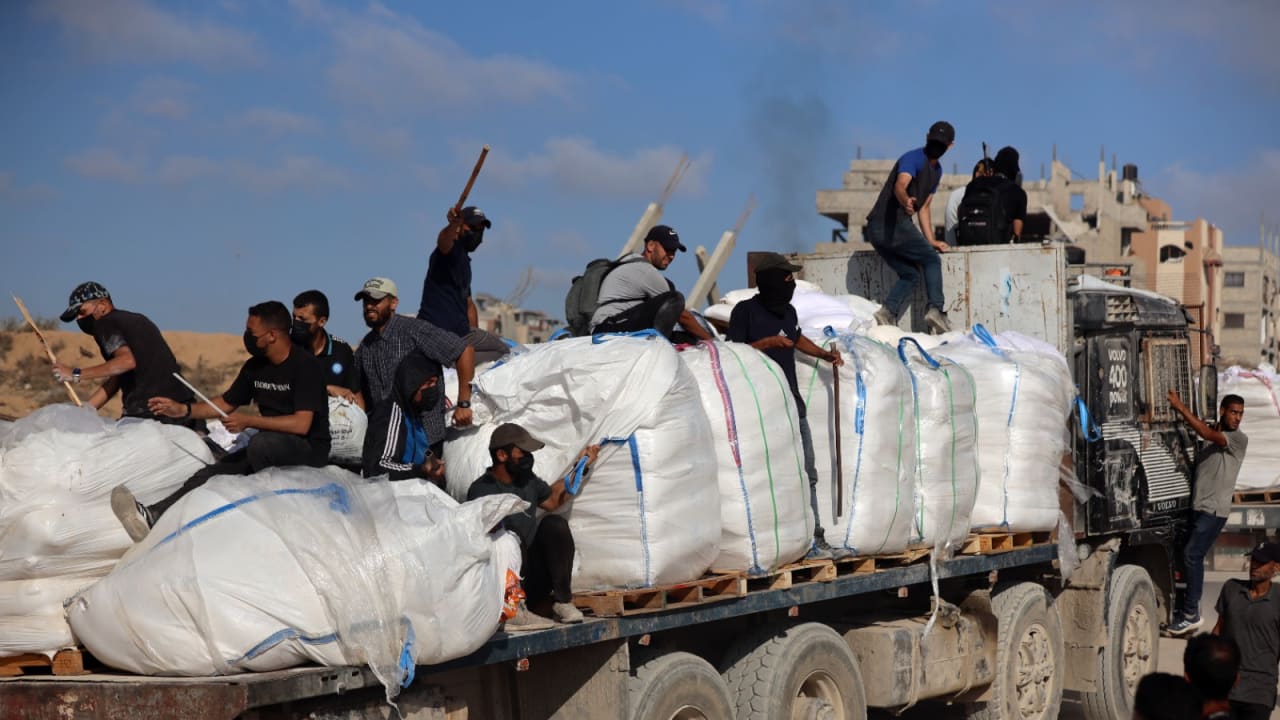
No, for you to blame the IDF for the danger says nothing about the situation, but it says a lot about you. While travelling through active war zones does present the danger of being hit by one side or the other, the real danger drivers face is being looted by Hamas or other armed gangs or by hungry Palestinian mobs that swarm the trucks and steal the food.
"Central to the international pressure on Israel for a ceasefire with Hamas are
claims of widespread starvation and even accusations that Israel is deliberately using hunger as a weapon.
But the Press Service of Israel’s closer examination of the humanitarian aid pipeline found that a combination of United Nations policies,
Hamas looting, and black market profiteering prevents much aid from reaching Gaza civilians and inflates the prices of items that do reach market shelves.
Most damningly, according to the UN’s own numbers, a staggering 85% of the aid entering the Gaza Strip by truck since May 19 has been stolen."
"Recent data suggests that Israel continues to facilitate large-scale humanitarian aid to the Gaza Strip — far exceeding pre-war levels. According to a July 2025 report by the Begin-Sadat Center for Strategic Studies, claims of deliberate starvation are not supported by facts on the ground.
Before the war, around 150–300 trucks entered Gaza daily, though only a fraction carried food. Data from the UN Office for the Coordination of Humanitarian Affairs (OCHA) shows that in 2022, an average of 292 trucks crossed daily, with just 73 of them carrying food — around 25%. Despite this, there were no signs of famine. Public health indicators such as infant mortality and life expectancy matched those in Jordan and Judea and Samaria.
The report also refuted flawed assumptions about local food production. While
Amnesty International claimed that local agriculture provided 44% of Gaza’s food needs, the report argued that this number was based on financial expenditure, not caloric intake. In reality, local production accounted for no more than 12% of caloric supply. The majority of calories came from imported grains, oils, and food aid — largely delivered by the UN Relief and Works Agency (UNRWA) and the World Food Programme.
“There is some hunger in Gaza, and it exists only in places Hamas is pursuing it, not in other areas,” said Professor Eytan Gilboa.

www.jpost.com
So despite demands for 600 trucks a day, 90% of the food Gazans ate before the war was delivered by 73 trucks a day, and there are already more than that number of trucks entering Gaza today, enough aid to stave off starvation, but according to the UN, only 15% of that aid reaches the warehouses and can be distributed to the people. By looting the trucks, the Palestinians are creating pockets of starvation themselves.