EMH
Diamond Member
- Apr 5, 2021
- 32,745
- 19,201
- 2,788
Follow along with the video below to see how to install our site as a web app on your home screen.
Note: This feature may not be available in some browsers.

So, you are furiously backing off the claim that it is 95k tons per year.
How much leaks out?
20 molecules?
You have evidence that 95000 tons doesn't escape each year?
You’d be much less of a moron if you relied more on google than social media.How much gas is between Earth and Moon, a teaspoon?
You’d be much less of a moron if you relied more on google than social media.
Hydrogen that escapes Earth's atmosphere is carried away by the solar wind into the solar system and beyond, eventually reaching the heliopause, the outer edge of our sun's influence. Once it is ionized by solar radiation and the interaction with the solar wind, it travels indefinitely. The process can involve particles being guided by Earth's magnetic field into the magnetotail, where they are then picked up by the solar wind and carried off into space.
How hydrogen escapes:
Where it goes:
- Thermal Escape:
Hydrogen molecules, being very light, can gain enough kinetic energy from the sun's heat to reach escape velocity and escape Earth's gravity.
- Photolysis:
In the upper atmosphere, water molecules can be broken apart by sunlight (photolysis) into hydrogen and oxygen. The hydrogen atoms then have a chance to escape.
Key Points:
- 1. Ionization and Solar Wind:
Once in space, escaped hydrogen atoms are ionized by solar radiation and become part of the solar wind.
- 2. Magnetotail:
Earth's magnetic field can direct some ionized particles, including those from the atmosphere, into the magnetotail, a long tail on the night side of the planet.
- 3. Swept into Space:
From the magnetotail, these particles can be picked up by the solar wind and swept away from the Earth.
- 4. Outward Journey:
The solar wind continues to "blow" these particles along until they reach the heliopause, the outermost boundary of the Sun's heliosphere.
- 5. Indefinite Travel:
Beyond the heliopause, the particles' momentum carries them out into interstellar space, never to return to Earth.
- Hydrogen is the lightest element, making it the most prone to thermal escape.
- The process is gradual, with Earth losing a significant amount of hydrogen each day, but the loss is not a concern for our planet's future.
- This escaping hydrogen contributes to the vast amount of matter found in the solar system
- Thermal Escape:
Hydrogen molecules, being very light, can gain enough kinetic energy from the sun's heat to reach escape velocity and escape Earth's gravity.
- Photolysis:
In the upper atmosphere, water molecules can be broken apart by sunlight (photolysis) into hydrogen and oxygen. The hydrogen atoms then have a chance to escape.
Maybe try using google.Translation... the "95k tons of gas per year" number is not being defended....
Indeed...
There is very little water in the upper atmosphere. I seriously doubt that just exposure to sun can cause hydrogen to escape, that is just speculative BS. Breaking any molecule introduces other forces, but "can" and "have a chance" is the best most biased way to phrase it...
So what if 30 H's end up in space per year.... that's 10 to the minus 500 power... not statistically significant.
Maybe try using google.
It’s planetary scale. Try using google.Google AI describes the space between Earth and Moon as a vacuum with a few atoms and molecules floating around, but nothing in the ballpark of even a kilo, much less a ton....
so someone FUDGED a 95k ton number out of truly "thin air," the "thinnest air = space" but surely it would be "anti semitic" to suggest who might have done that...
It’s planetary scale. Try using google.
Tons of evidence. Stop getting your information from social media. It’s wrong.Your side has NO EVIDENCE of a statistically significant change of Earth atmosphere gas molecule count, not even close multiplying it by a billion.
Surface Air Pressure proves
Earth is NOT WARMING
Earth is experiencing precisely NO ONGOING NET ICE MELT
Earth loses approximately 180,000 to 330,000 kilograms (180 to 330 tonnes) of hydrogen per day to space, or about 3 kilograms per second. This amount is a tiny fraction of Earth's atmosphere and is primarily lost through the polar wind in the upper atmosphere, though mechanisms like thermal escape and charge exchange also contribute.Your side has NO EVIDENCE of a statistically significant change of Earth atmosphere gas molecule count, not even close multiplying it by a billion.
Surface Air Pressure proves
Earth is NOT WARMING
Earth is experiencing precisely NO ONGOING NET ICE MELT
Tons of evidence. Stop getting your information from social media. It’s wrong.
Earth loses approximately 180,000 to 330,000 kilograms (180 to 330 tonnes) of hydrogen per day to space, or about 3 kilograms per second.
The problem is that you are a moron.PROBLEM with that....
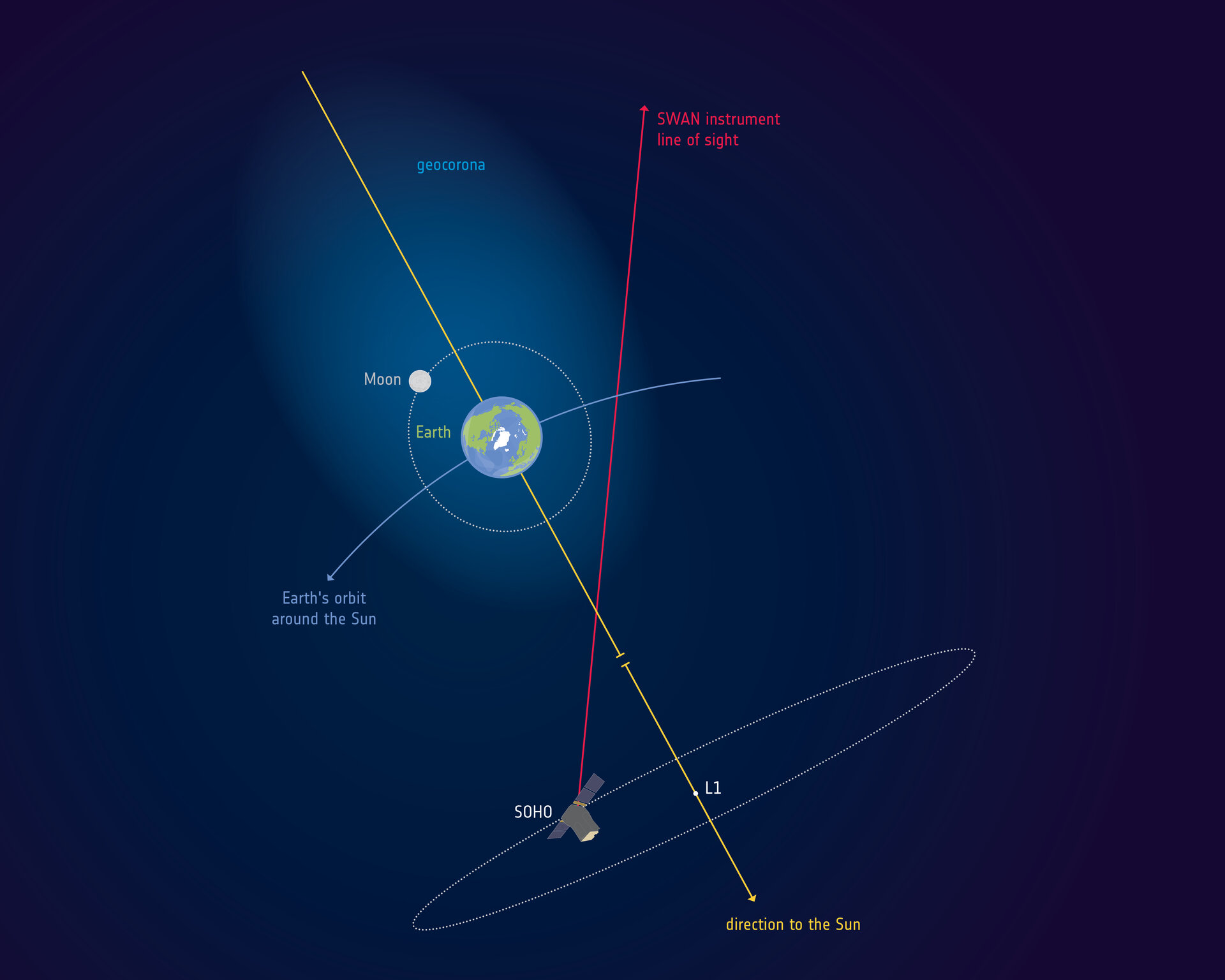
there is nowhere near one kilogram of gas between Earth and Moon, not one, maybe a gram in the entire sphere defined by Moon's orbit outside of Earth's atmosphere.
there is nowhere near one kilogram of gas between Earth and Moon, not one, maybe a gram in the entire sphere defined by Moon's orbit outside of Earth's atmosphere.
Link?
There's no significant amount of "gas" in the sense of a breathable atmosphere or fuel between the Earth and Moon; instead, the region is primarily a vacuum
Nobody said there was a breathable amount you stupid ****.
There's no significant amount of "gas" in the sense of a breathable atmosphere or fuel between the Earth and Moon; instead, the region is primarily a vacuum