Follow along with the video below to see how to install our site as a web app on your home screen.
Note: This feature may not be available in some browsers.
Save the planet, eat more meat.

Plant more grasslands for grazing and hay, plow up less for vegetables.
Florida needs to figure out how to market Pythons.
Look what they did with lionfish in the Carribean.
Carnivore for the win!Plant more grasslands for grazing and hay, plow up less for vegetables.
So then you fart the methane while the energy that went into producing that one steak could have fed a dozen people on a vegetarian dietThe way I look at it, Woody, every steak I eat is just one less steer farting methane ruining the planet for Leftists.![]()
Thank you for that brilliant and thought provoking dissertation on saving the planet by eating meat. Clearly you have advanced degrees from the finest institutions of higher learning in the fields of ecology and the economic, political and scientific aspects of food production and sustainability of the earth. I’ll be waiting with baited breath for more pearls of wisdom from you beautiful mind , As always you rais the bar on the quality if discourse on the USMBPlant more grasslands for grazing and hay, plow up less for vegetables.

The way I look at it, Woody, every steak I eat is just one less steer farting methane ruining the planet for Leftists.![]()
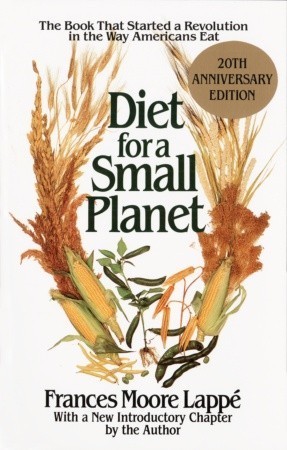
"Diet for a Small Planet," by Frances Moore Lappé, is a groundbreaking book advocating for a plant-based diet as a solution to global hunger and environmental problems. Published in 1971, it argues that the industrialized food system, particularly meat production, is wasteful, inefficient, and harmful to both human health and the planet. The book promotes the idea that a shift towards plant-centered eating, focusing on whole grains, vegetables, and legumes, can address food scarcity, reduce environmental impact, and promote social justice.Plant more grasslands for grazing and hay, plow up less for vegetables.
Don't forget the Asian carp.I'm confident we will find solutions. There has to be a market for big, thick slabs of snake meat and as to the lionfish, is there a single preferred foodstuff or raw material mankind likes or needs that we have not hunted to extinction? Just look what we did to the Buffalo.
I'm confident we can eat our way out of pythons and lionfish.
So, no rebuttal, just sarcasm?Thank you for that brilliant and thought provoking dissertation on saving the planet by eating meat. Clearly you have advanced degrees from the finest institutions of higher learning in the fields of ecology and the economic, political and scientific aspects of food production and sustainability of the earth. I’ll be waiting with baited breath for more pearls of wisdom from you beautiful mind , As always you rais the bar on the quality if discourse on the USMB
The problem is that people eat too much meat; over 200 pounds per person per year. I eat meat nearly every day but only consume about 50 pounds per year. Recalculate the problem using my consumption figure."Diet for a Small Planet," by Frances Moore Lappé, is a groundbreaking book advocating for a plant-based diet as a solution to global hunger and environmental problems. Published in 1971, it argues that the industrialized food system, particularly meat production, is wasteful, inefficient, and harmful to both human health and the planet. The book promotes the idea that a shift towards plant-centered eating, focusing on whole grains, vegetables, and legumes, can address food scarcity, reduce environmental impact, and promote social justice.
- Critique of the Meat-Heavy Diet:
The book highlights the inefficiencies of meat production, showing how much land, water, and energy are required to raise livestock compared to growing crops for direct human consumption.
- Plant-Based Nutrition:
Lappé demonstrates that a plant-based diet can provide all the necessary protein and nutrients for a healthy life, challenging the common belief that meat is essential
- Environmental Impact:
"Diet for a Small Planet" emphasizes the environmental consequences of industrial agriculture, including deforestation, water pollution from fertilizer runoff, and greenhouse gas emissions.
As a "revolution" the book is an abysmal failure. We are overeating and our health is declining.![]()
Diet for a Small Planet: The Book That Started a Revolu…
The book that started a revolution in the way Americans…www.goodreads.com
Really?? Please explainGrowing vegetables is destroying the planet.