Regarding the thread in politics on affordability...

Darkwind

Diamond Member
Joined
Jun 18, 2009
Messages
41,868
Reaction score
30,371
Points
3,615
The cost of living has always been a function of inflation and anyone who understands the world and how ecnonomics work know that inflation is defined as too many dollars chasing too few goods.

There is, in fact, another mechanism at play that is directly attributed to the high cost of living. That is government spending like drunken sailors and the permanent dependence class that is driving it. A significant number of people in this nation have been conditioned to accept that their very survival is dependent upon the government, which means they are dependent upon politicians expanding and ever-growing those programs and enacting those policies that keep them dependent.

Which brings Me to the crux of the thread.

Pavlov's Electorate, written by Michael Smith.
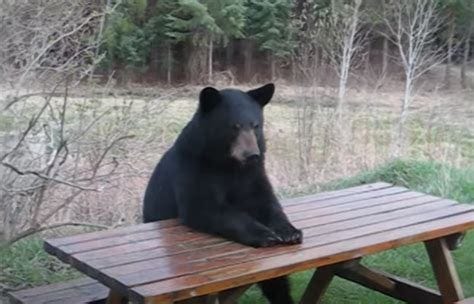

Pavlov's Electorate

From stimulus-response politics to eroded responsibility, the welfare state mirrors the logic of an experiment gone wrong.​


** Snip **

There is a reason debates over federal spending and entitlement reform trigger such raw emotion. These programs, many of them born in the Great Depression, are no longer viewed as policy instruments but as extensions of identity—moral covenants between the state and those who depend on it, fiercely defended by a political class that treats reform as sacrilege. Yet the causes of our dependence, and the path out of it, are hardly mystical. They sit in plain view, if we are willing to see them. For all the progressive insistence that science is on their side, the most compelling evidence comes not from ideological laboratories but from nature itself—Mother Gaia’s own operating manual.

Humans remain animals—brilliant animals, but animals nonetheless. The gap between us and our primate cousins is a mere sliver of DNA. Yes, opposable thumbs and a superior cortex helped vault us to the top of the food chain, but the continuity between human and animal behavior is unmistakable. Our achievements in reason, technology, and abstract thought coexist with primal instincts that continually reassert themselves: aggression, territoriality, dominance, fear. If these instincts did not simmer beneath the surface, there would be no murders, no wars, no marital betrayals, no tribal politics. We are governed, whether we admit it or not, by natural law—the ancient framework that links behavior to survival and freedom to responsibility.

* snip *

Humans are animals. We ignore that at our peril. The welfare state functions as a federal zoo—designed by well-meaning theorists, administered by political zookeepers, and catastrophic in its long-term effects. Our attempt to “take care” of a vulnerable class has instead destroyed the very skills necessary for independence. In trying to save people, we have weakened them.

Economic sanity begins with accepting the biological truth: reentry into a free-enterprise society is no different from reintroducing captive animals into the wild. The answer is not cruelty but conditioning—rebuilding the instincts that dependency has erased. We must teach those who have forgotten how to hunt to do so again.

And then we must let them go.


It's a good read and accurately describes what enertia we face in trying to solve the 'affordability' issue.
 
I found this paragraph frightenly similar to what we witnessed during the S.N.A.P. fisaco when the democrats temporarily shut down the government.

A 2008 University of Exeter study by Kristen Jule illuminates this truth with almost painful clarity. She tracked more than 2,000 captive carnivores released into the wild and found that fewer than one-third survived even six months. Captivity does not merely dull the instincts of an animal—it erodes them. Offspring of captive animals lose the ability to hunt, to forage, even to parent. Generational skills wither. Entire family lines become dependent on zookeepers to survive. When such animals are released, many die quickly, unaware of predators, hazards, or the demands of self-reliance.
 
The cost of living has always been a function of inflation and anyone who understands the world and how ecnonomics work know that inflation is defined as too many dollars chasing too few goods.

There is, in fact, another mechanism at play that is directly attributed to the high cost of living. That is government spending like drunken sailors and the permanent dependence class that is driving it. A significant number of people in this nation have been conditioned to accept that their very survival is dependent upon the government, which means they are dependent upon politicians expanding and ever-growing those programs and enacting those policies that keep them dependent.

Which brings Me to the crux of the thread.

Pavlov's Electorate, written by Michael Smith.


Pavlov's Electorate

From stimulus-response politics to eroded responsibility, the welfare state mirrors the logic of an experiment gone wrong.​


** Snip **

There is a reason debates over federal spending and entitlement reform trigger such raw emotion. These programs, many of them born in the Great Depression, are no longer viewed as policy instruments but as extensions of identity—moral covenants between the state and those who depend on it, fiercely defended by a political class that treats reform as sacrilege. Yet the causes of our dependence, and the path out of it, are hardly mystical. They sit in plain view, if we are willing to see them. For all the progressive insistence that science is on their side, the most compelling evidence comes not from ideological laboratories but from nature itself—Mother Gaia’s own operating manual.

Humans remain animals—brilliant animals, but animals nonetheless. The gap between us and our primate cousins is a mere sliver of DNA. Yes, opposable thumbs and a superior cortex helped vault us to the top of the food chain, but the continuity between human and animal behavior is unmistakable. Our achievements in reason, technology, and abstract thought coexist with primal instincts that continually reassert themselves: aggression, territoriality, dominance, fear. If these instincts did not simmer beneath the surface, there would be no murders, no wars, no marital betrayals, no tribal politics. We are governed, whether we admit it or not, by natural law—the ancient framework that links behavior to survival and freedom to responsibility.

* snip *

Humans are animals. We ignore that at our peril. The welfare state functions as a federal zoo—designed by well-meaning theorists, administered by political zookeepers, and catastrophic in its long-term effects. Our attempt to “take care” of a vulnerable class has instead destroyed the very skills necessary for independence. In trying to save people, we have weakened them.

Economic sanity begins with accepting the biological truth: reentry into a free-enterprise society is no different from reintroducing captive animals into the wild. The answer is not cruelty but conditioning—rebuilding the instincts that dependency has erased. We must teach those who have forgotten how to hunt to do so again.

And then we must let them go.


It's a good read and accurately describes what enertia we face in trying to solve the 'affordability' issue.
This is a reply to a thread. Post it in that other thread.
 
This is a reply to a thread. Post it in that other thread.
Yeah, he mentioned the other thread in the OP, so any comments related to that other thread are fair game.

Which makes me wonder why he did not simply post in that other thread, or better yet make this thread a standalone. It is certainly more substantive than the dozen threads a day posted by some of our most obvious sock posters.
 
The dignity of work needs to be emphasized more than the Somali criminal ethos of "rip the stupid MFs off".
 
The dignity of work needs to be emphasized more than the Somali criminal ethos of "rip the stupid MFs off".
From the article:

The parallel to the modern welfare state is not metaphorical flourish; it is behavioral equivalence. A welfare system that provides food, clothing, and shelter at a level just comfortable enough to discourage risk-taking creates precisely the dynamic seen in captive species: diminished survival skills, lost generational knowledge, and a dependence so deep that escape feels impossible. The cage is padded, but it remains a cage.
 
Yeah, he mentioned the other thread in the OP, so any comments related to that other thread are fair game.

Which makes me wonder why he did not simply post in that other thread, or better yet make this thread a standalone. It is certainly more substantive than the dozen threads a day posted by some of our most obvious sock posters.
As I replied to him, this alone is worthy of a thread of its own, and the other thread had degenerated into comfortable, tired, and mostly debunked talking points. It would have been lost in favor of the bickering that always gains momentum in these kinds of threads.
 
I'm starting to feel a tad domesticated Dark one .......for lack of a better term.......~S~
 
The cost of living has always been a function of inflation and anyone who understands the world and how ecnonomics work know that inflation is defined as too many dollars chasing too few goods.

There is, in fact, another mechanism at play that is directly attributed to the high cost of living. That is government spending like drunken sailors and the permanent dependence class that is driving it. A significant number of people in this nation have been conditioned to accept that their very survival is dependent upon the government, which means they are dependent upon politicians expanding and ever-growing those programs and enacting those policies that keep them dependent.

Which brings Me to the crux of the thread.

Pavlov's Electorate, written by Michael Smith.


Pavlov's Electorate

From stimulus-response politics to eroded responsibility, the welfare state mirrors the logic of an experiment gone wrong.​


** Snip **

There is a reason debates over federal spending and entitlement reform trigger such raw emotion. These programs, many of them born in the Great Depression, are no longer viewed as policy instruments but as extensions of identity—moral covenants between the state and those who depend on it, fiercely defended by a political class that treats reform as sacrilege. Yet the causes of our dependence, and the path out of it, are hardly mystical. They sit in plain view, if we are willing to see them. For all the progressive insistence that science is on their side, the most compelling evidence comes not from ideological laboratories but from nature itself—Mother Gaia’s own operating manual.

Humans remain animals—brilliant animals, but animals nonetheless. The gap between us and our primate cousins is a mere sliver of DNA. Yes, opposable thumbs and a superior cortex helped vault us to the top of the food chain, but the continuity between human and animal behavior is unmistakable. Our achievements in reason, technology, and abstract thought coexist with primal instincts that continually reassert themselves: aggression, territoriality, dominance, fear. If these instincts did not simmer beneath the surface, there would be no murders, no wars, no marital betrayals, no tribal politics. We are governed, whether we admit it or not, by natural law—the ancient framework that links behavior to survival and freedom to responsibility.

* snip *

Humans are animals. We ignore that at our peril. The welfare state functions as a federal zoo—designed by well-meaning theorists, administered by political zookeepers, and catastrophic in its long-term effects. Our attempt to “take care” of a vulnerable class has instead destroyed the very skills necessary for independence. In trying to save people, we have weakened them.

Economic sanity begins with accepting the biological truth: reentry into a free-enterprise society is no different from reintroducing captive animals into the wild. The answer is not cruelty but conditioning—rebuilding the instincts that dependency has erased. We must teach those who have forgotten how to hunt to do so again.

And then we must let them go.


It's a good read and accurately describes what enertia we face in trying to solve the 'affordability' issue.

I don't think it's as simple as that. I don't think the people who are dependent on state welfare are "driving" it.

A significant number of people in this nation have been conditioned to accept that their very survival is dependent upon the government, which means they are dependent upon politicians expanding and ever-growing those programs and enacting those policies that keep them dependent.

While this is certainly an issue, I don't really see it as the principal driver of the welfare state, and the associated spending. I think this is highlighted by the exasperation of Democrats when they claim that so many people, people who depend on the government, "vote against their interests". They can't understand how people who rely on the welfare state would vote against it.

But it makes perfect sense to me. They see, first hand, how demoralizing and counter-productive state dependency can be. And they're fed up with it. They don't want "free shit". They want the freedom to make a living without being herded and controlled.

The sad fact is, many people benefit from keeping others in a dependency cycle. The benefit may be crudely economic (eg employers who want cheap labor) or moral: throwing poor people a bone makes them feel better about their privilege.
 
I don't think it's as simple as that. I don't think the people who are dependent on state welfare are "driving" it.


While this is certainly an issue, I don't really see it as the principal driver of the welfare state, and the associated spending. I think this is highlighted by the exasperation of Democrats when they claim that so many people who depend on the government "vote against their interests". They can't understand how people who rely on the welfare state would vote against it.

But it makes perfect sense to me. They see, first hand, how demoralizing and counter-productive state dependency can be. And they're fed up with it. They don't want "free shit". They want the freedom to make a living without being herded and controlled.

The sad fact is, many people benefit from keeping others in a dependency cycle. The benefit may be crudely economic (eg employers who want cheap labor) or moral: throwing poor people a bone makes them feel better about their privilege. I think what drivers the welfare state more than just slackers sponging off the government.
Agreed, but the problem is, that those who are fostering these dependacies are accomplishing two things in favor of their own power.

This is a very real phenomenon happening in the USA right now:

A 2008 University of Exeter study by Kristen Jule illuminates this truth with almost painful clarity. She tracked more than 2,000 captive carnivores released into the wild and found that fewer than one-third survived even six months. Captivity does not merely dull the instincts of an animal—it erodes them. Offspring of captive animals lose the ability to hunt, to forage, even to parent. Generational skills wither. Entire family lines become dependent on zookeepers to survive. When such animals are released, many die quickly, unaware of predators, hazards, or the demands of self-reliance.

We are seeing a lack of parenting and the ability to teach their offspring how to survive. Hence, we have whole cities of fatherless men whose only lesson on survival is crime. We indeed have Generational skills withering in our cities.
 
Last edited:
There is, in fact, another mechanism at play directly contributing to the high cost of living. It's called tariffs.
Fed's Powell Says Inflation Overshoot Cause by Trump's Tariffs
The cost of the tariffs is no more than the cost of left-wing corporate taxation attempts.

The only real difference is that with the Tariffs, the money is not only being applied to help all Americans, but that their signature application will be bringing back national security and manufacturing.

A huge win for the American people and a huge embarrassment to the Democrats.
 
15th post
The unconverted mind is likened to that of brute beasts, and the evidence supports that assertion.
 
Back
Top Bottom