
My healthcare premiums have always been £0.00 and never had a problem when using the NHS.
Follow along with the video below to see how to install our site as a web app on your home screen.
Note: This feature may not be available in some browsers.

It could be anywhere from zero to half or more. I know my own employer shares some of the costs. But I see how much at the beginning of the year, and then forget about it.We get no federal subsidy and have 5 people on our policy. My wife pays right around $1500 a month but I am not sure how much her employer kicks in to get it to that.

Myself and everyone I knew who had a full-time job had their premiums go way up after the ACA passed. Even Democrats at my job at a news station were saying "I thought we were supposed to save money."
Why would you not believe Jonathan Gruber, when he said that Obamacare was a way to shift money from the healthy to the sick, and from people with employer provided health care policies to people who had not bothered to get jobs that provided benefits? That he relied on the stupidity of the American voter?
On average sure.That's an anecdote. Maybe it's true, maybe it's not.
But we have good data on premiums and per enrollee spending for employer-based insurance in the United States, and it all tells the same story: cost growth, including employees' contributions to their premiums, fell in the ACA era, annual increases in several years flirted with all-time lows.
No that is not what health insurance did before obamacare. Before obamacare a large pool of healthy people I bought in charts and when a few of them became sick they had a safety net.Shifting money from the healthy to sick is what all health insurance does, that's its function. And employer-based plans continue to enjoy a tax exemption that nets enrollees a $350 billion annual tax subsidy, far larger than the annual cost of tax credits in the marketplaces.

Same reason as the last 10 times you asked the same question.If these numbers are real, why did so many people's health insurance premiums, deductables, and co-pays go up instead of down?
No that is not what health insurance did before obamacare. Before obamacare a large pool of healthy people I bought in charts and when a few of them became sick they had a safety net.
Yes, like Jonathan Gruber said the ACA was about.So healthy people transferred resources to sick people.
You have no evidence to back up that the ACA reduced costs in any way. It just shifted who paid those costs.Or rather, to health care providers delivering care to sick people. The point, as always, is to finance the American health care system, which we do in myriad complicated ways. Premiums of individual fragmented risk pools are one of the ways we go about doing that.
And the best way to understand what happened to the cost of that health care system is to look at national health expenditures, the full cost of that system when you look across all the ways we finance it (premiums, out-of-pocket spending, taxes, employer contributions, etc). And those stabilized--that is, stopped growing--as a share of GDP and national income in 2010. Stopping the relative growth of health care costs has saved trillions of dollars to date.
You have no evidence to back up that the ACA reduced costs in any way. It just shifted who paid those costs.
How could the ACA have reduced costs?
Slow growth in health care spending for people with chronic conditions is in keeping with an emphasis on evidence-based care-transition practices (e.g., medication reconciliation, data sharing among health care entities, and follow-up calls or home visits). Increases in guideline-concordant use of antihypertensive drugs that can curb spending on cardiovascular disease illustrate the way in which incentives for containing spending may support the spread of cost-saving innovations. Medicare policies promoting a shift in the location of selected procedures from inpatient to outpatient settings have reduced per-procedure spending while also spilling over to private payers, including Medicare Advantage plans. Similarly, incentives promulgated by Medicare Advantage plans can affect patients with other types of insurance.
In much the same way that the threat of health care reform and the rise of managed care led to reduced spending growth in the mid-1990s, evidence suggests that the burning platform of a new era of “value-based care” in which clinicians and health care organizations would be held accountable for the cost and quality of care has fostered practice redesign and an orientation toward high-value technology. Without value-based payment models, there would be no business case for implementing various new technologies. Examples include products that automatically inform primary care practices when one of their patients is admitted to a health care facility, point-of-care tools that provide information on referral options and their costs, and predictive analytics that can help organizations determine which patients to focus on for care-management interventions and which care processes to target for improvement.
The value orientation has led to increased reliance on the nonphysician workforce, supported the passage of expanded–scope-of-practice laws, changed the way health care executives think about capital investments, and affected investment and pricing decisions by manufacturers of drugs, devices, and digital health technologies. The increased influence of and demand for the Institute for Clinical and Economic Review’s cost-effectiveness evaluations of new technologies are evidence of this shift, as is the limited adoption of costly technologies such as proton-beam therapy, which many observers predicted would explode in popularity.
Cut and paste all you like.Relative health care cost growth essentially halted in 2010 (i.e., finally slowed to come in line with income and economic growth) when the ACA passed. This is, needless to say, an unprecedented turn of events and has saved the country trillions of dollars on health care so far.
The financial incentives underpinning health care have been changing, spurred in large part by the ACA's push to link payments to value (quality/cost).
That in turn shapes the behavior of provider organizations and the way care delivery is organized.
The Value Zeitgeist — Considering the Slowdown in Health Care Spending Growth
Most of the ink gets spilled on the ACA's health insurance market reforms, but its provisions to reform health care are more interesting and ambitious.
Translation: "250 years and I still don't have my health care paid entirely by other people, whether I work or not. I'm sad."We are 250 years old or something close supposedly, and we just cannot figure out healthcare. Sad.
Translation: "250 years and I still don't have my health care paid entirely by other people, whether I work or not. I'm sad."
That's what I love about the internet!I worked my whole adult life
42 years
I served my sentence, paid my penalty in the godforsaken idiotic horrible moronic rat race. Your a poor judge of character.

All ******* insurance is spreading the risk.Translation: "250 years and I still don't have my health care paid entirely by other people, whether I work or not. I'm sad."

We do have a sick care system, not a health care system. There is very little emphasis on keeping the US population healthy. The onus is on the individual to make good choices for their own health maintenance because there is PLENTY of opportunity for bad choices.Shifting money from the healthy to sick is what all health insurance does, that's its function.

The people who cannot afford their health insurance?
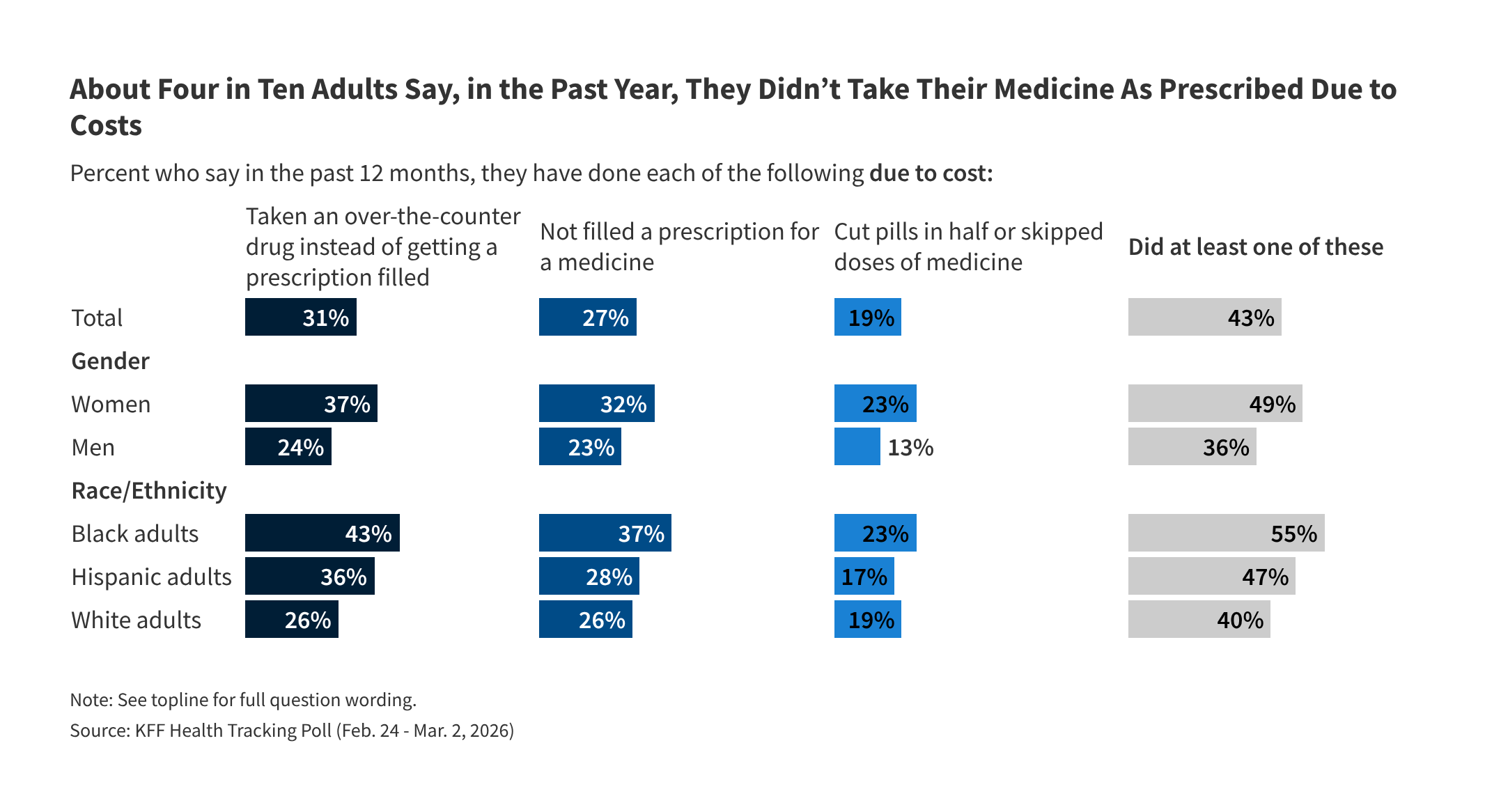
Americans’ Challenges with Health Care Costs | KFF
This data note reviews our recent polling data that finds that many Americans struggle to afford many aspects of health care, including disproportionate shares of uninsured adults, Black and Hispanic adults and those with lower incomes.www.kff.org
Oct 21, 2024
Healthcare Insights: How Medical Debt Is Crushing 100 Million Americans
John August
George Curlee is one of 52 million people or 1/3 of Americans in the workforce who earn $15/hour. They should look for a higher paying jobs and getting a higher level of education.

Attention fat *****. Go outside and talk a walk. Eat some greens. There's your health care.
No it's not healthcare, but that would be a really good start for about 40 percent of Americans.Attention fat *****. Go outside and talk a walk. Eat some greens. There's your health care.


