Its Bloomberg actually.
The FBI Redacted Trump’s Name in the Epstein Files
The bureau’s FOIA team tasked with conducting a final review of the records blacked out the names before higher-ups said last month that releasing the documents ‘would not be appropriate or warranted.’
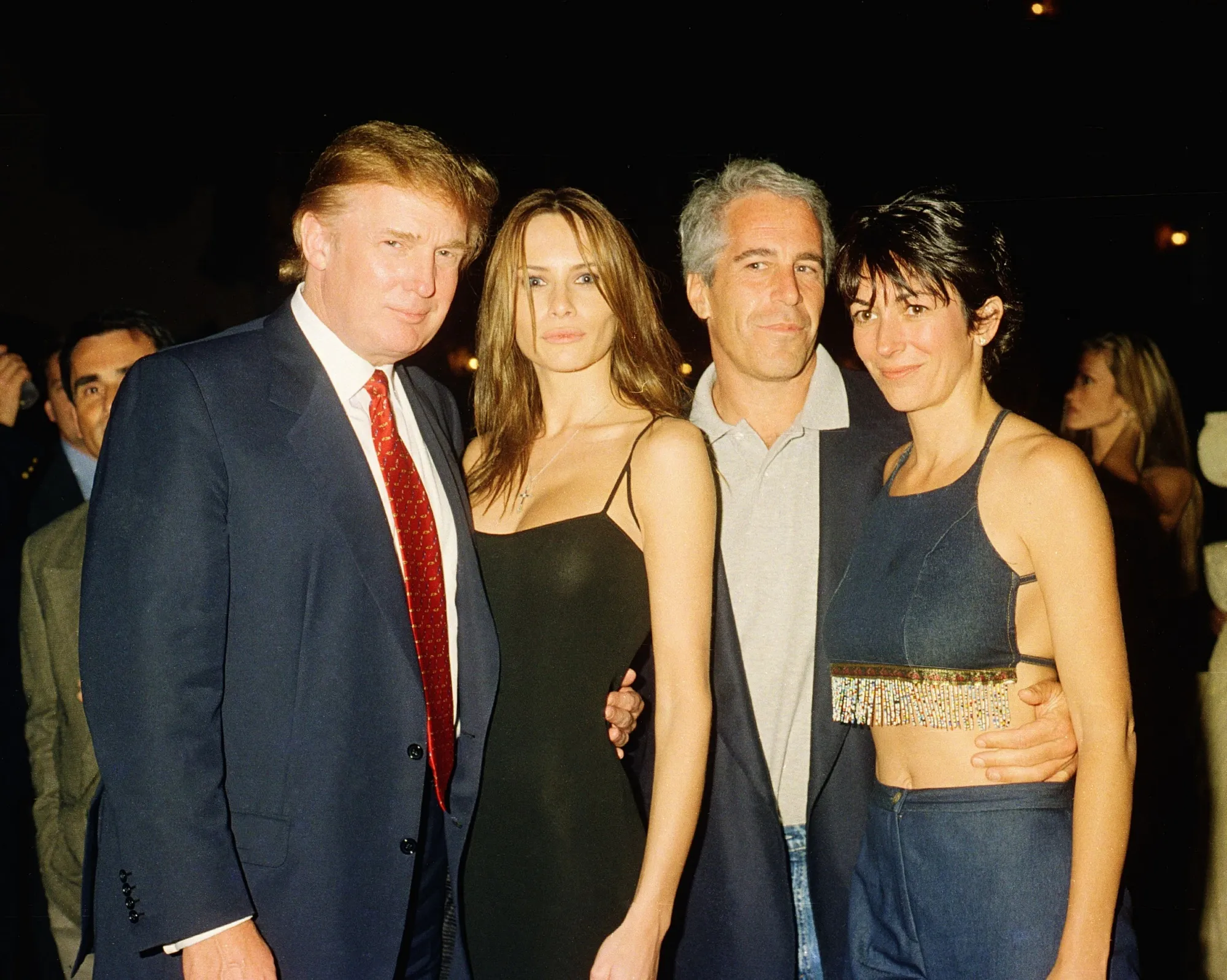
Donald Trump, Melania Trump, Jeffrey Epstein and Ghislaine Maxwell at Mar-a-Lago in 2000.
Photographer: Davidoff Studios Photography/Archive Photos
Add us on Google
Contact us:
Provide news feedback or report an error
Confidential tip?
Send a tip to our reporters
Site feedback:
Take our Survey
By
Jason Leopold
August 1, 2025 at 9:35 AM CDT
Save
Translate
You're reading the FOIA Files newsletter.
Come behind the scenes as Jason Leopold uncovers documents never seen before. Delivered weekly.
By continuing, I agree to the
Privacy Policy and
Terms of Service.
Welcome back to FOIA Files! This week, I’m delving into the Jeffrey Epstein saga: We know from news reports that Trump’s name was in the Epstein files. But what hasn’t been reported is that an FBI FOIA team redacted Trump’s name—and the names of other prominent public figures—from the documents, according to three people familiar with the matter who were not authorized to speak with the media.
That team, tasked with conducting a final review of the voluminous cache, had applied the redactions before the DOJ and the FBI concluded last month that “no further disclosure” of the files “would be appropriate or warranted.”
From the government’s perspective, Trump was a private citizen when the Epstein investigation took place and therefore is entitled to privacy protections. Read on and I’ll explain. If you’re not already getting FOIA Files in your inbox, sign up here.
‘
Before explaining the government’s rationale for blacking out Trump’s name, let’s recap. Along with aliens and JFK’s assassination, conspiracy theories surrounding the life and death of convicted sex-offender Jeffrey Epstein have long consumed MAGA.
Epstein avoided federal sex-trafficking charges in 2008 when he agreed to plead guilty to state charges in Florida for soliciting prostitution. In July 2019, following an investigation by the Miami Herald that also scrutinized the integrity of the government’s probe,
Epstein was indicted on federal charges of sex trafficking of minors. A month later, he died by suicide in his jail cell, federal law enforcement authorities said, while awaiting trial.
Epstein’s death led to a swirl of renewed interest among Trump supporters, which in recent months has verged into an obsession. Last year, while still on the campaign trail, Trump
vowed to “declassify” material in the government’s possession pertaining to Epstein. Before Pam Bondi was nominated as attorney general by Trump, she insisted that the public had a right to know more details about the case. “If people in that report are still fighting to keep their names private,”
she said on Fox News last year, “they have no legal basis to do so, unless they’re a child, a victim, or a cooperating defendant.” In January, Kash Patel, the FBI director,
told a Senate Committee during his confirmation hearing that he’d ensure “the American public knows the full weight of what happened.”
Then on Feb. 27, during a highly publicized event at the White House, Bondi rolled out what the Justice Department referred to as the “
first phase” of the release of the Epstein files. It was attended by former Pizzagate provocateur Jack Posobiec and other far-right influencers. They were given binders labeled “The Epstein Files” and “The Most Transparent Administration in History” that contained about 200 pages of documents that Bondi characterized as “declassified.” She also suggested that the records would contain previously undisclosed details about Epstein.
Instead, Bondi’s big Epstein files party was a bust. It turned out the documents she called declassified, which included pages from Epstein’s infamous “
black book,” had been previously released, most recently during the criminal trial of Ghislaine Maxwell four years earlier. (The black book revealed Trump’s name and the names of his wife, Melania, and other family members.)
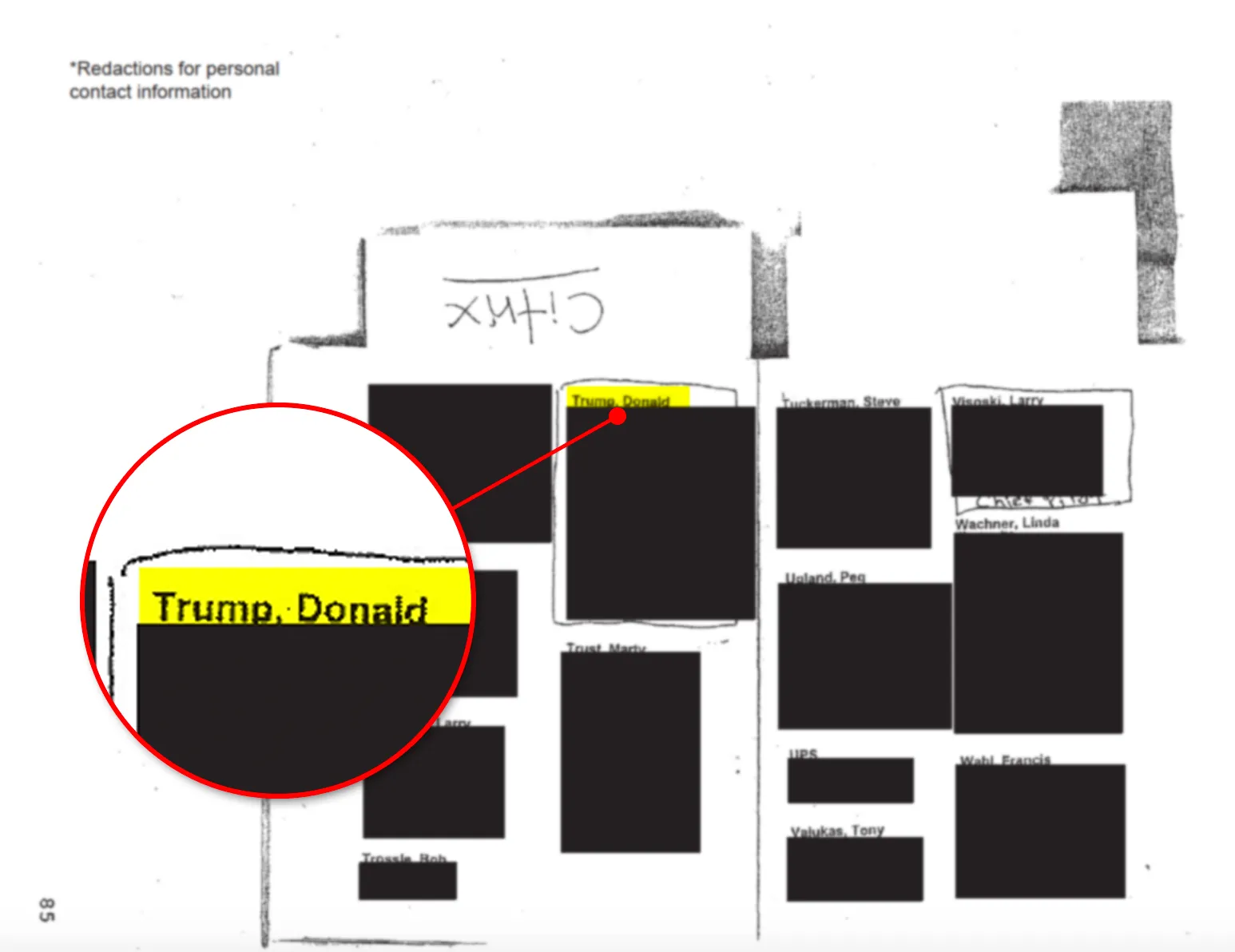
A page from Epstein’s “black book,” containing the names of various contacts, which included Trump.
Trump’s followers were irate. Bondi was angry, too. She fired off a letter to FBI Director Patel demanding to know why the bureau failed to provide her with the thousands of pages of documents related to the Epstein investigation and indictment she requested. She wanted answers from Patel, and accountability.
Trump’s name blacked out
What happened next kicked off a new phase in the Epstein saga. As I reported in the March 28th
edition of FOIA Files, Patel directed FBI special agents from the New York and Washington field offices to join the bureau’s FOIA employees at its sprawling Central Records Complex in Winchester, Virginia and another building a few miles away.
They were instructed to search for and review every single Epstein-related document and determine what could be released. That included a mountain of material accumulated by the FBI over nearly two decades, including grand jury testimony, prosecutors’ case files, as well as tens of thousands of pages of the bureau’s own investigative files on Epstein. It was a herculean task that involved as many as 1,000 FBI agents and other personnel pulling all-nighters while poring through more than 100,000 documents, according to
a July letter from Senator Dick Durbin to Bondi.