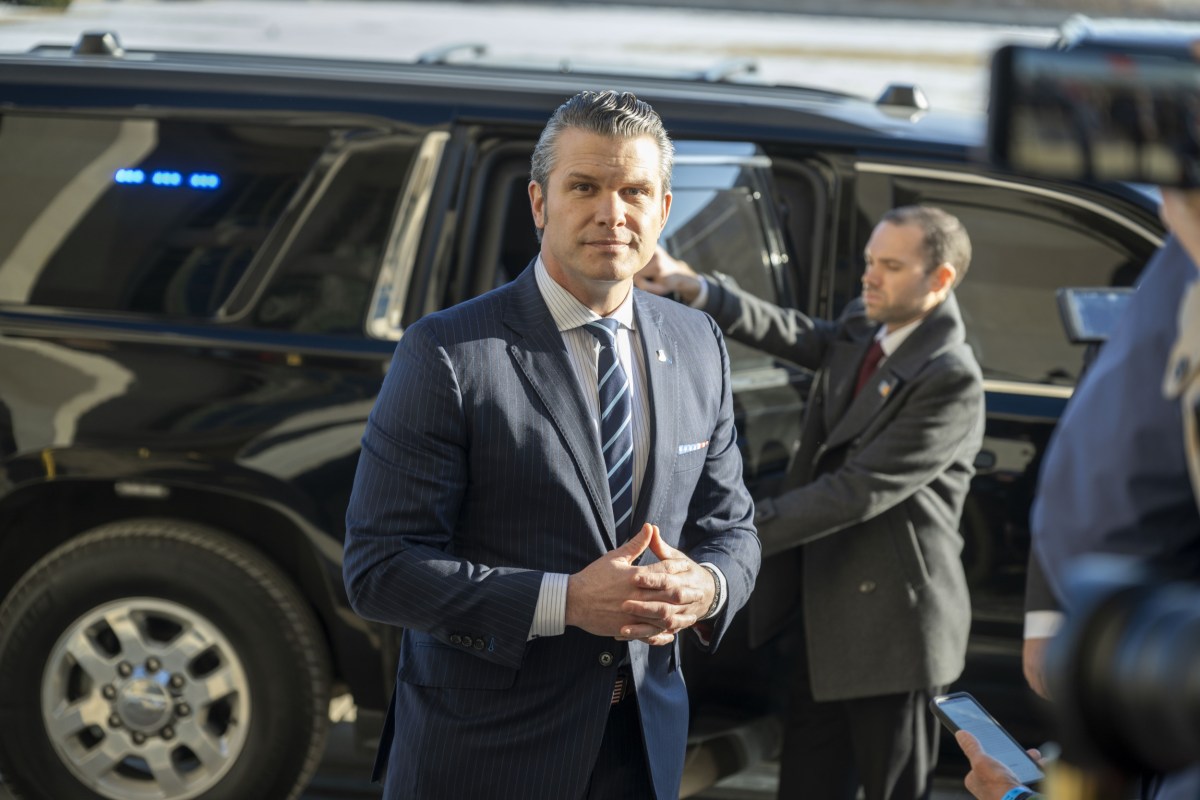
Pete Hegseth Says Air Force Restoring Tuskegee Airmen Videos Amid Backlash

Explain what you mean. I just researched when the Tuskegee Airmen was created and how long it took the Army air corps to train them and when at the end of WW2, they flew protection flights. They protected white pilots flying B17s.

Training for white pilots took 5 months yet blacks trained by white officers took about 1.5 years.
You do not take a person who, for years, has been hobbled by chains and liberate him, bring him up to the starting line of a race and then say, "you are free to compete with all the others," and still justly believe that you have been completely fair. Lyndon B Johnson
 
So, Japan attacked Pearl Harbor because they didn't like FDR, is that what you are telling us?
Not at all. I conditioned their reasons. FDR baited the Japanese with our war ships. Put them in a target rich environment. What was your impression of FDR being a racist?
 
Not at all. I conditioned their reasons. FDR baited the Japanese with our war ships. Put them in a target rich environment. What was your impression of FDR being a racist?
So, FDR knew if he put our ships at Pearl Harbor that the Japanese would attack? Am I following you so far?
 
You do not take a person who, for years, has been hobbled by chains and liberate him, bring him up to the starting line of a race and then say, "you are free to compete with all the others," and still justly believe that you have been completely fair. Lyndon B Johnson
I was a child when FDR was president. After he died, the Democrats ignored all the Racism he had. HE did not like blacks at all. His wife told him to form a black air group. So he dragged that out till the war end was very close. Blacks who changed to the Air Force felt better as time faded for them. As racist as FDR was, why blacks like him to this day shocks me.
So, FDR knew if he put our ships at Pearl Harbor that the Japanese would attack? Am I following you so far?
I used this due to duplicates.

Day of Deceit lays it out. FDR had a Navy commander reporting to him. And the commander was then in Japan. McCollum laid out an 8 point plan to get into war with Japan. Roosevelt pretty much followed that plan.

'Day of Deceit': On Dec. 7, Did We Know We Knew?​

By RICHARD BERNSTEIN​

isbn

DAY OF DECEIT
The Truth About F.D.R. and Pearl Harbor.

By Robert B. Stinnett.
Illustrated. 386 pages. Free Press. $26.

F
or nearly 60 years it has been bruited about -- and for nearly 60 years unproved -- that President Franklin D. Roosevelt knew in advance of the Japanese attack on Pearl Harbor on Dec. 7, 1941, but, because he wanted some national shock therapy to get the reluctant country into the war, he did nothing about it. Now Robert B. Stinnett, a Navy veteran of the war who subsequently made a career as a journalist for The Oakland Tribune, has produced the results of a 17-year search for documentary evidence on this important historical question.

The basic conclusion of his new book, "Day of Deceit: The Truth About F.D.R. and Pearl Harbor," is this: Not only was the "surprise attack" no surprise to Roosevelt, but also the effort to provoke Japan into military action was the principal policy of the Roosevelt administration for the entire preceding year.

Historians of World War II generally agree that Roosevelt believed war with Japan was inevitable and that he wanted Japan to fire the first shot. What Stinnett has done, taking off from that idea, is compile documentary evidence to the effect that Roosevelt, to ensure that the first shot would have a traumatic effect, intentionally left Americans defenseless. One of the most sensational of Stinnett's claims in this regard concerns Japan's most important spy on Hawaii, Tadashi Morimura, who, in the months before the attack, gave Tokyo grids of the harbor showing the location of American naval vessels.

Just before the assault took place he sent radio messages to Tokyo saying that a surprise attack remained feasible. Stinnett demonstrates that Morimura's dispatches were intercepted by American naval intelligence, which had cracked the Japanese code, and that translations of those intercepts were sent to Washington. But they were never given to Adm. Husband E. Kimmel, the United States Navy commander for the Pacific, or to his Army counterpart, Lt. Gen. Walter Short.


stinnett.jpg

Peggy Stinnett/Free Press​
Robert Stinnett
Also Today in Books


The implication here is that Roosevelt, by withholding critical information from commanders in the field, wanted, as Stinnett puts it, to "ensure an uncontested overt Japanese act of war." Given that 2,273 American soldiers and sailors died at Pearl Harbor, this basic conclusion, if it is correct, would require some drastic rethinking about Roosevelt and the American entry into the war. But while the volume of documentation provided by Stinnett is impressive, he hardly decides the issue once and for all.

Stinnett's strongest and most disturbing argument relates to one of the standard explanations for Japan's success in keeping the impending Pearl Harbor attack a secret: namely that the aircraft carrier task force that unleashed it maintained strict radio silence for the entire three weeks leading up to Dec. 7 and thus avoided detection. In truth, Stinnett writes, the Japanese continuously broke radio silence even as the Americans, using radio direction finding techniques, were able to follow the Japanese fleet as it made its way toward Hawaii.

Among the Japanese who made radio broadcasts were Adm. Isoroku Yamamoto, commander of the Japanese Imperial Navy, and Vice Adm. Chuichi Nagumo, commander of the leading element in the Japanese Pearl Harbor strike force. Stinnett writes that their messages were intercepted, deciphered and provided to Washington by a coded transmission procedure known as TESTM. Roosevelt, Stinnett says, would have been provided the TESTM documents, but they were not given to Kimmel or Short.

It is possible that Stinnett might be right about this; certainly the material he has unearthed ought to be reviewed by other historians. Yet the mere existence of intelligence does not prove that that intelligence made its way into the proper hands or that it would have been speedily and correctly interpreted.
 
The Air Force says it has reinstated training material on the Tuskegee Airmen and Women Airforce Service Pilots (WASPs) after a brief delay to revise it in line with the Trump administration's rollback of diversity, equity, and inclusion (DEI) policies.

I wonder why you need to restore something that folks claimed was not needed.
Learning the black people can be excellent at the job’s disrupts their racism.
 
The Air Force says it has reinstated training material on the Tuskegee Airmen and Women Airforce Service Pilots (WASPs) after a brief delay to revise it in line with the Trump administration's rollback of diversity, equity, and inclusion (DEI) policies.

I wonder why you need to restore something that folks claimed was not needed.

Good job Pete!

Now what was that you people said about him being "unqualified"? :laughing0301:
 
I was a child when FDR was president. After he died, the Democrats ignored all the Racism he had. HE did not like blacks at all. His wife told him to form a black air group. So he dragged that out till the war end was very close. Blacks who changed to the Air Force felt better as time faded for them. As racist as FDR was, why blacks like him to this day shocks me.

I used this due to duplicates.

Day of Deceit lays it out. FDR had a Navy commander reporting to him. And the commander was then in Japan. McCollum laid out an 8 point plan to get into war with Japan. Roosevelt pretty much followed that plan.

'Day of Deceit': On Dec. 7, Did We Know We Knew?​

By RICHARD BERNSTEIN​

isbn


DAY OF DECEIT
The Truth About F.D.R. and Pearl Harbor.

By Robert B. Stinnett.
Illustrated. 386 pages. Free Press. $26.​


F
or nearly 60 years it has been bruited about -- and for nearly 60 years unproved -- that President Franklin D. Roosevelt knew in advance of the Japanese attack on Pearl Harbor on Dec. 7, 1941, but, because he wanted some national shock therapy to get the reluctant country into the war, he did nothing about it. Now Robert B. Stinnett, a Navy veteran of the war who subsequently made a career as a journalist for The Oakland Tribune, has produced the results of a 17-year search for documentary evidence on this important historical question.

The basic conclusion of his new book, "Day of Deceit: The Truth About F.D.R. and Pearl Harbor," is this: Not only was the "surprise attack" no surprise to Roosevelt, but also the effort to provoke Japan into military action was the principal policy of the Roosevelt administration for the entire preceding year.

Historians of World War II generally agree that Roosevelt believed war with Japan was inevitable and that he wanted Japan to fire the first shot. What Stinnett has done, taking off from that idea, is compile documentary evidence to the effect that Roosevelt, to ensure that the first shot would have a traumatic effect, intentionally left Americans defenseless. One of the most sensational of Stinnett's claims in this regard concerns Japan's most important spy on Hawaii, Tadashi Morimura, who, in the months before the attack, gave Tokyo grids of the harbor showing the location of American naval vessels.

Just before the assault took place he sent radio messages to Tokyo saying that a surprise attack remained feasible. Stinnett demonstrates that Morimura's dispatches were intercepted by American naval intelligence, which had cracked the Japanese code, and that translations of those intercepts were sent to Washington. But they were never given to Adm. Husband E. Kimmel, the United States Navy commander for the Pacific, or to his Army counterpart, Lt. Gen. Walter Short.


stinnett.jpg

Peggy Stinnett/Free Press​
Robert Stinnett
Also Today in Books


The implication here is that Roosevelt, by withholding critical information from commanders in the field, wanted, as Stinnett puts it, to "ensure an uncontested overt Japanese act of war." Given that 2,273 American soldiers and sailors died at Pearl Harbor, this basic conclusion, if it is correct, would require some drastic rethinking about Roosevelt and the American entry into the war. But while the volume of documentation provided by Stinnett is impressive, he hardly decides the issue once and for all.

Stinnett's strongest and most disturbing argument relates to one of the standard explanations for Japan's success in keeping the impending Pearl Harbor attack a secret: namely that the aircraft carrier task force that unleashed it maintained strict radio silence for the entire three weeks leading up to Dec. 7 and thus avoided detection. In truth, Stinnett writes, the Japanese continuously broke radio silence even as the Americans, using radio direction finding techniques, were able to follow the Japanese fleet as it made its way toward Hawaii.

Among the Japanese who made radio broadcasts were Adm. Isoroku Yamamoto, commander of the Japanese Imperial Navy, and Vice Adm. Chuichi Nagumo, commander of the leading element in the Japanese Pearl Harbor strike force. Stinnett writes that their messages were intercepted, deciphered and provided to Washington by a coded transmission procedure known as TESTM. Roosevelt, Stinnett says, would have been provided the TESTM documents, but they were not given to Kimmel or Short.

It is possible that Stinnett might be right about this; certainly the material he has unearthed ought to be reviewed by other historians. Yet the mere existence of intelligence does not prove that that intelligence made its way into the proper hands or that it would have been speedily and correctly interpreted.
So, you posted someone's opinion on what they think FDR may or may not have done.

We had 7 Republican presidents from 1901 until 1961, tell me what they did to improve life for black folks in America.
 
So, you posted someone's opinion on what they think FDR may or may not have done.

We had 7 Republican presidents from 1901 until 1961, tell me what they did to improve life for black folks in America.
Depends on the acts by FDR. Keep in mind I used to defend him. I defended him from around 1950 until 1980. I know all the tactics used by the left because I was one of you.

I think when Blacks stopped relying on themselves, and told the Democrats how to operate, it told the Feds that if they support Blacks, blacks will be so grateful they will have eternal loyalty. But lately the Blacks show up actually attacking democrats. It signals to other blacks to stop trusting Democrats just as I did after many years as a very loyal Democrat.

 
Learning the black people can be excellent at the job’s disrupts their racism.
What was excellent? Doing what? I have posted history of the black airmen and shown that FDR did not do them any favors. First whites took 5 months to be combat ready. Blacks spent 1.5 years to do the same. So what excellence?
 
What was excellent? Doing what? I have posted history of the black airmen and shown that FDR did not do them any favors. First whites took 5 months to be combat ready. Blacks spent 1.5 years to do the same. So what excellence?
Olde bob dude.

You have posted white bullshit.

Black people remorsed the passing of FDR.
 
Depends on the acts by FDR. Keep in mind I used to defend him. I defended him from around 1950 until 1980. I know all the tactics used by the left because I was one of you.
Defending him? I don't give a fk what he did really.
I think when Blacks stopped relying on themselves, and told the Democrats how to operate, it told the Feds that if they support Blacks, blacks will be so grateful they will have eternal loyalty. But lately the Blacks show up actually attacking democrats. It signals to other blacks to stop trusting Democrats just as I did after many years as a very loyal Democrat.

You know that makes no sense. Neither party is mine not the Jackass or the Elephant. Again we had 7 Republican presidents from 1901 until 1961, what did they do to end racism against blacks in America?
 
What was excellent? Doing what? I have posted history of the black airmen and shown that FDR did not do them any favors. First whites took 5 months to be combat ready. Blacks spent 1.5 years to do the same. So what excellence?
How many of those white pilots have previously been flying before joining the Army Air Corps?
 
I was not telling you what to do.
Tell me SBB, (abbreviation) so this history is new to you?
Yes, never heard that FDR tricked the Japanese into attacking Pearl Harbor. I wonder how many other folks on here are hearing that for the first time.
 
15th post
How many of those white pilots have previously been flying before joining the Army Air Corps?
Getting my pilots license was not cheap. I got mine in 1980. Started on 5/27/1980 and was approved on 10/12/1980.

I have not checked entirely on the white pilots. But from what I studied, it was about 5 months from start to bomber pilot. A myth could be that whites did not become pilots at that time, but I believe a small number of whites signed up to become pilots.
 
Yes, never heard that FDR tricked the Japanese into attacking Pearl Harbor. I wonder how many other folks on here are hearing that for the first time.
Trick might not be correct. But he wanted war against Japan. But even more, he wanted war against Germany. Few bother to ask about FDR. Few were alive when he was. I was then in school when he died.
 
Did Pres. Obama watch Birth of a Nation and no one told us? Tell me how Pres. Obama discriminated against white folks. Tell me how any of the above-named folks discriminated against white folks. Well show us how black folks are discriminating and acting out their racism against whites.
Obama spent most of his second term replacing civil service retirees with black only applicants, pretty much the way the USPS did in the 80s and 90s.

DEI is systemic anti-white discrimination dressed up as government programs.
 
Trick might not be correct. But he wanted war against Japan. But even more, he wanted war against Germany. Few bother to ask about FDR. Few were alive when he was. I was then in school when he died.
No way FDR wanted a war with Japan. He wanted to fight Hitler.
Why would FDR, a Navy man, sacrifice his Navy to fight Japan
 
Back
Top Bottom