Haha.
I have both a background in finance and economics, unlike some of our resident PhD Keyboard Commandos. I'm not a "leftist", nor do I frequent MoveON.
ROFL
You're like the guy who doesn't know what a "variable" is, telling us all that he is a professional programmer. Your ignorance is self-evident. Perhaps you had a job as an AP clerk or accountants helper, but you certainly do not have a background in economics.
I'm talking about the Laffer Curve. It's pretty basic: you cut taxes, government revenue increases, thus improving the economy. Tax cuts are the fiscal equivalent of spending increases. This is textbook Keynes, Art Laffer knows this for sure.
Again you demonstrate that you have no grasp of Keynes. You don't know anything about turns or multipliers and think that Keynes merely promoted redistribution of wealth - which is not at all what Keynes proposed.
Yes, Laffer advocates freeing capital as a means of initiating market activity. Keynes advocated deficit spending to put capital in the market as a means of initiating market activity. Same thing, right?
No, not even close.
Let me put this in really simply terms so that you might grasp it.
A field is on fire, two men, Mr. K and Mr. A both claim they can put the fire out. Mr. K says he needs to put water on the fire. Mr. A says he needs to put water on the fire. AHA you say, both advocate the same thing..
Well no, Mr. K says he should dump buckets of water in the center of the fire. Mr. A says he want to use a hose and spray the base of the fire inward. In fact, the two have vastly different approaches.
And? I understand purchasing power has increased 230% over the last hundred or so years. I'm actually going to bookmark this page, that's usable data.
If we look at the data between 1970 and 2007, real hourly wages in the United States increased by roughly 4% over a thirty-six year time period. During the same time period, productivity has increased - or doubled - by like 99%. The average American worker's productivity increased twenty-five times more than his/her pay. As productivity increases, it doesn't necessarily benefit everyone. The pie gets larger, but not everyone is a beneficiary of these gains. I'm simply pointing out that we've had increased productivity and stagnant wages for the better part of thirty years.
As I pointed out before - your complaint is that while you got more, others got even more than you - so NO FAIR.
And your graphs - even slanted as they are by including the 08' crash and the Obama depression of 9-10 shows that all saw at least modest gains.
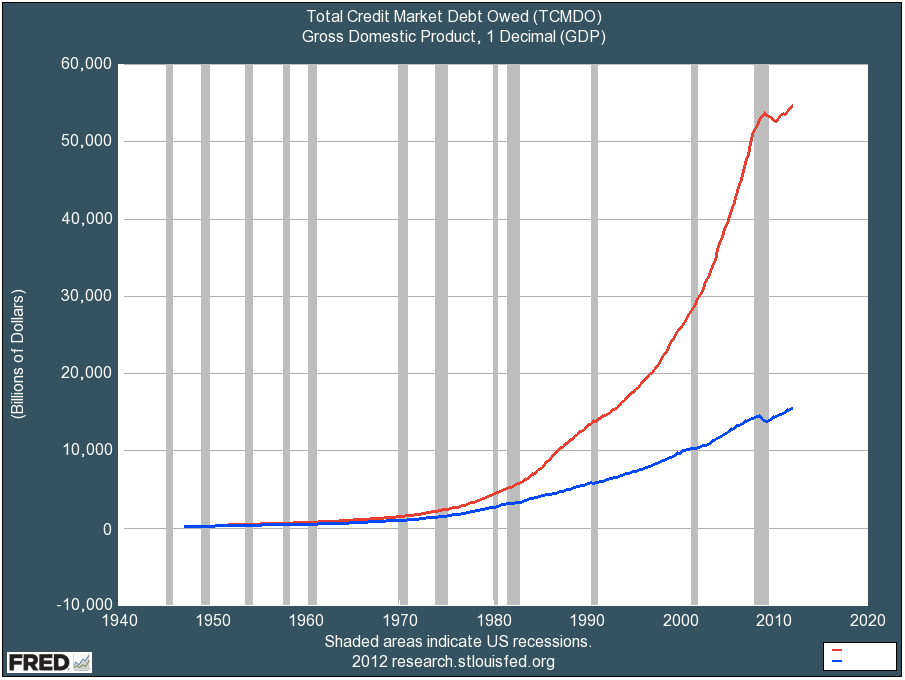
I was simply pointing out how supply-side was a total failure.
You're not "pointing it out," you making an erroneous claim based on your partisan bias in direct contradiction of established fact.
(I) Investment is a component of how we calculate GDP. It could be because I had a type-o and forgot the word "investments".
Oh, and by the way, I'm not a fan of this Administration. I didn't vote for the guy on both occasions.
Thank god for Wiki, huh?
For fun, here is the top ten economic performers - in inflation adjusted, 2005 dollars;
1. Clinton, 1993-2001, $2.7 trillion.
2. George W. Bush, 2001-2009, $1.7 trillion.
3. Reagan, 1981-1989, $1.6 trillion.
4. Johnson, 1963-1969, $741 billion.
5. Nixon, 1969-1974, $628 billion.
6. Eisenhower, 1953-1961, $484 billion.
7. Carter, 1977-1981, $461 billion.
8. George H.W. Bush, 1989-1993, $401 billion.
9. Obama, 2009-2012, $325 billion.
10. Kennedy, 1961-1963, $310 billion.
http://www.politifact.com/virginia/...ine-says-bill-clinton-presided-over-biggest-/
Funny thing, the top three all used Supply Side theories...
FDR sits at 31 - yeah, he was a ******* disaster.