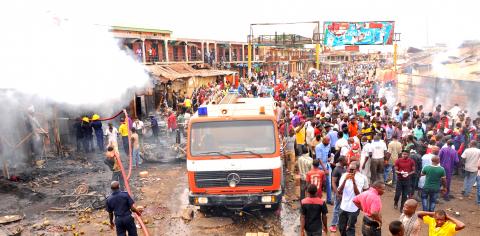
Gabriel Uche never heard the sound of the explosion. All he knew was his brick, zinc-roofed electronics shop was suddenly pitch dark and silent. Then came a burst of searing pain and a high-pitched wailing from his nine-months-pregnant wife. Uche's car was less than 10 metres from a car packed with explosives which detonated in a teeming business district in the central Nigerian city of Jos on Tuesday afternoon. Miraculously, he survived the twin explosions, believed to be the work of Islamist insurgents Boko Haram, that left at least 123 dead. "I came out and the first thing I saw was a woman with no head and no legs," he said, standing amid the twisted remnants of laptops and televisions, twisted into spidery globules of black metal. Gusts of wind carried the scent of ash and the acrid smell of burning flesh.
Next door, his neighbour Sunday's shop was an equally smouldering wreck. He was burnt alive along with three customers as flames from the car set his carpet shop ablaze. Abdulsalam Mohammed, of Nigeria's national emergency management agency, told the Guardian the death toll could rise as emergency workers cleared the rubble. In the shadow of a teaching hospital whose windows had been blasted out, diggers began moving sheets of metal, rubble and singed clothes from the streets. "We've spent most of this morning picking up body parts arms, legs, they were scattered over the rooftops," said one worker, staring blankly into the distance as he spoke. Nearby, the men had amassed a pile of ash-grey debris, from which a single pink high heel protruded.
No group has claimed responsibility, but the blast is probably the work of Boko Haram, which has recently escalated its five-year insurgency to carve a caliphate in northern Nigeria, and kidnapped more than 300 schoolgirls from a remote north-eastern school in April. In the past month, the group has set off two bombs in the capital, Abuja, and another in the country's second city, Kano. The second blast timed to go off as people rescued the victims from the first one mimics the tactics used in earlier blasts by the group. Witnesses said a group of youths crowded around a car they noticed was parked on the narrow, shop-lined street and warned panicked people fleeing the scene to stay away from there.
Late on Tuesday, Boko Haram gunmen also stormed through two settlements near Chibok, the village where the schoolgirls were kidnapped last month. Locals said at least 48 were killed in Alagarno and Shawa as the militants fired on fleeing civilians and razed parts of the village. Haruna Bitrus, a resident, said the attack had not provoked any response from an apparently beefed-up military presence in the area, part of three regions where a year-long state of emergency was extended this month. Nigeria's military has been stretched by attempts to police a vast, arid area in which fleet-footed insurgents have been able to make lightning raids. "While the gunmen were fleeing, three of their vehicles broke down and they have stayed behind to fix them. They were there up to this morning," with no response from the military, Bitrus told AFP.
MORE