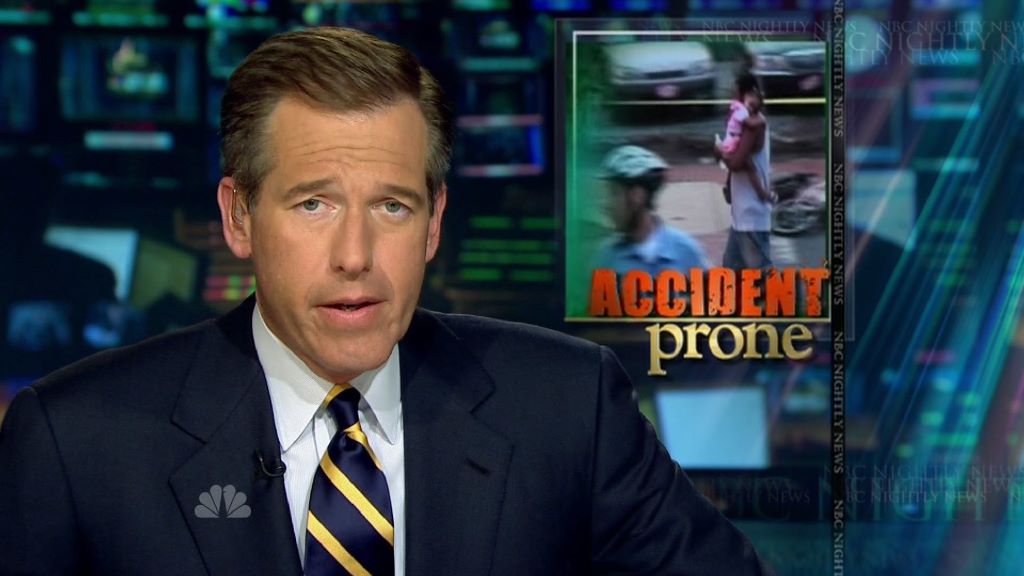
NBC’s Brian Williams didn’t just exaggerate one anecdote: He serially lied about nearly a dozen events he had covered, and continued to rake in millions after it. He was everything wrong with corporate news.

jacobinmag.com
Brian Williams didn’t just exaggerate one anecdote: He serially lied about nearly a dozen events he had covered, and continued to rake in millions after it. He was everything wrong with corporate news.
Williams embodies one of the more noxious and pervasive trends in not just US news media, but American life more generally: the normalization of serious ethical breaches and the lack of any serious accountability for people with wealth, power, or influence.
Williams didn’t just tell a story inaccurately one time, as this phrasing suggests. Williams told the story at least half a dozen times over the years, embellishing its details with each retelling, until he eventually started claiming it was his helicopter that had been fired on, not a different helicopter an hour ahead of his, as was the reality
In a statement on the Iraq helicopter episode, he insisted that he had “told the story correctly for years before [he] told it incorrectly,” that he “was not trying to mislead people,” and that “it came from a sloppy choice of words.”
More importantly, NBC chose to respond to one of their most trusted, well-known anchors publicly discrediting himself with a nonpunishment for the ages. Williams was first suspended without pay from the NBC Nightly News anchor’s desk for six months — unpleasant, but less harsh when you remember Williams was making in the ballpark of $15 million a year at that point.
new NBC News chair Andrew Lack decided he would save his friend’s career by plopping Williams at MSNBC, a place where, presumably, truth and credibility don’t matter. Lack declared Williams’s recent scandal was “ancient history,” and before long Williams was making between $8 and $10 million a year, a number that’s reportedly dropped to somewhere around $6 million in recent years. At a time when the median pay for journalists was less than $40,000, Williams’s punishment for publicly lying was to be paid as a multimillionaire.
Figures like Phil Donahue, Jesse Ventura, and Ashleigh Banfield were all removed by CNN or MSNBC for their criticism of Bush’s wars, while MSNBC later purged left-leaning hosts Cenk Uygur and Ed Schultz. Uygur says he was told by the network’s president to book more Republicans and that “we’re the establishment,” while Schultz charged he was fired shortly after the network killed his planned broadcast of Bernie Sanders’s announcement speech.
The rules seem clear: Lie publicly or cross major journalistic ethical lines, and as long as you’re a well-connected, big-time anchor, you’ll keep making millions. Just don’t dare take a position outside of these networks’ narrow ideological boundaries or do anything that might jeopardize their profits — that would be truly unacceptable.
Brian Williams ushered in our new era of media unaccountability. But of course, this neither begins nor ends with him, nor with the US press. In a world where Bush administration war criminals are rehabilitated as elder statesmen, lawbreakers in the national security state are turned into heroic defenders of justice, and the superrich openly indulge in crimes that they’re barely punished for, Williams was just one minor reminder that those in the upper tiers of American life live by a different set of rules than the rest of us.


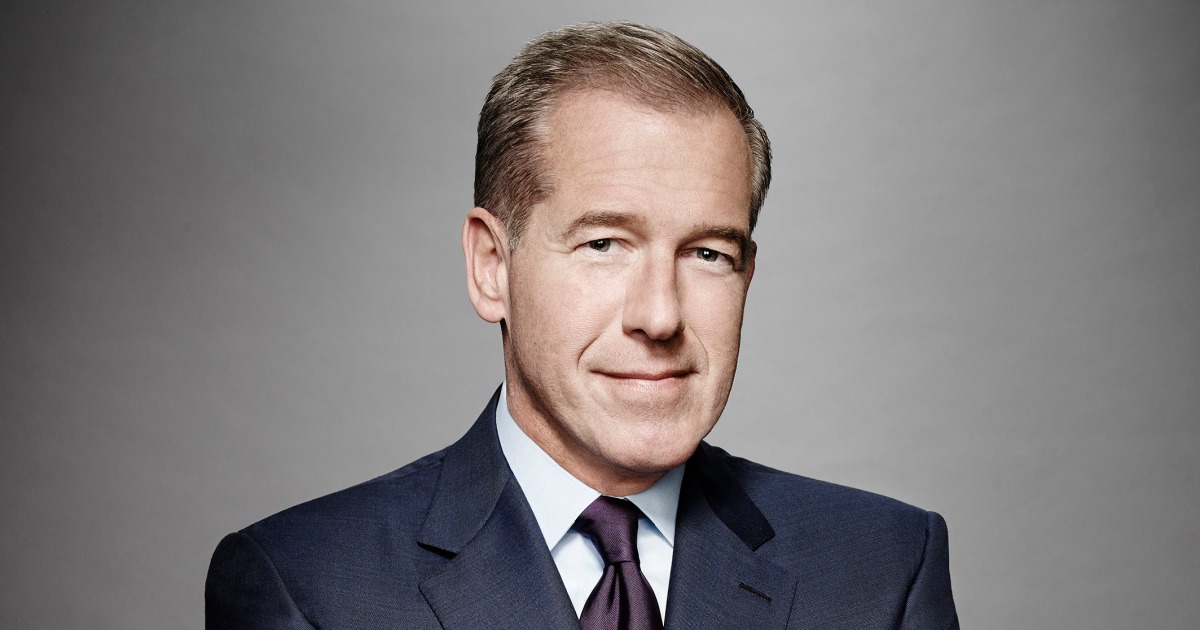


 .....(ok you can stop laughing or puking now)