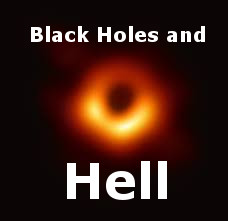
At the event horizon, time is theorized to stop.
To an outside observer watching something fall into the black hole, that something appears to slow and redden and fade forever, but it never quite stops or disappears. It's asymptotic.
The gravitational effects of the hole doesn't take place until passing the event horizon.
In the absence of any other accelerating force, the "event horizon" (not proper use of the term, but an analogue in some ways) for objects with mass is larger than the proper event horizon. All futures within the event horizon end up in the black hole., even for massless "objects". However, barring some sort of accelerating force, objects with mass near the event horizon will also always end up in the black hole. But its not a true event horizon, as we can still see light reflected off of these objects, and possible futures for these objects do exist that don't end up in the black hole (such as , a future where the object fires a thruster pushing it away from the black hole).
This is why we expect there to be a relatively empty gap between the inner 'ring' of material orbiting a black hole and the event horizon.
The black hole exerts a force of gravity on other objects just as any other massive object would. Yes, planets can orbit black holes, just like they would any other star with the same mass.




 .
.