Not even sure where to begin replying to this bag of crazy.
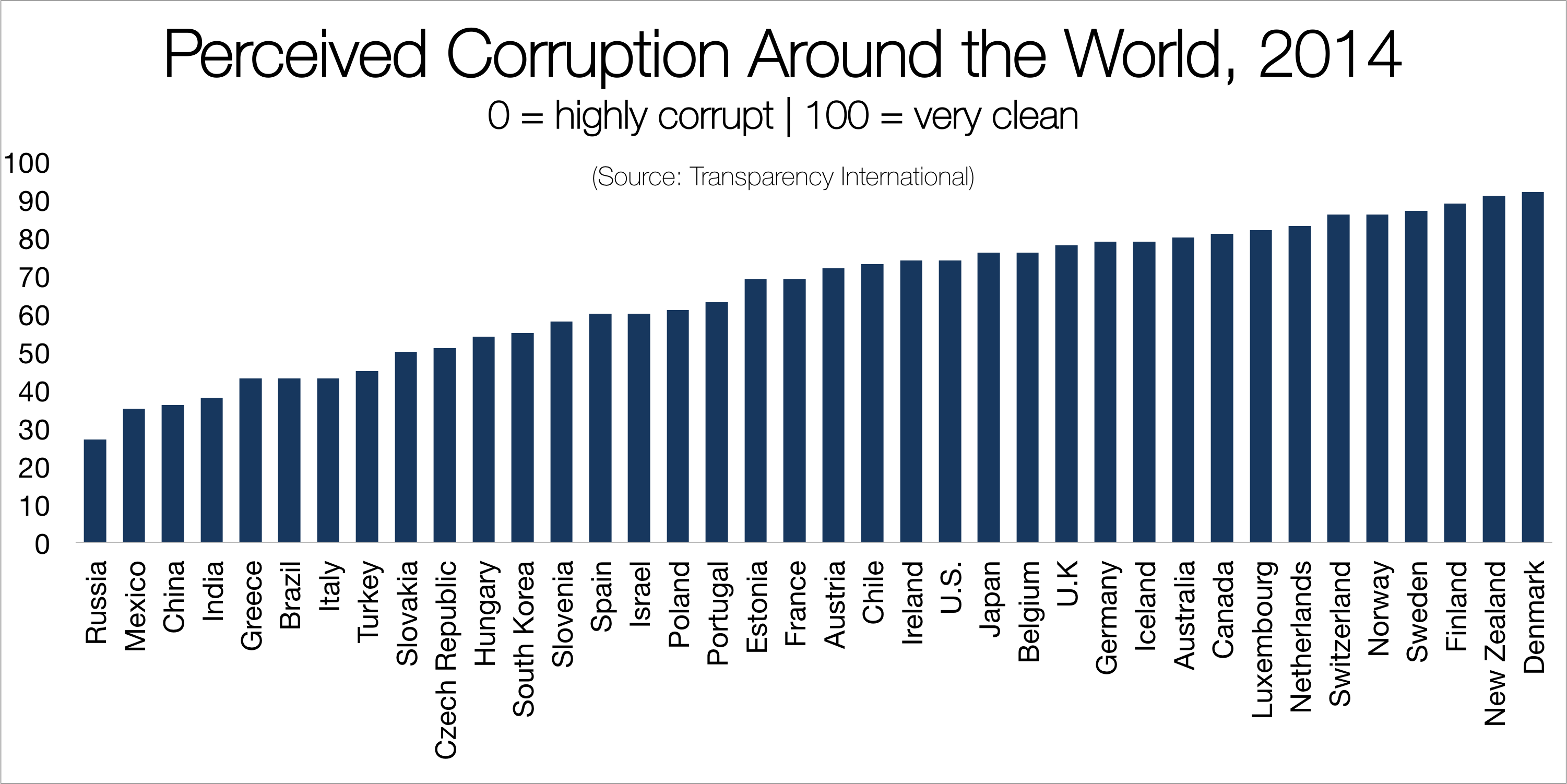
Russia was not a victim of anything it's people could not fix in 100 years. And even IF it's somehow not-Russia-fault ...it's a still a shithole that can't hold a candle to quality of life in most EU countries, no matter who you blame for it.
No, you don't know how to reply because you are ignorant and woefully so. You think life is so great in the E.U that has been hit with huge austerity measures so that they can continue to "borrow" from the IMF that asks for more and more of their country's resources as collateral? Yeah, I am going to say that you are either an idiot or hopelessly stupid and ignorant.
"You think life is so great in the E.U ..."
The Left usually parrots mindless bumper-stickers not based on reality....
BTW.... "It is a vulgar mistake to think that most people in Eastern Europe are miserable," wrote [Paul] Samuelson in the tenth edition of his textbook "Economics." This, mind you, in the aftermath of the 1953 East German uprising, the 1956 Hungarian uprising and the Poznan protests in Poland, the 1968 revolution in Czechoslovakia--all suppressed with bloodshed by Soviet tanks."
http://www.beichman.com/Articles/SAMUELSN.htm
Which, of course, explains all the Russian ex-pats buying real estate in London, Paris and New York, and sticking all their money in a London, Switzerland, Cyprus and the Caymans, compared to all the Europeans living in all these awful EU countries fleeing to Moscow and stashing their money in Russian banks.

Maybe, Russian ex-pats, stealing a lot of Russian money, are not enough criminalized to live comfortable in criminal and corrupted Russia... Or Putin just waiting of "Rat Wolf" born from them, with gathered capital, which must be returned to Russia back...
Except that they do live comfortable lives in Russia.
Just walk through Mayfair or Belgravia or other neighborhoods in London where rich Russians have bought homes, or apartments in places such as Billionaire's Row in midtown Manhattan, and you see few people actually living in them.
It's a place for the Russian kleptocracy who rule the country to store their wealth.
I can help with your education......
"Communal apartments, where strangers lived as one big family, shaped many generations of Soviet and Russian citizens, and continue to exist even today. The lack of a private life, a striving to dole out rights and responsibilities equally, snitching, and a willingness to help one’s neighbors were all characteristic of an upbringing in a communal apartment.
Communal apartments are a unique Russian phenomenon. They first appeared after the revolution in 1917, when
residential real estate became public property. The authorities began to divide up the apartments of wealthy citizens into smaller units in order to solve the chronic housing shortage brought on by the country’s rapid industrialization, which attracted many people to big cities. During the chaotic period of the 1920s, many peasants were also forced to seek shelter in cities
in order to survive as collectivization robbed them of a livelihood. Securing a job at a factory or institution meant that they could get a room in a communal apartment.
An adult was eligible for about 10 square meters, and a child was eligible for five (these regulations changed later). The peasants of yesterday were the new neighbors of the pre-revolutionary intelligentsia; kitchen staff started sharing bathrooms with university professors. This lifestyle may not have been easy, but it adhered to
the official ideology of Communal apartments are a unique Russian phenomenon. This description
still holds true for many surviving kommunalki today, in which
little appears to have changed in the last 30 or 40 years.
According to official data cited by Ilya Utekhin in Sketches of Communal Living, even as late as 2001, communal apartments comprised 35-38 percent of housing in central St. Petersburg and over 10 percent of the city’s total housing stock. Even today, the city has more communal apartments than any other city in Russia and it is not unusual to meet somebody who lives in a kommunalka.
The demand for rooms in communal apartments remains stable. In Moscow, not everyone can afford to rent an apartment (rent costs about $850-900), but rooms in communal apartments (about $500-625) are affordable to a lot of young people and those who have relocated to Moscow from other cities."
In it together: How communal apartments shaped the outlook of generations
"In Petersburg, when the apartments of the bourgeoisie were divided for the workers, sometimes a door was left. Was a time the wet nurse's room and the nursery. Now for three, four, five families. A door in an old wall. If you had such a door, into your neighbor's apartment,you kept it a secret. A bookcase in front of it. Yes.
A way to get out. When they come for you. "
From the novel "Skinner," Charlie Huston, p. 197.


 ) Much of them just have a "villager complex"