For once, she must had a weak immune system that couldn't fight off the parasite. And these parasites feeds on bacteria . And so she must have had a weak immune system that didn't fought off bacteria that reaches the brain.
There has been a lot of unhealthy gut bacteria reaching to the brain lately from consuming GMO's. And Gmo's helps lower the immune system letting invaders to travel through all parts of the body freely.
And then they are monkeying around with genetics, enhancing species capabilities. Who knows, this could be a test run for a new bio-weapon. It does says in the scriptures that a third of our water and creatures will die due to something about worm in a wood.
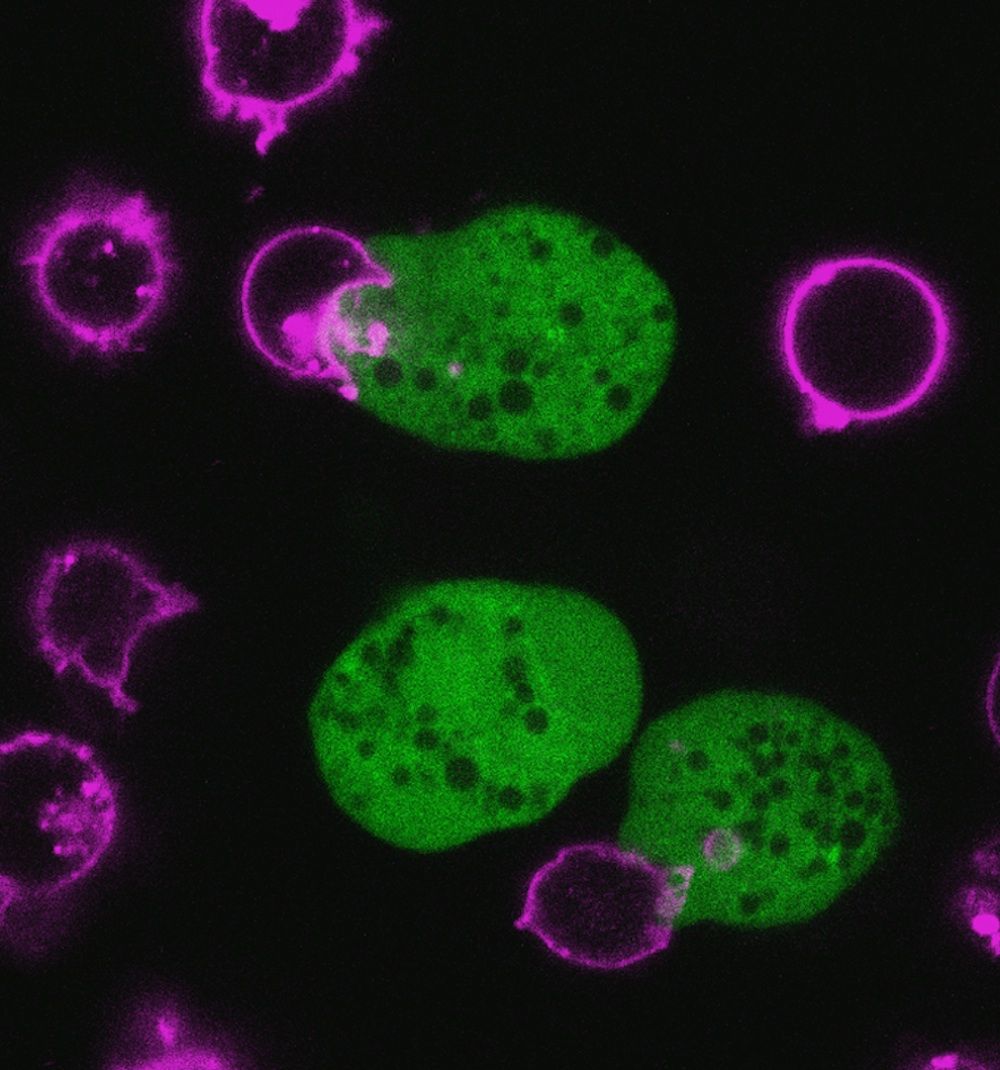
Intriguingly, the amoebae likely derive little sustenance from the cells they nibble to death, the researchers said. Moreover, the amoebae do not feed on the corpses of the cells they kill — once the cells are dead, the parasites detach, effectively spitting out the corpses. The amoebae probably live mostly off the hordes of bacteria that normally live in the human gut, the researchers said.
If the amoebae aren't getting significant nutritional value from the cells they bite to death, then why kill them? They could be doing so to evade the human
immune system, the researchers suspect.
Researchers observed amoebae killing cells by eating them alive.

www.livescience.com
Thanks to progress being made in genetic engineering, though, a way to rev up the speed at which the bacteria digest plastic could soon be at hand. The scientists performing the study have already sequenced the bacteria’s genome and using gene editing techniques, are well on their way to figuring out a way to increase its plastic eating potency. Technologies like CRISPR, the subject of much hand wringing recently when Chinese scientists used it to
edit the genomes of human embryos, are in bad need of a success story.
Genetically engineering a bacterium that eats plastic could fix the world's spiraling problem of waste disposal.

www.extremetech.com


 nypost.com