Not if it is more absurd what I say or you who say that the Etruscans were Celts ????
Ancient historiography affirms quite the opposite about the Etruscans, and places them as an ethnic group from Anatolia, with a Semitic lexicon, we take the study of Marco Carrara.
In practice, they were originally Levantines, who, for commercial reasons, settled in colony in some areas of Anatolia, where they made a family with the local women, before migrating to today's Tuscany.
Etruscan: An Anatolian language with an archaic morphology and a Semitic lexicon
Native and Eastern Pre-Indo-European peoples.
Cisalpina:
The Orobi, according to Pliny the Elder (quoting the words of Origines, a lost work by Cato the Censor) attributes to them the foundation of Como, Bergamo, Licini Forum and Parra, while Cornelio Alessandro reports their entic descent to the Greeks.
Classical historians, like Pliny himself, consider them to be of Greek origin. The modern interpretation is different, a better analysis of the name reveals a more likely Ligurian origin: or is a pre-Indo-European term which means water and bo is an Indo-European term given to houses. Considering that the name Orumbovi was transmitted to the Romans by the Gauls, nothing more logical than to interpret it as "those who live on the water or pile dwellings"
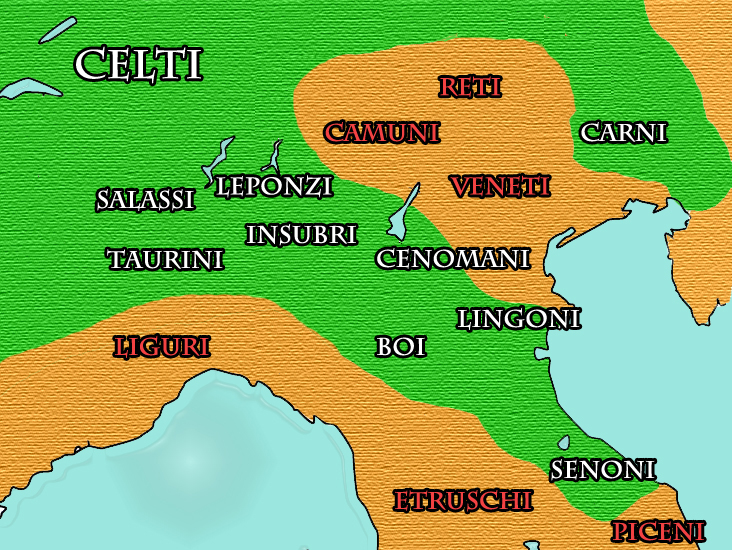
The Orobi therefore, together with other peoples that the classical authors confirm to us lived in these regions, such as the Lepontii, the Moesiates, the Insubres and the Laevi Ligures, are considered by archaeologists and glottologists to be a population of Celtized Ligurians or Celto-Ligurians formed through the penetration of people from the Rhine and Danube regions into north-western Italy in a much older age than the historic Celtic invasions of the 4th century BC and settled between Oglio and Ticino.
according to the Roman historian Pliny the Elder, the Reti were divided into various groups, however, attributable to a single ethnic-cultural entity of Etruscan origin.
The Greek historian Strabo (58 BC-25 AD) describes the Leponzi (together with the Camuni) as one of the communities in which the Reti were divided.The grouping of the Lepontic inscriptions in a single Celtic language is discussed: some (especially the oldest ) are considered written in a non-Celtic language similar to Ligurian (Whatmough 1933, Pisani 1964). In this opinion, which was prevalent until 1970, lepontius is the correct name for the non-Celtic language, while the Celtic language must be called the Cisalpine Gallic language.
Following the opinion of Lejeune (1971), the prevailing idea became that Lepontius must be classified as a language of the Celtic family, although it is probably as divergent as Celtiberian, and in any case quite distinct from Cisalpine Gaul. In the last few years alone, there has been a tendency to identify Lepontic and Cisalpine Gaul as one and the same language.
According to a Lydian tradition reported by the Greek historian Herodotus of the 5th century BC. the Etruscans would have come from Lydia (current southern Anatolian Turkey), set sail from the port of Smyrna following a famine. In fact, initially, to cope with this emergency, the Lydians had invented many games with which to enjoy themselves, thus eating every other day and enjoying these activities on the days when they did not eat.
Within the thesis of oriental provenance, a Pelasgian hypothesis was already elaborated in ancient times. According to Ellanicus of Lesvos, a Greek historian of the fifth century BC, the Etruscans were Pelasgians, mythical people of ancient Greece, always of oriental origin, radiating in various regions of the Mediterranean Sea, who would have settled in the area of Etruria giving themselves the name by Tirreni.
The eastern hypothesis seems confirmed by some modern genetic studies carried out by the University of Turin on the populations of Murlo and Volterra, located in the original nucleus of the Etruscan civilization, which would present haplogroups and mDna very similar to those of today's populations of the Anatolian coasts and the Near Orient.
According to modern genetic theories, the Pelasgic populations (precedents of the Minoan and Hellenic cultures) belonged to the haplogroups of type I (arrived from the Middle East as haplogroup IJ about 35,000 years ago and developed into haplogroup I about 25,000 years ago), E-V13 and T ( arrived from the Syrian area, after colonizing southern Anatolia, in the Neolithic era, 8,500 / 7,000 years ago) and G2a (arrived from the Caucasus, through southern Anatolia about 6,000 years ago, linked to sheep farming and metalworking) .
these genetic and historical theories also seem to explain the myth of the titanomachy which would explain the historical truths of the successive Hellenic invasions (Ionian, Aeolian and Achaean) to the detriment of the local (Pelasgic) populations
Other scholars have attributed a number of non-Indo-European cultural and linguistic characteristics to the Pelasgians.
The Insubri, from the latest discoveries, also supported by archaeological finds and their analyzes, rank them very well as a people of Ligurian ethnicity.
As for the Taurini, the most common opinion places them among the Ligurian ethnic group, even if the centuries-old contact with Celtic populations could have changed their culture, to the point of making them not clearly differentiable from the latter. In this sense, for Pliny and Strabone they were "ancient Ligurians", for Livio "semi-galli", even today they are often prudently defined and, generically, the Celto-Ligurians, in practice, the Tautini were Ligurians of ethnicity but Celts culturally.
According to Polybius, their main site was Taurasia, but it has not yet been possible to indicate its exact position archaeologically, even if it is located near the confluence of the Po and the Dora Riparia, that is, in the Vanchiglietta area of today's city of Turin. .
POPULATIONS OF LIGURIAN ETHNIA:
1. In Spain the ELESYCES.
2. Within France the SEGOBRIGI.
3. In the south of France: SALLUVI and OXYBI.
4. From Varo alla Turbia, the VEDIANZI, whose capital was Cemenello (today Cimiez); Nice and Monaco being colonies of the Massaliots.
5. On the Italian-French Alps: the DECLATES, the NERUSI, the NEMETURI, the SUETRI.
6.North Italy: Piedmont and Lombardy up to Lugano: LEPONTI, INSUBRI, SALASSI, AGONES, LIBUI, TAURINI, CAPILLATI, LIBICI, VENTAMOCORI, LAEVI, MARICI.
7. Between Emilia and Lombardy: LANGENSES, CELEIATES.
8. From Turbia to the Impero stream, the INTEMELI, capital of Ventimiglia.
1.From the Empire to Finale, that is to the Pora stream, the INGAUNI, capital of Albenga, and to the north of these, the EPANTERJ (upper Val Tanaro and Val Bormida).
9.From Pora to the Lerone stream, between Cogoleto and Arenzano i SABAZI, capital of Vadi Sabazi, today I am Vado. To the north are the StatiELLI with capital Carystum, and the BAGIENNI in present-day Piedmont.
1.From the Lerone stream to Portofino, the GENUATI, capital of Genoa, and upstream of them in the upper Val Polcevera, the VETURII whose dominion continued up to Voltri.
10. From Portofino to Capo Mesco, the TIGULI, with the oppids Tigulia and Segesta. To the north the VELEIATI.
1. From the border of the Tiguli to that of Luni, the APUANI (The Apuans were deported en masse "47,000 people" in Sannio and Campania following the Romanization) capital Pontremoli. To the north, up to the Garfagnana the FRINIATI and the CASUENTILLANI.
2. On the border with Tuscany, near the island of Elba (the island was called Ilva): ILVATES.
To the south:
Elimi, Sicani, Sardi (divided into Iolei and Balari, the latter perhaps Indo-European), Corsi.
Indo-Europeans (Celts from the Kurgan area - "Italics" and Germans.):
In Cisalpina we find the Cenomani of Segoveso, who were originally from the region around the current city of Le Mans (Maine), west of the Carnuti between the Seine and the Loire, similar to the Aulerci Brannovici and the Aulerci Eburovici.
The Meats came from the original plains between the Rhine and the Danube, the Salassi came from the La Tène culture, formed north of the Alps around the 6th century BC. Following their expansion towards the south, the Salassi arrived in the Dora Baltea valley and in the Canavese, sparsely populated areas, colonizing the entire territory and founding Eporedia (today's Ivrea), the Lingoni were a Celtic people of Gaul, settled among the rivers Seine and Marne (France). Some of them migrated around the Alps, settling in Gallia Cisalpina (northern Italy), at the mouth of the Po in the area of Ferrara (Emilia), around 400 BC.
The Senones of Brenno who came from the territories now occupied by the districts of Seine-et-Marne, Loiret and Yonne. 53 to 51 BC they were at war with Caesar, after which they disappeared from history. They were then included in Gallia Lugdunensis.
The Boi, originally from central Europe, perhaps from the same regions that still bear their name of Bohemia and Bavaria today.
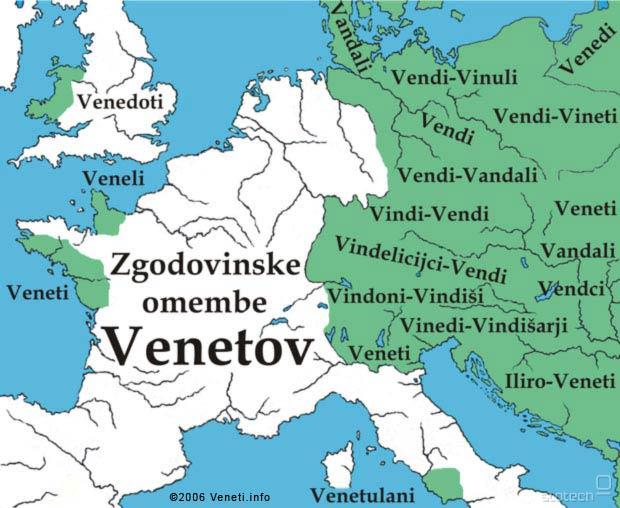
In Transpadana Gaul, that is north of the Po, where Insubri, Cenòmani and Paleoveneti were settled, Roman agrarian property overlapped almost peacefully with the pre-existing Celtic tribal systems of the Gallic tribes and the inhabited centers of Venetics (this people, it must be remembered, absolutely not Celtic, and probably of Italic lineage. Rome left ample room for the survival of the original settlement and this was one of the elements that favored a non-violent epilogue of the Romanization process. Considerable importance for aggregating the villages and tribes not yet urbanized the institute dell'Adtributio, thanks to which the villages and rural tribes were "ascribed" to an existing urban center.
The Roman intervention in Cispadana (today Emilia-Romagna and Liguria), however, was characterized by agricultural confiscations and land redistribution. Here, within the Roman retaliation against the allies of Carthage during the Second Punic War, entire populations were almost completely exterminated or deported, so as to make room for new Roman-Italic colonists. This decimation mainly affected the Boi and Senoni among the Celts and the Apuans (pre-Indo-European) among the Ligurians, causing a radical upheaval in the demographic structure of these regions. This was followed by the establishment of an agrarian economy, the most advanced of the time, articulated between small, medium and large properties conducted as monoculture companies, whose products were then sold in urban markets.
Augustus grouped the Italic cities according to ethnic, linguistic and geographical criteria also in order to carry out censuses for large areas but fairly homogeneous from these points of view. It is worth remembering that the new reorganization was also of fundamental importance for the purpose of recruiting the legions. Keppie claims that 65% of Italic citizens belonged to the Roman army (mostly from Cisalpine Gaul), while the remaining 35% consisted of provincials, also with Roman citizenship, for a total of about 140,000 men.
Do you notice the phenotypic differences?
Don't tell me you really believe that the Etruscans were Celts - or native to Tuscany?