Guess we shouldn't let is pass without a challenge to the statement that most of the last several centuries' tech advances came from military roots - stats, please. Difficult to believe.
History of military technology - Wikipedia, the free encyclopedia
The Department of Defense primarily funded what has been broadly described as “physical research,” but to reduce this to merely chemistry and physics is misleading. Military patronage benefited a large number of fields, and in fact helped create a number of the modern scientific disciplines. At Stanford and MIT, for example, electronics, aerospace engineering, nuclear physics, and materials science—all physics, broadly speaking—each developed in different directions, becoming increasingly independent of parent disciplines as they grew and pursued defense-related research agendas. What began as interdepartmental laboratories became the centers for graduate teaching and research innovation thanks to the broad scope of defense funding. The need to keep up with corporate technology research (which was receiving the lion’s share of defense contracts) also prompted many science labs to establish close relationships with industry.[22]
Computing
Computing
The complex histories of computer science and computer engineering were shaped, in the first decades of digital computing, almost entirely by
military funding. Most of the basic component technologies for digital computing were developed through the course of the long-running Whirlwind-SAGE program to develop an automated radar shield. Virtually unlimited funds enabled two decades of research that only began producing useful technologies by the end of the 50s; even the final version of the SAGE command and control system had only marginal military utility. More so than with previously-established disciplines receiving military funding, the culture of computer science was permeated with a Cold War military perspective. Indirectly, the ideas of computer science also had a profound effect on psychology, cognitive science and neuroscience through the mind-computer analogy.[23]
Geosciences and astrophysicsThe history of earth science and the history of astrophysics were also closely tied to military purposes and funding throughout the Cold War. American geodesy, oceanography, and seismology grew from small sub-disciplines in into full-fledged independent disciplines as for several decades, virtually all funding in these fields came from the Department of Defense. A central goal that tied these disciplines together (even while providing the means for intellectual independence) was the figure of the Earth, the model of the earth’s geography and gravitation that was essential for accurate ballistic missiles. In the 1960s, geodesy was the superficial goal of the satellite program CORONA, while military reconnaissance was in fact a driving force. Even for geodetic data, new secrecy guidelines worked to restrict collaboration in a field that had formerly been fundamentally international; the Figure of the Earth had geopolitical significance beyond questions of pure geoscience. Still, geodesists were able to retain enough autonomy and subvert secrecy limitations enough to make use of the findings of their military research to overturn some of the fundamental theories of geodesy.[24] Like geodesy and satellite photography research, the advent of radio astronomy had a military purpose hidden beneath official astrophysical research agenda. Quantum electronics permitted both revolutionary new methods of analyzing the universe and—using the same equipment and technology—the monitoring of Soviet electronic signals.[25]
Military interest in (and funding of) seismology, meteorology and oceanography was in some ways a result of the defense-related payoffs of physics and geodesy. The immediate goal of funding in these fields was to detect clandestine nuclear testing and track fallout radiation, a necessary precondition for treaties to limit the nuclear weapon technology earlier military research had created. In particular, the feasibility of monitoring underground nuclear explosions was crucial to the possibility of a comprehensive rather than partial nuclear test ban treaty.[26] But the military-funded growth of these disciplines continued even when no pressing military goals were driving them; as with other natural sciences, the military also found value in having ‘scientists on tap’ for unforeseen future R&D needs.[27]
[edit] Biological sciencesThe biological sciences were also affected by military funding, but, with the exception of nuclear physics-related medical and genetic research, largely indirectly. The most significant funding sources for basic research before the rise of the military-industrial-academic complex were philanthropic organizations such as the Rockefeller Foundation. After World War II (and to some extent before), the influx of new industrial and military funding opportunities for the physical sciences prompted philanthropies to divest from physics research—most early work in high-energy physics and biophysics had been the product of foundation grants—and refocus on biological and medical research.
The social sciences also found limited military support from the 1940s to the 1960s, but much defense-minded social science research could be—and was—pursued without extensive military funding. In the 1950s, social scientists tried to emulate the interdisciplinary organizational success of the physical sciences’ Manhattan Project with the synthetic behavioral science movement.[28] Social scientists actively sought to promote their usefulness to the military, researching topics related to propaganda (put to use in Korea), decision making, the psychological and sociological causes and effects of communism, and a broad constellation of other topics of Cold War significance. By the 1960s, economists and political scientists offered up modernization theory for the cause of Cold War nation-building; modernization theory found a home in the military in the form of Project Camelot, a study of the process of revolution, as well as in the Kennedy administration’s approach to the Vietnam War. Project Camelot was ultimately canceled because of the concerns it raised about scientific objectivity in the context of such a politicized research agenda; though natural sciences were not yet susceptible to implications of the corrupting influence of military and political factors, the social sciences were.[29]
The term RADAR was coined in 1941 by the United States Navy as an acronym for radio detection and ranging to replace the British RDF (Radio Detection and Finding).[1][2] Thus, a true radar system must both detect and provide range (distance) information for a target. Before 1934, no single system gave this performance; some systems were omni-directional and provided ranging information, while others provided rough directional information but not range. A key development was the use of pulses that were timed to provide ranging, which were sent from large antennas that provided accurate directional information. Combining the two allowed for accurate plotting of targets.
In the 1934–1939 period, eight nations developed, independently and in great secrecy, systems of this type: the United States, Great Britain, Germany, the USSR, Japan, the Netherlands, France, and Italy. In addition, Great Britain had shared their basic information with four Commonwealth countries: Australia, Canada, New Zealand, and South Africa, and these countries had also developed indigenous radar systems. During the war, Hungary was added to this list.[3]
History of radar - Wikipedia, the free encyclopedia
Military invention - Wikipedia, the free encyclopedia
Global Positioning System - Wikipedia, the free encyclopedia
Digital photography - Wikipedia, the free encyclopedia
Jet engine - Wikipedia, the free encyclopedia
http://en.wikipedia.org/wiki/McDonnell_Douglas#Military_airplanes
Walkie-talkie - Wikipedia, the free encyclopedia
Advancements in military technology in the United States from 1775 to Present timeline | Timetoast timelines
---
I'm not saying the military is the only way to get advances. Nasa, Jpl make good advances towards science, but the military has played a huge part of making our lives as they're today.
We wouldn't have satellites if it wasn't for rockets to get into space.
Modern rocketry[edit] Pre-World War II
Robert Goddard and the first liquid-fueled rocket.Modern rockets were born when Goddard attached a supersonic (de Laval) nozzle to a liquid-fueled rocket engine's combustion chamber. These nozzles turn the hot gas from the combustion chamber into a cooler, hypersonic, highly directed jet of gas, more than doubling the thrust and raising the engine efficiency from 2% to 64%.[49][50] In 1926, Robert Goddard launched the world's first liquid-fueled rocket in Auburn, Massachusetts.
During the 1920s, a number of rocket research organizations appeared worldwide. In 1927 the German car manufacturer Opel began to research rocket vehicles together with Mark Valier and the solid-fuel rocket builder Friedrich Wilhelm Sander.[51] In 1928, Fritz von Opel drove with a rocket car, the Opel-RAK.1 on the Opel raceway in Rüsselsheim, Germany. In 1928 the Lippisch Ente flew, rocket power was used to launch the manned glider, although it was destroyed on its second flight. In 1929 von Opel started at the Frankfurt-Rebstock airport with the Opel-Sander RAK 1-airplane, which was damaged beyond repair during a hard landing after its first flight.
In the mid-1920s, German scientists had begun experimenting with rockets that used liquid propellants capable of reaching relatively high altitudes and distances. In 1927 and also in Germany, a team of amateur rocket engineers had formed the Verein für Raumschiffahrt (German Rocket Society, or VfR), and in 1931 launched a liquid propellant rocket (using oxygen and gasoline).[52]
From 1931 to 1937 in Russia, extensive scientific work on rocket engine design occurred in Leningrad at the Gas Dynamics Laboratory there. Well-funded and staffed, over 100 experimental engines were built under the direction of Valentin Glushko. The work included regenerative cooling, hypergolic propellant ignition, and fuel injector designs that included swirling and bi-propellant mixing injectors. However, the work was curtailed by Glushko's arrest during Stalinist purges in 1938. Similar work was also done by the Austrian professor Eugen Sänger who worked on rocket-powered spaceplanes such as Silbervogel (sometimes called the 'antipodal' bomber.)[53]
On November 12, 1932 at a farm in Stockton NJ, the American Interplanetary Society's attempt to static fire their first rocket (based on German Rocket Society designs) failed in a fire.[54]
In 1930s, the Reichswehr (which in 1935 became the Wehrmacht) began to take an interest in rocketry.[55] Artillery restrictions imposed by the Treaty of Versailles limited Germany's access to long distance weaponry. Seeing the possibility of using rockets as long-range artillery fire, the Wehrmacht initially funded the VfR team, but because their focus was strictly scientific, created its own research team. At the behest of military leaders, Wernher von Braun, at the time a young aspiring rocket scientist, joined the military (followed by two former VfR members) and developed long-range weapons for use in World War II by Nazi Germany.[56]
[edit] World War II
A German V-2 rocket on a Meillerwagen
Layout of a V2 rocketIn 1943, production of the V-2 rocket began in Germany. It had an operational range of 300 km (190 mi) and carried a 1,000 kg (2,200 lb) warhead, with an amatol explosive charge. It normally achieved an operational maximum altitude of around 90 km (56 mi), but could achieve 206 km (128 mi) if launched vertically. The vehicle was similar to most modern rockets, with turbopumps, inertial guidance and many other features. Thousands were fired at various Allied nations, mainly Belgium, as well as England and France. While they could not be intercepted, their guidance system design and single conventional warhead meant that it was insufficiently accurate against military targets. A total of 2,754 people in England were killed, and 6,523 were wounded before the launch campaign was ended. There were also 20,000 deaths of slave labour during the construction of V-2s. While it did not significantly affect the course of the war, the V-2 provided a lethal demonstration of the potential for guided rockets as weapons.[57][58]
In parallel with the guided missile programme in Nazi Germany, rockets were also used on aircraft, either for assisting horizontal take-off (JATO), vertical take-off (Bachem Ba 349 "Natter") or for powering them (Me 163,[59] etc.). During the war Germany also developed several guided and unguided air-to-air, ground-to-air and ground-to-ground missiles (see list of World War II guided missiles of Germany).
The Allies rocket programs were much less sophisticated, relying mostly on unguided missiles like the Soviet Katyusha rocket.
http://en.wikipedia.org/wiki/Rocket
Some military and some civilian.
Medieval technology - Wikipedia, the free encyclopedia
Ancient Greek technology - Wikipedia, the free encyclopedia
Roman technology - Wikipedia, the free encyclopedia
http://en.wikipedia.org/wiki/Roman_engineering
List of Byzantine inventions - Wikipedia, the free encyclopedia
Roman military engineering - Wikipedia, the free encyclopedia
When invading enemy territories, the Roman army would often construct
roads as they went, to allow swift reinforcement and resupply, as well as a path for easy retreat if necessary. Roman road-making skills are such that some Roman roads survive to this day. Michael Grant credits the Roman building of the Via Appia with winning them the Second Samnite War.[4]
Bridge building
Trajan's Bridge across the Danube, the longest bridge for over a millenniumFurther information: Roman bridge
The engineers also built bridges from both timber and stone depending on required permanence, time available etc. Some Roman stone bridges survive to this day. Stone bridges were made possible by the innovative use of the keystone to allow an arch construction. One of the most notable examples of military bridge-building in the Roman Empire was Julius Caesar's Bridge over the Rhine River. This bridge was completed in only ten days and is conservatively estimated to be more than 100 m (300 feet) long.[1][2] The construction was deliberately over-engineered for Caesar's stated purpose of impressing the Germanic tribes,[3] who had little experience of engineering, and to emphasise that Rome could travel wherever she wished. Caesar was able to cross over the completed bridge and explore the area uncontested, before crossing back over and dismantling the bridge. Caesar relates in his War in Gaul that he "sent messengers to the Sugambri to demand the surrender of those who had made war on me and on Gaul, they replied that the Rhine was the limit of Roman power". The bridge was intended to show otherwise.
Roman technology - Wikipedia, the free encyclopedia

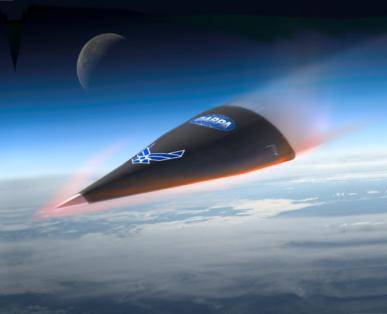


 We would of never broke a rock to make a sharp edge or developed roads, computers, satellites, houses to live comfortably. All this was developed through people thinking and carrying through with it. Life isn't worth living if we stop our forward precession. What the **** is the purpose of life?
  You'd likely see that as something good.


