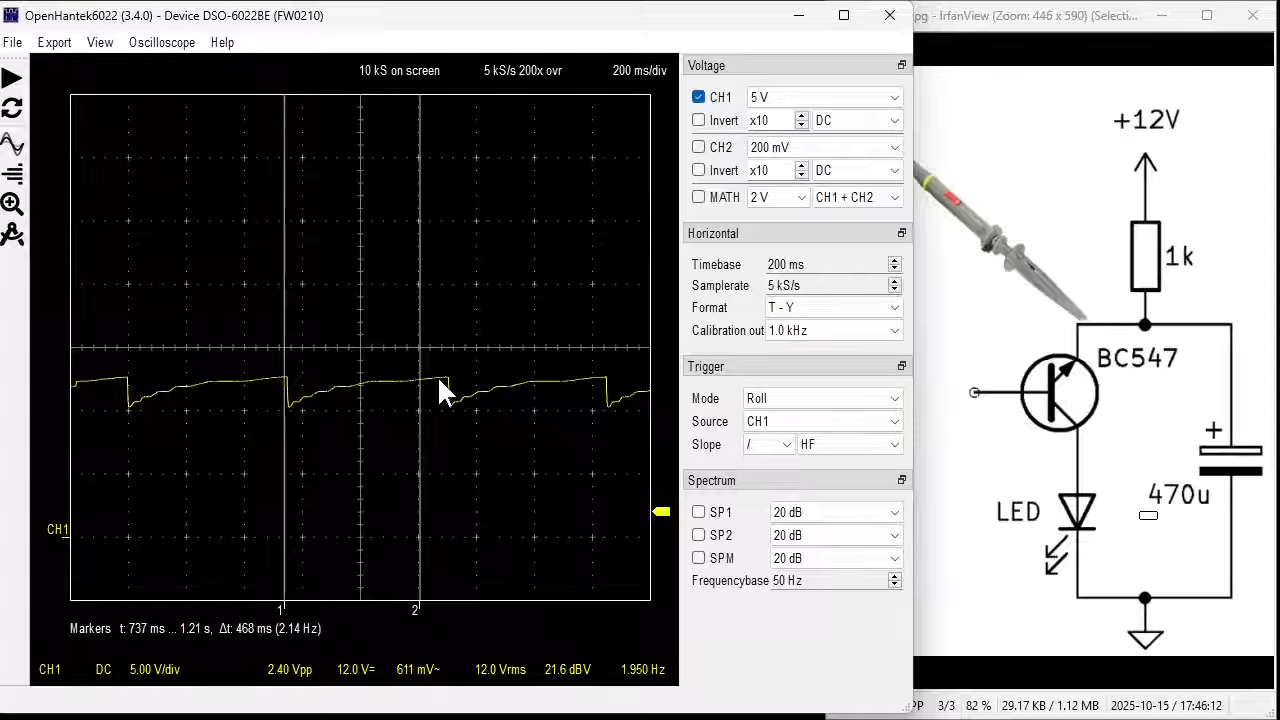
For an NPN transistor, the collector wants to be positive. So you connect the + side of your battery to the collector, and the - side to the emitter. There are usually resistors on both sides, between the transistor and the battery. The curves in this pic show how the transistor operates. Vce is your collector to emitter voltage, which is your battery. Ic is the collector current.
The idea of the transistor is, the base current is very small, and it regulates the much larger current from emitter to collector. Essentially the base is acting as a "gate" for the current between the emitter and the collector.
In the pic, you can see the values of base current (Ib), and the operating behavior of each curve.
The point Q is where you want to set your bias ("quiescent operating point") so there is plenty of headroom in any direction and so the transistor is sitting more or less in the middle of its linear operating range. When that is the case, a tiny change in base current will bring about a much larger change in collector current, therefore your transistor will "amplify" any signal arriving at its base.
This link describes some of the ways of biasing an NPN transistor. The idea is, you put a small positive voltage on the base, and a larger positive voltage on the collector.
I was told to connect the inductor and capacitor to the base of the transistor and the collector, but was also told that part of the output needs to circle around to the input. The base is the input to the transistor but it seems like the emitter is the output? the collector is also an input, so does attaching two inputs create a loop?
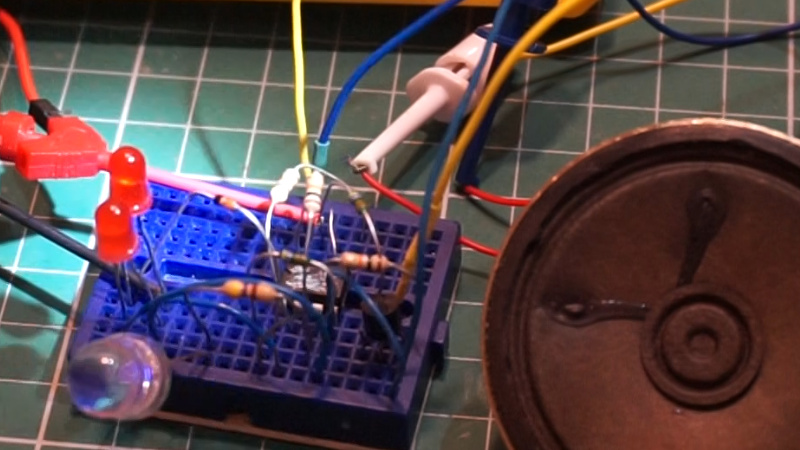
Your output (speaker connection) can come from any point in the circuit where there is a changing signal. You must isolate your speaker from DC, there can be no DC allowed in the load. There are two ways of doing this: 1) you can "inline" the load in either the collector leg or the emitter leg of your circuit (that's how you're doing it, you're inlining the little red speaker in the emitter leg), or 2) you can isolate your speaker from DC with either a capacitor or a transformer, and connect it in parallel with any of the load resistors.
An emitter follower (your circuit) is also called a "common collector" circuit). That means you connect the commons (grounds) of both your input and output to the collector side rather than the emitter side. This is why you were told to connect your input between base "and collector". Both ways are possible, in fact common-emitter is way more prevalent in the real world. The need is your output voltage has to be relative to "something", it could be relative to the emitter which is 0v or it could be relative to the collector which is 6v. In the latter case your input signal will be "phase inverted" because you're subtracting your original signal from a fixed value.
You can think of a gigantic water pipe where the water flows from emitter to collector (that's your "current"), then your base is like the control valve that turns your current on and off. For your output you want to access the current, and you can do that either at the emitter or at the collector.