This new data follows participation from 2009 to 2012. And it reveals, across those four years, that the vast majority of people receiving welfare — about 63 percent — participated in the Temporary Assistance for Needy Families program for cumulatively less than 12 months.
Policymakers should preserve the program’s vital role for workers and their families and reject proposals that would weaken SNAP benefits as participants cope with the realities of the low-wage labor market.

www.cbpp.org
That seems like a statistical lie: they go off welfare, get a low wage job, they soon quit or get fired, and go back on welfare.
-------------
Posted on October 29, 2012
American Renaissance, August and September 1992
Professor Arthur Jensen: Where the differences in basic characteristics are not conspicuous, as in the case of Asians and whites, and when persons can fit in and do the same kinds of jobs and do them as well as anyone else, it may work. See, there are blacks who fit in this way too — who do all right.
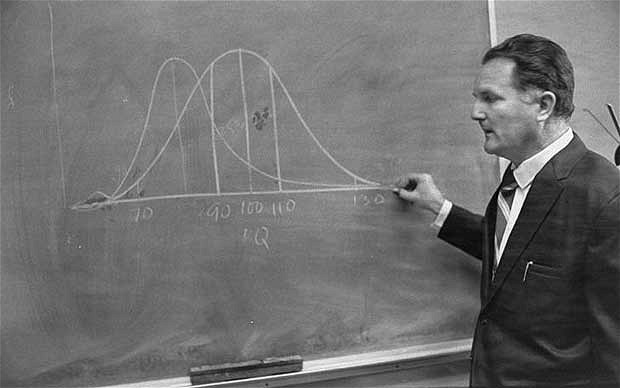
But the black population in this country is in a sense burdened by the large number of persons who are at a level of g that is no longer very relevant to a highly industrialized, technological society. Once you get below IQs of 80 or 75, which is the cut-off for mental retardation in the California School System, children are put into special classes. These persons are not really educable up to a level for which there’s any economic demand. The question is, what do you do about them? They have higher birth-rates than the other end of the distribution.
People are shocked and disbelieving when you tell them that about one in four blacks in our population are in that category — below 75.
A 1992 interview with Jared Taylor.

www.amren.com