Happiness in Islam

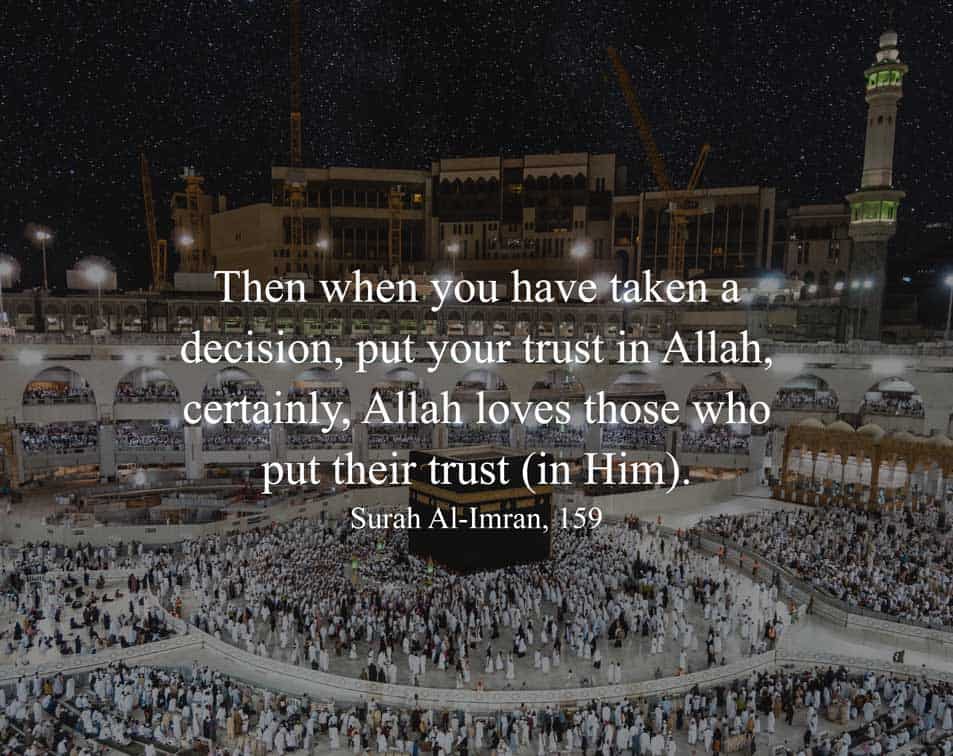
Trust in God

It is not about passivity or neglecting effort, but about doing one’s best and then relying on God for the outcome. A Muslim is encouraged to plan, work, and strive, while recognizing that ultimate control belongs to God alone. This balance creates a sense of calm and purpose. This trust, tawakkul, reduces anxiety and fear, and replaces them with reliance, patience, and hope.

A well-known Ayah teaches that whoever places their trust in God, He is sufficient for them, meaning that reliance on God brings support and care beyond what a person can manage alone. The Prophet Muhammad ﷺ explained that true reliance on God is like a bird that leaves its nest hungry and returns full, showing that one must both trust God and actively seek provision.
 

Compassion and Mercy

Muslims believe that God is merciful, and they are encouraged to reflect this quality in their own lives. Showing kindness to others, and helping those in need are all seen as essential parts of faith. This mercy extends not only to family and friends, but also to strangers and even animals.

God describes the Prophet Muhammad ﷺ as a mercy to all worlds, highlighting that his message and character were rooted in compassion and care for all creation. The Prophet ﷺ also taught that those who show mercy to others will be shown mercy by God.
 
Muslims believe that God is merciful, and they are encouraged to reflect this quality in their own lives

anthropomorphic much ...

those in the heavens are proven - to join them as the hope of a&e as their equal would be anything than what would need being merciful by them for their sake and would never occur.
 
Sincerity in Worship

Worship should be directed to God alone and performed with sincerity, not for recognition or praise from others. Sincerity gives spiritual value to actions, whether they are formal acts like prayer or good deeds done in daily life.

The Qur’an emphasizes that people are commanded to worship God with pure devotion to Him alone. The Prophet Muhammad ﷺ also taught that actions are judged by their intentions, highlighting that what matters most is the sincerity behind what a person does.

 
Charity and Caring for Others

Caring for those in need is a core part of faith. Giving charity is encouraged to support the poor, and strengthen communities. This includes both formal charity, such as obligatory giving, and voluntary acts of generosity like helping others, sharing resources, and offering support.

The Qur’an praises those who give from what they have to help others, describing it as a sign of true righteousness. The Prophet Muhammad ﷺ also taught that charity does not decrease wealth, highlighting that generosity brings blessing and benefit both to the giver, in this life and in the hereafter, and to society as a whole.
 
Forgiveness

Forgiveness is a sign of strength and moral character, not weakness. Letting go of resentment helps purify the heart.
The Qur’an praises those who restrain their anger and pardon others, describing such people as beloved to God.

The Prophet Muhammad ﷺ also taught that showing forgiveness leads to increased honor, emphasizing that those who forgive for the sake of God are elevated in status.


Keeping Promises and Trusts

Honoring commitments and fulfilling trusts is a key part of integrity. Islam teaches that these obligations must be taken seriously. Being trustworthy builds confidence between people and forms the basis of healthy relationships.

The Qur’an instructs believers to fulfill their agreements and to return trusts to those to whom they are due. The Prophet Muhammad ﷺ also taught that a person who betrays trust or breaks promises reflects a serious trait of hypocrisy, highlighting the importance of reliability in everyday life.


Respectful Communication

Muslims should speak in a way that is truthful, kind, and respectful. Words have a strong impact, and Islam emphasizes choosing speech that benefits others and avoids harm. This includes avoiding insults, gossip, and harsh language, while encouraging honesty delivered with wisdom and care.

The Prophet Muhammad ﷺ instructs believers to speak good or remain silent, emphasizing that controlling one’s words is an essential part of good character.


Respect for Parents


Islam places great importance on honoring and caring for parents. Muslims are taught to treat their parents with kindness, patience, and gratitude, especially as they grow older. Respecting parents is seen as one of the highest moral duties after worshipping God, reflecting appreciation for the care and sacrifices they make throughout life.

1778158443157.webp


The Qur’an repeatedly joins worship of God with kindness toward parents, emphasizing gentle speech and compassionate treatment. The Prophet Muhammad ﷺ also taught that serving and honoring one’s parents is among the most beloved deeds to God.
 
What does the Qur'an say about whether people should honor parents that were despicable narcissistic deceitful violent people who sacrificed their own children to Moloch? Should they be honored? I don't think so. Perhaps the Law commanding to honor your father and mother is about honoring Mother earth and God the Father whose mysterious union between the physical and the eternal Spirit created humanity? Do you think God would make a law demanding honoring people who never repented and aren't worthy of honor?

so true - there are no commandments from the heaves as such found in any of the three desert religions w/ the same prologue written in their bibles. used throughout history for nefarious purposes unabated to the present day.
 
The Qur’an repeatedly joins worship of God with kindness toward parents, emphasizing gentle speech and compassionate treatment. The Prophet Muhammad ﷺ also taught that serving and honoring one’s parents is among the most beloved deeds to God.
What does the Qur'an say about whether people should honor parents that were despicable narcissistic deceitful violent people who sacrificed their own children to Moloch? Should they be honored? I don't think so. Perhaps the Law commanding to honor your father and mother is about honoring Mother Earth and God the Father whose mysterious union between the mortal body and the eternal Spirit created humanity? Do you think God would make a law demanding honoring people who never repented and so aren't worthy of honor?

Given the remote possibility that I am right, there are a lot of very stupid people out there honoring unclean creatures while flat out disrespecting their Mother and Father, raping and pillaging Mother earth and defiling and contaminating a portion of the Spirit of God their Father, their own consciousness, their very souls, defiling even the minds of their own children, and making a fortune doing it while imagining that they have been blessed by God.

Even though they are contaminating the entire planet risking an extinction level event and degrading the quality of life for all of the inhabitants of the earth. Not too bright. They should either repent or start praying that there is no God because I heard He could get a little testy.

But thats just what I heard.
 
Muslims don't drink beer.

Muslims are ill-fated.
 
Muslims don't drink beer.

Muslims are ill-fated.

Islam teaches that anything which clouds the mind and harms judgment should be avoided. Clear thinking and self-control are highly valued in Islam, and intoxicants are seen as harmful to individuals, and society. So, abstaining from alcohol is viewed not simply as a restriction, but as a way of protecting one’s well-being and moral awareness.

The Qur’an gradually prohibited intoxicants and ultimately described them as harmful and a tool that leads to conflict and distraction from God.

1778242703579.webp

The Prophet Muhammad ﷺ also warned against all intoxicating substances, teaching that whatever intoxicates in large amounts should be avoided even in small amounts. This reflects Islam’s broader emphasis on preserving health, dignity, and sound judgment.
 
tool that leads to conflict and distraction from God.

View attachment 1253805
The Prophet Muhammad ﷺ also warned against all intoxicating substances, teaching that whatever intoxicates in large amounts should be avoided even in small amounts. This reflects Islam’s broader emphasis on preserving health, dignity, and sound judgment.
Click to expand...
Click to expand...
Click to expand...
Click to expand...
Click to expand...
Click to expand...
How does Islam reconcile acknowledging that Jesus was a prophet of God with him being accused of being a glutton and a drunk? Should his open predilection to drinking disqualify him? Does the truth become false just because the person speaking was drinking alcohol?

Wouldn't a person be more likely to speak the truth from God when they are half crocked?

Or even as high as a kite on mind altering substances that open the doors of perception?
 
Cleanliness and Purity

Islam teaches to maintain personal hygiene, keep surroundings clean, and approach worship in a state of purity. Practices such as washing before prayer reflect the idea that cleanliness helps prepare a person for devotion. The Qur’an praises those who purify themselves and describes God as loving those who maintain cleanliness and repentance.

1778500825740.webp


Cleanliness and Purity

Islam teaches to maintain personal hygiene, keep surroundings clean, and approach worship in a state of purity. Practices such as washing before prayer reflect the idea that cleanliness helps prepare a person for devotion. The Qur’an praises those who purify themselves and describes God as loving those who maintain cleanliness and repentance.

View attachment 1255086


there is no worship in the heavens.

purity is required for judgement and necessary for admission to the everlasting ...
 
15th post
Courage

A courageous person speaks the truth, remains patient during hardship, and resists fear when facing injustice or pressure from others. True courage is guided by wisdom, not by anger or recklessness.

The Qur’an encourages believers not to lose heart or despair when facing challenges, emphasizing trust in God and perseverance (3:139). The Prophet Muhammad ﷺ also taught that true strength is not found in overpowering others, but in controlling oneself during moments of anger, showing that courage begins with mastery over one’s own emotions.

 
Hajj

Hajj is an unparalleled human spectacle; at once religious, political, cultural, and deeply human, surpassing any pageant staged by civilization. No creed, no empire has witnessed such a sustained, all-encompassing rite. For the pilgrim it effects an elemental transformation: it demolishes the brittle edifice of self-regard by exposing its vanity, then rebuilds the soul and orients it towards Allah and His cause.

1779131481414.webp

Hajj eradicates the last traces of narrowness; individualism, ego, isolation, tribalism, the sterile claims of nationhood and it dissolves both inferiority and superiority alike. In their place it pours steadiness of mind, balance of feeling, and a compassionate regard for humanity that knows no border, colour, tongue, or class. It awakens, or confirms, the pilgrim’s consciousness as a member of the ummah, charged with a universal mission; and by so doing it raises him beyond the currents of space and time, appointing him guide and steward of their march.
 
Now do Homosexuality, Pedophilia (especially marrying 8 year olds), Abortion, women owning property, and freedom of and from religion.
 
Personal accountability

Islam teaches that every person is responsible for their own actions and will stand before God individually. Because of this, one person can not carry the sins of another and salvation doesn't require the sacrifice of an innocent person. Instead, forgiveness comes directly from God through sincere faith, repentance, and righteous action.

1779196677003.webp


The Qur’an repeatedly states that no soul bears the burden of another, emphasizing personal accountability and direct responsibility before God. Muslims deeply respect Jesus as a prophet and messenger of God, but do not believe that his mission was to die for humanity’s sins. The Prophet Muhammad ﷺ also taught that God accepts the repentance of those who sincerely turn back to Him, highlighting divine mercy and personal accountability rather than inherited guilt or substitutionary atonement.
 
Back
Top Bottom