Great Barrier Reef Healthy and Growing Rapidly - BBC News

Why did homO go SILENT on the issue of climate change 2010-2012?

It was the "greatest threat" before 2010, then two years of silence, then back to being the "greatest threat" in 2012, and then homO and Big Mike bought BEACHFRONT PROPERTY on an island last hit by Cat 5 in 1938 (the last Cat 5 to get that far north).


 
1725194879971.webp


View attachment 1004675


Another left wing science invalid cuts and pastes fudged fraud.


If ocean temps were actually rising, there would be a breakout in cane activity. There is not one.


THE DATA


record decade for canes - 1940s, second place 1890s

Sorry, hurricane data, which is extremely difficult to FUDGE, refutes your taxpayer funded FUDGE CHART....


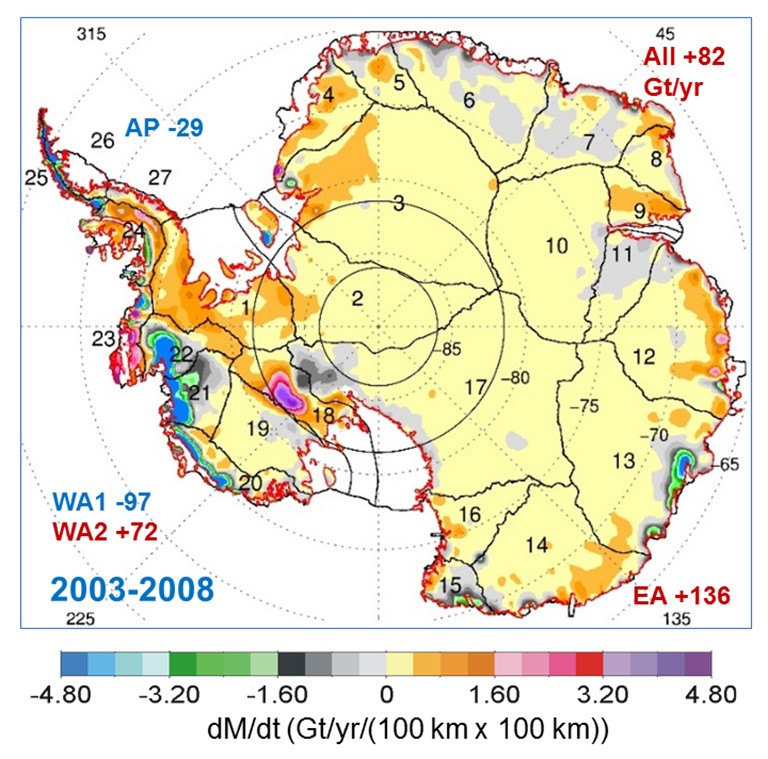
It actually is going down. Surface Air Pressure proves there is no ongoing net ice melt...


and 90% of Earth ice on Antarctica has been growing every year...


"the Antarctic ice sheet showed a net gain of 112 billion tons of ice a year from 1992 to 2001. That net gain slowed to 82 billion tons of ice per year between 2003 and 2008."


and we went to court on this issue...


  • The film suggests that the Antarctic ice covering is melting, the evidence was that it is in fact increasing.
 
Irrelevant. If you haven't noticed, they spin up quicker, move faster, and do a LOT more damage when they hit land.
You only need one or two to have a catastrophic season....in terms of property damage (loss to the local economy).

Well, apparently, they're not doing much spinning this year despite the fear mongering from CSU and NOAA saying this was going to be the worst year of hurricanes in the history of the universe. The sobbing is reaching a fever pitch.
 
But in a lot of cases...it doesn't come back. And that's the issue. Have enough of those "not coming back" species...and it's just a matter of time before the two legged variety will be next on the list. :)

Some coral species adapt while others don't, and they do not come back. Or maybe they do come back but it takes longer if conditions change. That is the nature of life on an ever-changing planet.

How do we help corals adapt?

Corals have the capacity to adapt to environmental change, so research efforts are often focused on how we can assist and help these natural processes. The first step is to understand and find the genes for heat tolerance and other important traits that corals pass from generation to generation. Measuring how these genes respond to stress in different species of corals helps us answer how corals can become more tolerant within their lifetimes and across generations. From this knowledge, we can then help to speed up the naturally occurring evolutionary processes.
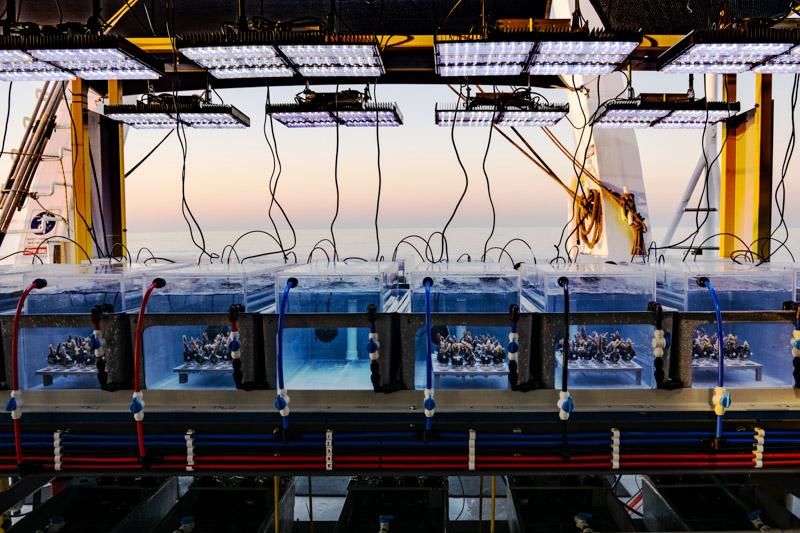
Researchers from the Australian Institute of Marine Science use portable aquariums in the search for heat-resistant corals that can survive warming ocean temperatures caused by climate change. Credit: James Gilmour/AIMS


Researchers from the Australian Institute of Marine Science use portable aquariums in the search for heat-resistant corals that can survive warming ocean temperatures caused by climate change. Credit: James Gilmour/AIMS

One approach is to encourage the spread of heat tolerance, mixing corals from different parts of the Reef that are more resilient to higher water temperatures with those that are less so. When the next hybrid generation is born, they may have boosted survival rates.
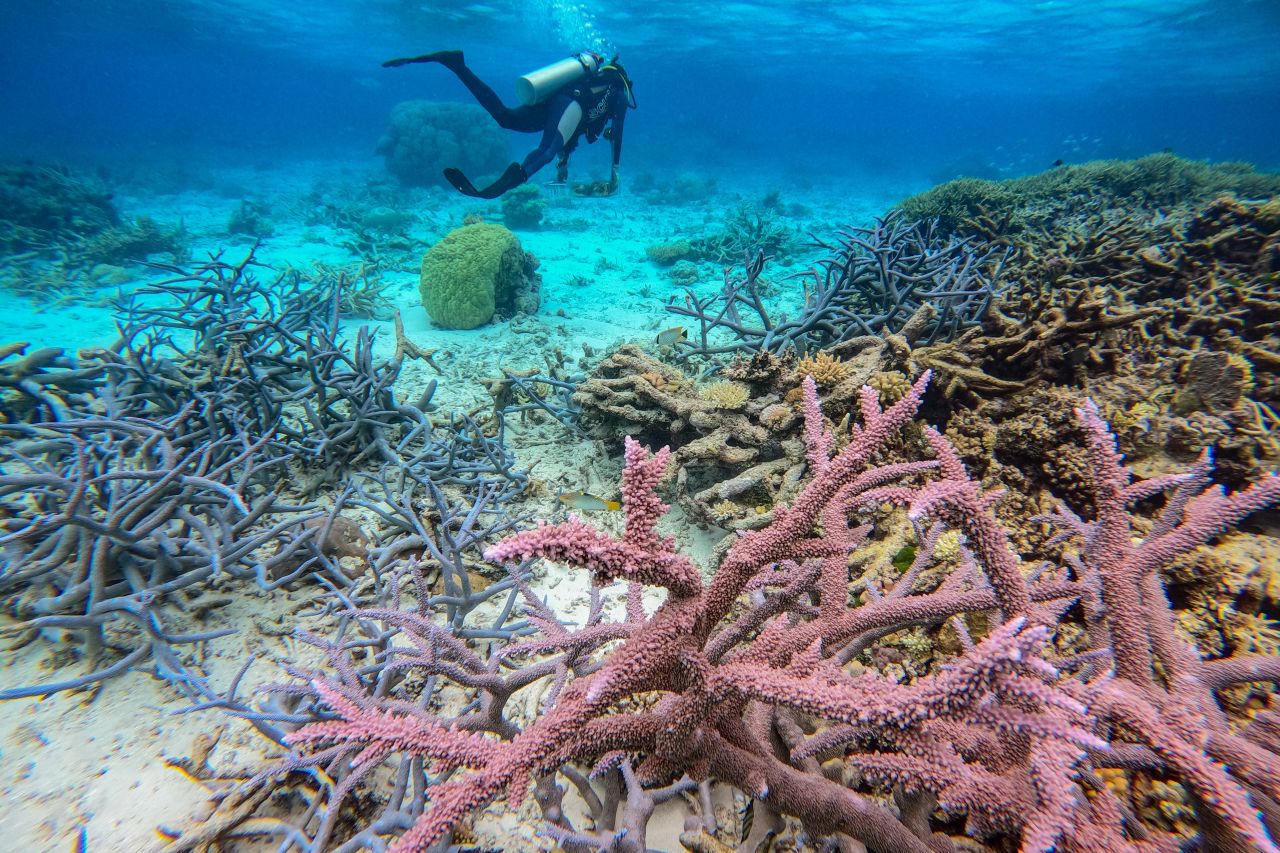
Researchers collect coral samples from the Reef to conduct heat tolerance tests in mobile or land-based aquaria. Credit: Marie Roman, AIMS


Researchers collect coral samples from the Reef to conduct heat tolerance tests in mobile or land-based aquaria. Credit: Marie Roman, AIMS

Researchers are also investigating whether it’s possible to cross-breed the special algae that live inside corals to enhance their heat tolerance. The algae can be grown outside the coral host and bred over multiple generations to resist higher levels of heat stress. When the tougher algae are re-introduced to corals, the hope is that they will be better able to resist bleaching.
Another method involves giving the coral organism probiotics made from beneficial mixtures of the bacteria that live naturally inside the coral gut. Pioneering research has revealed that these probiotics can increase a coral’s health and resilience to stresses related to climate change.

Many of these solutions are showing promising results in laboratory settings, but there are many considerations before we can deliver these heat-adapted corals back out onto the Reef.

 
I didn't confirm or deny. All I did was point out that your anti-climate change hysteria.....is baloney.
What do you mean by anti climate change hysteria? I know climate changes slowly perpetually.
 
It's so odd that not one denier moron has pieced together that this is not the only reef on the planet. And that short term events in one area of the globe do not delete or show a global trend.

Okay, maybe that's not odd at all.
 
Irrelevant. If you haven't noticed, they spin up quicker, move faster, and do a LOT more damage when they hit land.
You only need one or two to have a catastrophic season....in terms of property damage (loss to the local economy).
Link?
 
This is data that I've provided you. From organizations that study this. I looked back through your posts on this subject and you've provided ZERO articles (save for one) to backup your assertions.
So either provide some, or I'll assume you are reposting talking points from alt-right publications. In which case, you're just pulling shit of your ass.
Organizations get paid for research. If there is nothing to research the government money spigot gets turned off.
 
During WW2, ships were (still are) powered by diesel fuel. During WW2 more than a hundred ships including fuel tankers were lost off the Great Barrier Reef. The toxic stuff still leaks after 80 years but the organisms in the Reef survived and thrived. What does that say about the agenda of greenie extortionists who think my SUV is the enemy of life on earth?
 
Some coral species adapt while others don't, and they do not come back. Or maybe they do come back but it takes longer if conditions change. That is the nature of life on an ever-changing planet.

How do we help corals adapt?

Corals have the capacity to adapt to environmental change, so research efforts are often focused on how we can assist and help these natural processes. The first step is to understand and find the genes for heat tolerance and other important traits that corals pass from generation to generation. Measuring how these genes respond to stress in different species of corals helps us answer how corals can become more tolerant within their lifetimes and across generations. From this knowledge, we can then help to speed up the naturally occurring evolutionary processes.
Researchers from the Australian Institute of Marine Science use portable aquariums in the search for heat-resistant corals that can survive warming ocean temperatures caused by climate change. Credit: James Gilmour/AIMS


Researchers from the Australian Institute of Marine Science use portable aquariums in the search for heat-resistant corals that can survive warming ocean temperatures caused by climate change. Credit: James Gilmour/AIMS

One approach is to encourage the spread of heat tolerance, mixing corals from different parts of the Reef that are more resilient to higher water temperatures with those that are less so. When the next hybrid generation is born, they may have boosted survival rates.
Researchers collect coral samples from the Reef to conduct heat tolerance tests in mobile or land-based aquaria. Credit: Marie Roman, AIMS


Researchers collect coral samples from the Reef to conduct heat tolerance tests in mobile or land-based aquaria. Credit: Marie Roman, AIMS

Researchers are also investigating whether it’s possible to cross-breed the special algae that live inside corals to enhance their heat tolerance. The algae can be grown outside the coral host and bred over multiple generations to resist higher levels of heat stress. When the tougher algae are re-introduced to corals, the hope is that they will be better able to resist bleaching.
Another method involves giving the coral organism probiotics made from beneficial mixtures of the bacteria that live naturally inside the coral gut. Pioneering research has revealed that these probiotics can increase a coral’s health and resilience to stresses related to climate change.

Many of these solutions are showing promising results in laboratory settings, but there are many considerations before we can deliver these heat-adapted corals back out onto the Reef.


That's what happened to the coral?

The researchers took it?
 
15th post
View attachment 1004678


More fudge.

Can you tell us what the difference is between data and fudge?


What did the court say??


  • The film suggests that the Antarctic ice covering is melting, the evidence was that it is in fact increasing.
... and you cannot show us any LIQUID WATER on it either...


So tell us, is there any compressed air in Antarctic ice? If there is, would it not be released into the atmosphere if there is ongoing net ice melt?

If that is happening, should it push Surface Air Pressure higher?

But that's not happening...


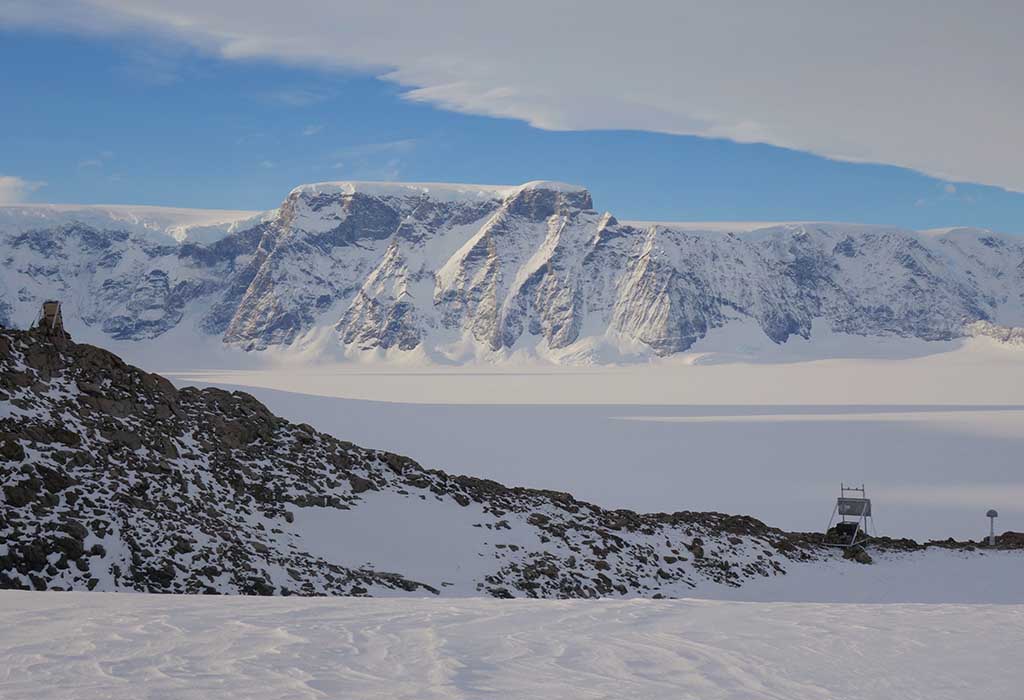
Antarctica is not melting.

So sayeth the Court and the Surface Air Pressure.
 
More fudge.

Can you tell us what the difference is between data and fudge?


What did the court say??


  • The film suggests that the Antarctic ice covering is melting, the evidence was that it is in fact increasing.
... and you cannot show us any LIQUID WATER on it either...


So tell us, is there any compressed air in Antarctic ice? If there is, would it not be released into the atmosphere if there is ongoing net ice melt?

If that is happening, should it push Surface Air Pressure higher?

But that's not happening...


Antarctica is not melting.

So sayeth the Court and the Surface Air Pressure.
Lies for idiots.
 

Latest Discussions

Back
Top Bottom