Votto
Diamond Member
- Oct 31, 2012
- 70,502
- 79,973
- 3,605
I did not know if I should post this in the history section or the religious section. But since most equate stories about giants and the Great Deluge with the Biblical text, I decided to post it in the religious section.
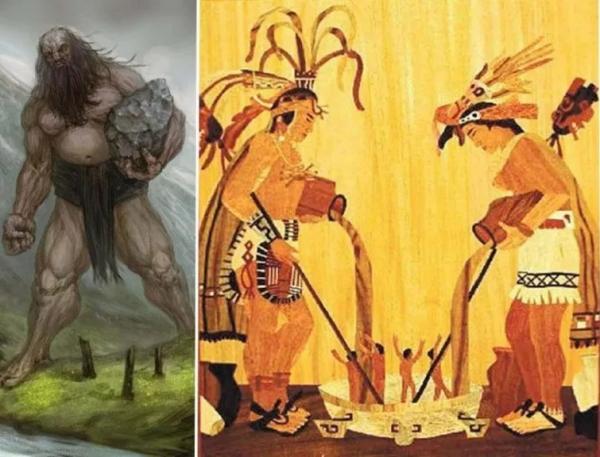
From what I can ascertain, those who believe in the story of the Great Flood spoken of in the Bible, place the time at around 2350 BC. The story revolves around the notion that God used a great flood to cleanse the earth of wickedness. In the Book of Enoch, however, we are treated to the notion that there were beings called Nephilim, beings created from angelic beings mating with humans that were larger and stronger and often referred to as "giants". Unfortunately, they were also referred to as fallen creatures, along with the demonic cast of angelic beings that fell from heaven after their rebellion.
Most who read this discard it as pure myth, however, this is not the only story of such happenings. In fact, every ancient culture on the face of the planet has similar musings about a great deluge and giants. So, either all ancient prehistoric cultures around the globe were all somehow in communication as they shared these stories, or it is evidence that these events actually occurred. This would predate the Biblical text.
For example, in China there is a story of a Great Deluge that is estimated to have occurred 2300 to 2200 BC according to ancient accounts. The myth revolves around the goddess Nuwa, not to be confused with Noah, who saved her people by building a large raft like Leaf as an ark to save them from the flood. Those saved by this act later repopulated the earth.
But there are also writing such as the Shanttai Jing that also discusses the Great Deluge and giants that existed before the flood.
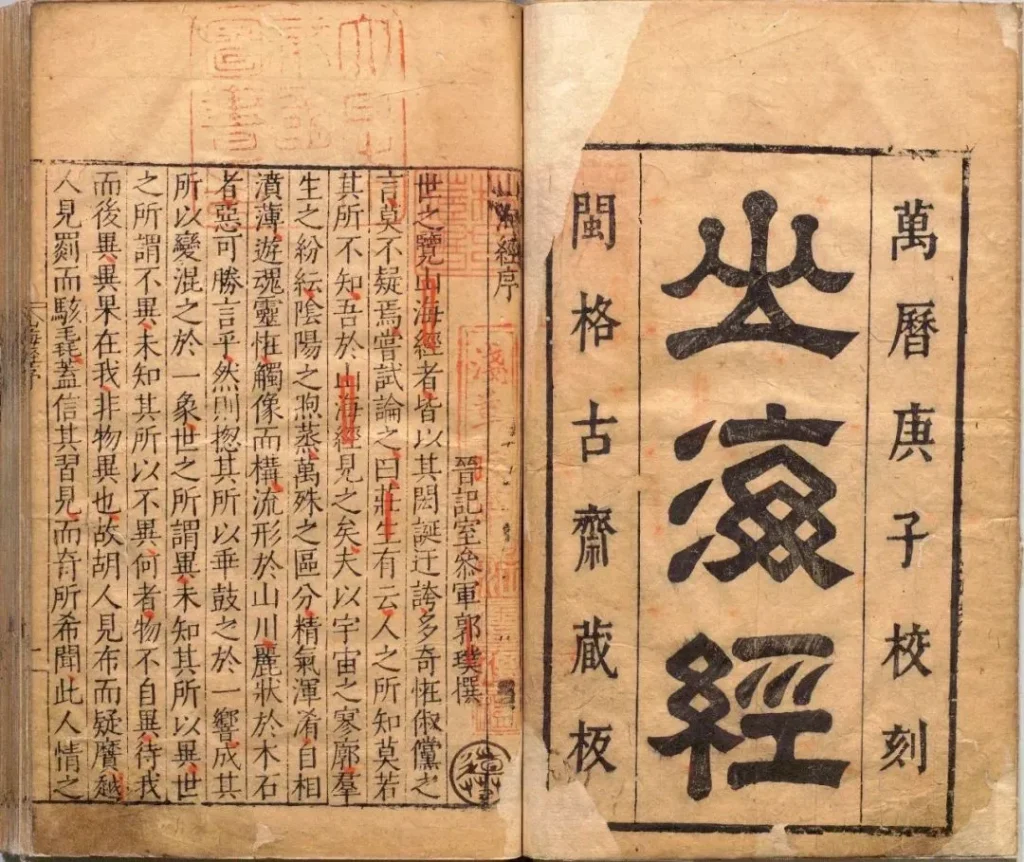
The Classic of Mountains and Seas(Shanhaijing): Exploring Amazing Ancient Chinese Mythology and Geography - Chinese Weird Tales
Intrigued by legends of mountains and seas, mythical creatures, and the allure of ancient Chinese mythology? Delve into the captivating realm of "The Classic
 weirdtales.me
Intrigued by legends of mountains and seas, mythical creatures, and the allure of ancient Chinese mythology? Delve into the captivating realm of “The Classic of Mountains and Seas” (also known as Shanhai jing), a treasure trove of mythic geography and legendary beings.
Unraveling the Origins of Shanhaijing
This revered Chinese classic, steeped in history, is a compilation believed to date back to the early Han dynasty, potentially originating as early as the 4th century BCE. However, its true origins remain shrouded in mystery, sparking a two-millennium-long debate about its authorship.Authorship Enigma
From attributions to Yu the Great and Boyi during the classical era to assertions by scholars like Zhu Xi and Hu Yinglin that it might have been penned by a curious mind during the Warring States period, the authorship puzzle persists. Some theories even suggest a collaboration of diverse authors contributing to different sections of the book.The Classic of Mountains and Seas: Exploring the Book’s Essence
This esteemed work, divided into eighteen sections, unveils over 550 mountains, 300 channels, and a myriad of fascinating narratives. Its contents range from mundane descriptions of locations to the portrayal of exotic creatures and enchanting myths. Notably, it includes the enthralling tale of Yu the Great battling the deluge, depicted in a whimsical manner distinct from other historical accounts.Nature’s Wonders
Initially perceived as a geographical compendium, this book’s essence transcends conventional boundaries. While some perceive it as a bestiary or an encyclopedia of geographical knowledge, others argue it embodies ancient Chinese mythological materials or even class it as a novel. Its multifaceted nature sparks diverse interpretations, fueling ongoing scholarly discourse.Legacy and Field Contributions
Beyond its enigmatic nature, “The Classic of Mountains and Seas” enriches fields like geography, mythology, zoology, medicine, and religion. It serves as a historical repository, documenting ancient Chinese mythologies, migration patterns, ecological landscapes, medicinal knowledge, and even the spiritual beliefs of yore.A Collection of Ancient Wisdom
From chronicling the migration and evolution of over 400 ancient Chinese animals to detailing medicinal values of approximately 110–140 drugs, this text unveils a tapestry of ancient wisdom. It not only sheds light on ancient diseases but also offers insights into ancient religious beliefs, immortals, and supernatural beings that shaped Chinese shamanism.Evolution of Perception
The book’s credibility shifted across history, revered as an authentic source during certain periods while later epochs regarded it as a fictional work. This evolving perception from authentic geography to a work of fiction reflects changing societal cognitions and the evolving landscape of knowledge.Legacy in Modern Academia
In contemporary academia, it remains a cornerstone for understanding ancient Chinese culture, offering a glimpse into a world rich in folklore, philosophy, religion, and historical contexts. Its legacy extends far beyond mere geographic documentation, leaving an indelible mark on various academic disciplines.Read Shanhaijing/The Classic of Mountains and Seas in English
I translated some of the articles from Shanhaijing. You can read them along with illustrations here.Yu/顒
In the mountains, there is a bird that looks like an owl. It has a human face, four eyes, and…Read More
Zhu/鴸
There is a bird that looks like a hawk, but it has human hands. Its voice sounds like the buzzing…Read More
QuRu/瞿如
In the mountains, there is a mythical creature that looks like a water bird. It has a white head, three…Read More
LongZhi/蠪蛭
蠪蛭(Longzhi) lives in the mountains. It has a body similar to a fox, with nine tails, nine heads, and tiger…Read More
XieXie/[犭颉][犭颉]
𝕏𝕚𝕖 [犭颉]Xie: Its appearance is like that of a hunting dog with scales, and its fur is like a pig’s…Read More
ZouWu/騶虞
In the country of Lin(林氏國), there lived a rare beast. It was as big as a tiger, with a colorful…Read More
FAQ
Who wrote The Classic of Mountains and Seas, and when was it written?
The authorship of this ancient Chinese text remains a subject of debate, with attributions ranging from Yu the Great and Boyi to a curious mind during the Warring States period. Its origins date back potentially to the 4th century BCE, but the present form emerged in the early Han dynasty.What is the book about?
This classic text is a compilation of mythic geography, encompassing descriptions of over 550 mountains, 300 channels, and a myriad of mythical creatures. It’s a blend of fabulous geographical accounts, cultural depictions of pre-Qin China, and an anthology of Chinese mythology.What genre does The Classic of Mountains and Seas belong to?
While initially perceived as a geographical compendium, this text transcends conventional categorization. Scholars have classified it as a bestiary, an encyclopedia of geographical knowledge, and even as a novel, showcasing its multifaceted nature.How does the book contribute to various fields of study?
The book enriches diverse fields such as geography, mythology, zoology, medicine, and religion. It documents ancient Chinese mythologies, migration patterns, ecological landscapes, medicinal knowledge, and spiritual beliefs.How has the perception of the book evolved over time?
Across different historical periods, the credibility of the text fluctuated. Initially considered authentic and reliable during the Han dynasty, its perception shifted during the Ming and Qing dynasties when it was regarded more as a fictional work. Its reception continues to evolve in contemporary academia, fostering ongoing discussions and interpretations.“The Classic of Mountains and Seas” continues to stand as a testament to the rich tapestry of ancient Chinese heritage, fostering ongoing discussions and deepening our understanding of a bygone era. Its legacy endures, inviting modern-day explorers to unravel the mysteries of an ancient world teeming with mythical creatures and cultural treasures.