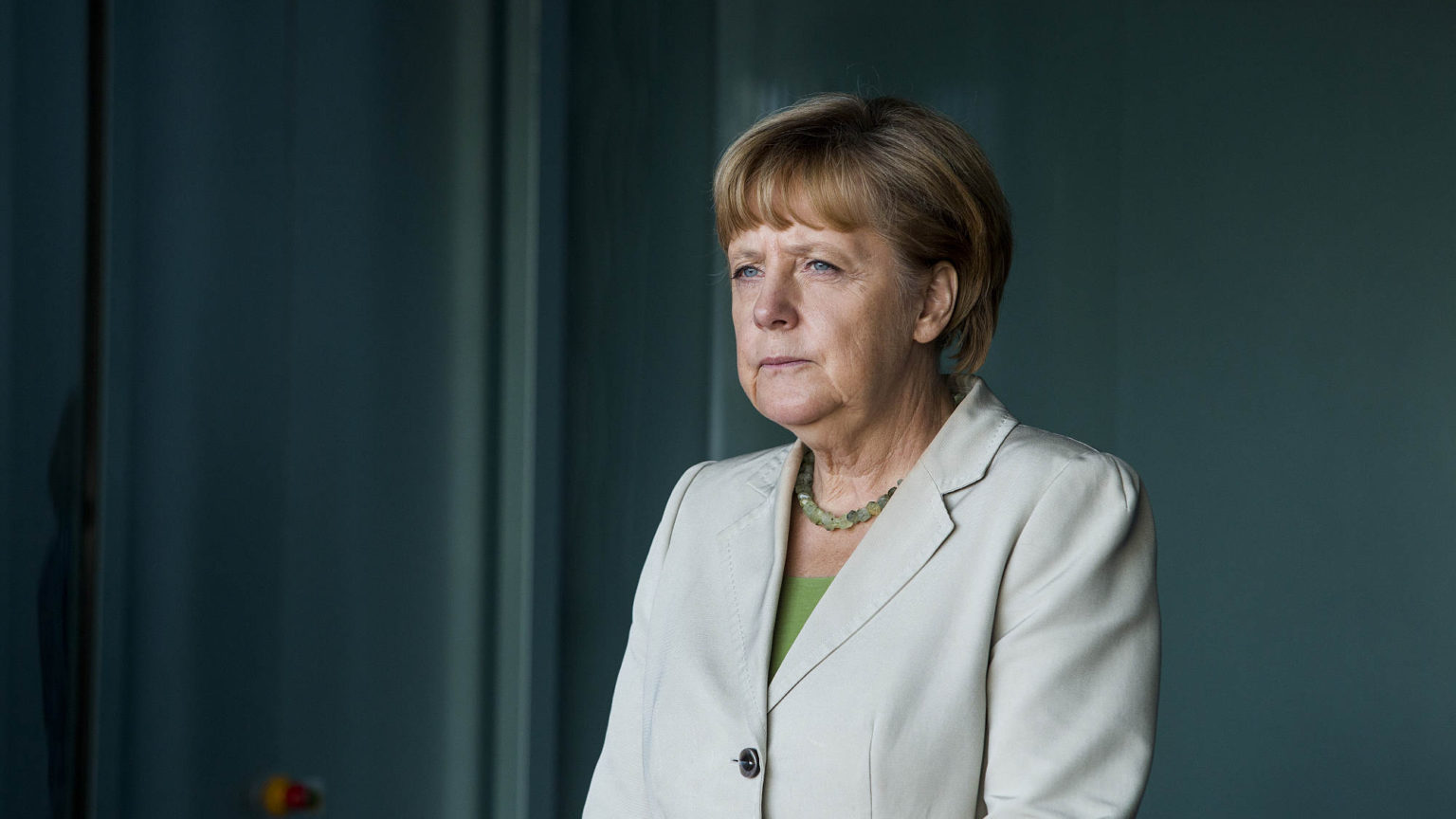
At the height of Angela Merkel’s powers, the outgoing German chancellor was hailed as the leader of the free world – the supreme defender of the liberal order in an age of populism, and the saviour of Europe in an age of nationalist revanchism. But as Merkel exits the stage, after 16 years at the helm of Europe’s largest and most prosperous nation, the commentary has been much more muted. Hagiographies of her years in power are few and far between. Could the myth of Merkel finally be starting to unravel?
There is no question that Merkel is a formidable politician. Her 16-year reign makes her one of Germany’s longest-serving chancellors, placing her alongside the likes of Otto von Bismarck and Helmut Kohl. But while Merkel’s staying power, her dominance, her supreme talent for self-preservation may have served her well, she leaves her party, her country and Europe in a weakened state.
Merkel is, above all, an opportunist. She is a politician who has moved with the times, who has ably outmanoeuvred her rivals in and outside her party. ‘Merkiavelli’ is how she was dubbed by the late sociologist Ulrich Beck. She is a political shapeshifter. On the economy, Merkel began her chancellorship as a fiscal hawk, keeping a tight grip on the budget strings for most of her time in office. She leaves office having authorised some of the most generous pandemic spending in the world. On cultural questions, she was at times a social conservative, opposing gay marriage, and other times a hyper-liberal, opening Germany’s borders to a million refugees. Merkel has no ideology beyond what works for Merkel. ,,,