The longest gov't shutdown ever ,,a trade war no one wins and is hurting millions started by Dems??? Look in the fn mirror un to see what the cause of our problems are ,,,you and the dotards voting for the moronthe more unhinged they get the better they know there's trouble ahead for trump and their party
There is trouble ahead for all Americans. You traitors have started a civil war, a real one.
Navigation
Install the app
How to install the app on iOS
Follow along with the video below to see how to install our site as a web app on your home screen.
Note: This feature may not be available in some browsers.
More options
Style variation
You are using an out of date browser. It may not display this or other websites correctly.
You should upgrade or use an alternative browser.
You should upgrade or use an alternative browser.
FBI opened investigation Feared Trump secretly working for Russians
- Thread starter JLW
- Start date

Uncensored2008
Libertarian Radical
Looks like I touched a nerve eh?
Looks like you have an IQ in the low 40's. All you can do is bleat mantras. That the conspiracy theory you spew makes no sense is of no concern to you...
Uncensored2008
Libertarian Radical
The FBI has some public relations to work on after what that shitstain Comey pulled
Meme on display, aided by brainwashes, nothing this member posts has any semblance of reality.
Hey idiot Stasi scum, maybe YOU can explain how the "russian bot" conspiracy theory that your traitor party chants actually works?


Wry Catcher
Diamond Member
- Banned
- #265
The FBI has some public relations to work on after what that shitstain Comey pulled
Meme on display, aided by brainwashes, nothing this member posts has any semblance of reality.
Hey idiot Stasi scum, maybe YOU can explain how the "russian bot" conspiracy theory that your traitor party chants actually works?
I can't explain in detail your sentence, other than it's an emotional rant wrapped in anger. Take a few deep breaths, calm down, and try to write an interrogatory which makes sense.
sassovitch?It's becoming easier to sort out the Trump stooges from the Russian trolls
Uncensored2008
Libertarian Radical
Few people, including Trump’s opponents, have publicly challenged the widespread belief that no obtainable evidence can prove that Russian interference changed any votes. Democrats, for the most part, have avoided attributing Hillary Clinton’s defeat directly to Russian machinations.
So, the author starts with blatant and absurd lies.
Democrats, including the corrupt press, have adamantly attributed Hillary Clinton’s defeat directly to Russian machinations. With no evidence or even logic to support the absurd claim.
They have more readily blamed James Comey, the former F.B.I. director, for reversing Clinton’s thin lead in the final days of the campaign by reopening a criminal investigation into her mishandling of classified e-mails. Many have also expressed frustration with Clinton’s weak performance as a candidate, and with her campaign’s tactical errors. Instead of investigating whether Russia tipped the electoral scales on its own, they’ve focussed on the possibility that Trump colluded with Russia, and that this, along with other crimes, might be exposed by the probe being conducted by the special counsel, Robert Mueller.
ROFL
democrats worship Comey as a minor deity.
The U.S. intelligence community, for its part, is prohibited from investigating domestic political affairs. James Clapper, the former director of National Intelligence, told me, “We try not to spy on Americans. It’s not in our charter.” He emphasized that, although he and other intelligence officials produced—and shared with Trump—a postelection report confirming an extensive cyberattack by Russia, the assessment did not attempt to gauge how this foreign meddling had affected American voters. Speaking for himself, however, he told me that “it stretches credulity to think the Russians didn’t turn the election.”
Barack Mugabe was prohibited from engaging in treason, it didn't stop him or Commie Clapper.
Ordinarily, Congress would aggressively examine an electoral controversy of this magnitude, but the official investigations in the House and the Senate, led by Republicans, have been too stymied by partisanship to address the ultimate question of whether Trump’s victory was legitimate. Although the Senate hearings are still under way, the Intelligence Committee chairman, Richard Burr, a Republican, has already declared, “What we cannot do, however, is calculate the impact that foreign meddling and social media had on this election.”
Even the Clinton campaign has stopped short of attributing its loss to the Russians. Joel Benenson, the campaign’s pollster, told me that “a global power is ******* with our elections,” and that “every American should be outraged, whether it changed the outcome or not.” But did the meddling alter the outcome? “How will we ever know?” he said. “We probably won’t, until some Russians involved in it are actually prosecuted—or some Republican, in a moment of conscience, talks.”
Politicians may be too timid to explore the subject, but a new book from, of all places, Oxford University Press promises to be incendiary. “Cyberwar: How Russian Hackers and Trolls Helped Elect a President—What We Don’t, Can’t, and Do Know,” by Kathleen Hall Jamieson, a professor of communications at the University of Pennsylvania, dares to ask—and even attempts to answer—whether Russian meddling had a decisive impact in 2016. Jamieson offers a forensic analysis of the available evidence and concludes that Russia very likely delivered Trump’s victory.
Yawn, moronic idiocy that in no way points to how putting memes up on fascistbook did or even COULD alter the election.
Your russian bot conspiracy theory is based on nothing other than party talking points.
Uncensored2008
Libertarian Radical
It's becoming easier to sort out the Trump stooges from the Russian trolls
DERP
Still nothing on how these gremlin russian bots actually did anything?
Even the bigfoot fools at least try to lay out logic. Not you, you say "just because.."
******* idiot.
Wry Catcher
Diamond Member
- Banned
- #269
Few people, including Trump’s opponents, have publicly challenged the widespread belief that no obtainable evidence can prove that Russian interference changed any votes. Democrats, for the most part, have avoided attributing Hillary Clinton’s defeat directly to Russian machinations.
So, the author starts with blatant and absurd lies.
Democrats, including the corrupt press, have adamantly attributed Hillary Clinton’s defeat directly to Russian machinations. With no evidence or even logic to support the absurd claim.
They have more readily blamed James Comey, the former F.B.I. director, for reversing Clinton’s thin lead in the final days of the campaign by reopening a criminal investigation into her mishandling of classified e-mails. Many have also expressed frustration with Clinton’s weak performance as a candidate, and with her campaign’s tactical errors. Instead of investigating whether Russia tipped the electoral scales on its own, they’ve focussed on the possibility that Trump colluded with Russia, and that this, along with other crimes, might be exposed by the probe being conducted by the special counsel, Robert Mueller.
ROFL
democrats worship Comey as a minor deity.
The U.S. intelligence community, for its part, is prohibited from investigating domestic political affairs. James Clapper, the former director of National Intelligence, told me, “We try not to spy on Americans. It’s not in our charter.” He emphasized that, although he and other intelligence officials produced—and shared with Trump—a postelection report confirming an extensive cyberattack by Russia, the assessment did not attempt to gauge how this foreign meddling had affected American voters. Speaking for himself, however, he told me that “it stretches credulity to think the Russians didn’t turn the election.”
Barack Mugabe was prohibited from engaging in treason, it didn't stop him or Commie Clapper.
Ordinarily, Congress would aggressively examine an electoral controversy of this magnitude, but the official investigations in the House and the Senate, led by Republicans, have been too stymied by partisanship to address the ultimate question of whether Trump’s victory was legitimate. Although the Senate hearings are still under way, the Intelligence Committee chairman, Richard Burr, a Republican, has already declared, “What we cannot do, however, is calculate the impact that foreign meddling and social media had on this election.”
Even the Clinton campaign has stopped short of attributing its loss to the Russians. Joel Benenson, the campaign’s pollster, told me that “a global power is ******* with our elections,” and that “every American should be outraged, whether it changed the outcome or not.” But did the meddling alter the outcome? “How will we ever know?” he said. “We probably won’t, until some Russians involved in it are actually prosecuted—or some Republican, in a moment of conscience, talks.”
Politicians may be too timid to explore the subject, but a new book from, of all places, Oxford University Press promises to be incendiary. “Cyberwar: How Russian Hackers and Trolls Helped Elect a President—What We Don’t, Can’t, and Do Know,” by Kathleen Hall Jamieson, a professor of communications at the University of Pennsylvania, dares to ask—and even attempts to answer—whether Russian meddling had a decisive impact in 2016. Jamieson offers a forensic analysis of the available evidence and concludes that Russia very likely delivered Trump’s victory.
Yawn, moronic idiocy that in no way points to how putting memes up on fascistbook did or even COULD alter the election.
Your russian bot conspiracy theory is based on nothing other than party talking points.
LOL, You're been brainwashed, and have no clue you have been. Sad.
Uncensored2008
Libertarian Radical
The FBI has some public relations to work on after what that shitstain Comey pulled
Meme on display, aided by brainwashes, nothing this member posts has any semblance of reality.
Hey idiot Stasi scum, maybe YOU can explain how the "russian bot" conspiracy theory that your traitor party chants actually works?
I can't explain in detail your sentence, other than it's an emotional rant wrapped in anger. Take a few deep breaths, calm down, and try to write an interrogatory which makes sense.
So, that would be a "no."
Funny, all you traitors claim that "russian bots" were the reason that Trump won, yet not one of you morons can lay out HOW that would work, much less provide a hint of evidence.
Back when you were active STASI, beating prisoners hand cuffed in their cells, were you NEVER exposed to the concept of investigation? You know, evidence and a THEORY OF THE CRIME that explains how it plausibly could happen?
See, not a single traitor can explain HOW the russian bots, if they had actually existed, would work? "THEY WAS MEMES," Okay, let's say there actually were memes, so what? How did that alter the election? There were millions of memes on both sides, why would the "russian bot" memes be special?
INVESTIGATION ???? The kind your scum in congress wouldn't pursue in their fed up attempt to protect the douche in the WH??The FBI has some public relations to work on after what that shitstain Comey pulled
Meme on display, aided by brainwashes, nothing this member posts has any semblance of reality.
Hey idiot Stasi scum, maybe YOU can explain how the "russian bot" conspiracy theory that your traitor party chants actually works?
I can't explain in detail your sentence, other than it's an emotional rant wrapped in anger. Take a few deep breaths, calm down, and try to write an interrogatory which makes sense.
So, that would be a "no."
Funny, all you traitors claim that "russian bots" were the reason that Trump won, yet not one of you morons can lay out HOW that would work, much less provide a hint of evidence.
Back when you were active STASI, beating prisoners hand cuffed in their cells, were you NEVER exposed to the concept of investigation? You know, evidence and a THEORY OF THE CRIME that explains how it plausibly could happen?
See, not a single traitor can explain HOW the russian bots, if they had actually existed, would work? "THEY WAS MEMES," Okay, let's say there actually were memes, so what? How did that alter the election? There were millions of memes on both sides, why would the "russian bot" memes be special?
Uncensored2008
Libertarian Radical
[
LOL, You're been brainwashed, and have no clue you have been. Sad.
Oh, okay..
Well in that case there is no need for a rational explanation of HOW these russian bots you traitors constantly yap about would actually work.
Just trust the party and bleat the mantras...
You ******* idiots.
Uncensored2008
Libertarian Radical
INVESTIGATION ???? The kind your scum in congress wouldn't pursue in their fed up attempt to protect the douche in the WH??
DERP
So how would these russian bots work? Explain the mechanism.
Russian bots would alter the election by _______________
Why is it that not one of you fucktards can formulate an answer?
We know why, your conspiracy theory is so ******* stupid that there IS no answer.
No, firing the FBI director and then go on camera and say you did it because you didn't like an investigation into your campaign and ties to Russia implies that. Then inviting the Russian ambassador and a Russian journalist to the the oval office and no one else implies that. Then it coming out that during that meeting you GAVE the Russian code word level intelligence implies that. Happened within days from each other. Furthermore before that several people within the Trump campaign were already under investigation for Russian contacts and then apparently they got a hold of the original letter they wanted to send out for firing Comey, again saying that the Russian investigation was the reason.So a President doing something they have the legal constitutional authority to do fire an FBI director means they are working for the Russians wow seriously ******* wow.
Last edited:
I'll formulate it, no problem. If the Russians would have access to polling data they could identify battleground states and target specific voters with fake news about Hillary Clinton. In doing this they could reinforce existing doubts and by that mechanism change their votes. They wouldn't have to change a lot of people's opinion, just enough to swing a few in states that matter.INVESTIGATION ???? The kind your scum in congress wouldn't pursue in their fed up attempt to protect the douche in the WH??
DERP
So how would these russian bots work? Explain the mechanism.
Russian bots would alter the election by _______________
Why is it that not one of you fucktards can formulate an answer?
We know why, your conspiracy theory is so ******* stupid that there IS no answer.
Last edited:

Synthaholic
Diamond Member
- Jul 21, 2010
- 84,016
- 77,045
- 3,605
Of course. Because it’s been obvious for 2 years that Trump is a Russian asset.In the days after President Trump fired James B. Comey as F.B.I. director, law enforcement officials became so concerned by the president’s behavior that they began investigating whether he had been working on behalf of Russia against American interests, according to former law enforcement officials and others familiar with the investigation.
The inquiry carried explosive implications. Counterintelligence investigators had to consider whether the president’s own actions constituted a possible threat to national security. Agents also sought to determine whether Mr. Trump was knowingly working for Russia or had unwittingly fallen under Moscow’s influence.
F.B.I. Opened Inquiry Into Whether Trump Was Secretly Working on Behalf of Russia
FBI reportedly investigated whether Trump was a secret agent for Russia | Daily Mail Online
Just shows how unfit Trump is for office.

EvilCat Breath
Diamond Member
- Sep 23, 2016
- 95,045
- 71,079
- 3,645
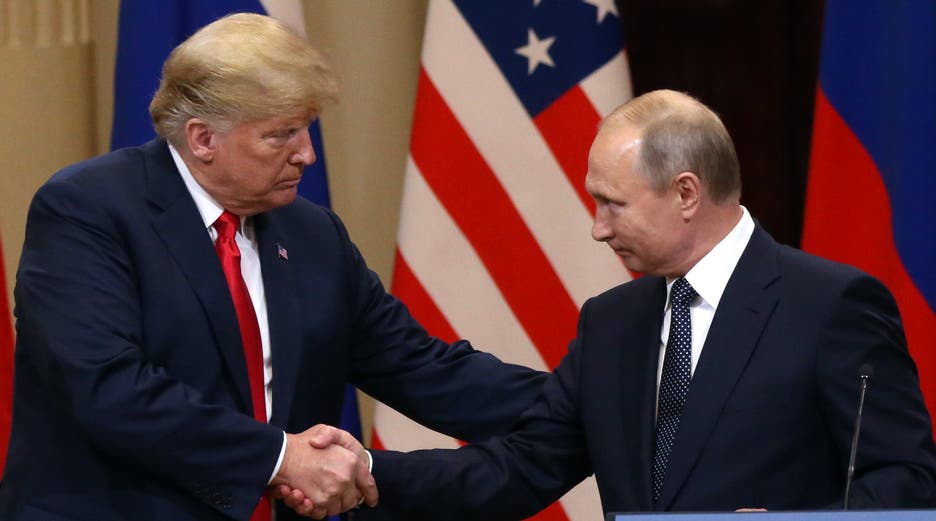
The Magnitsky Act should be properly named the shitstain obama snit act.And then there was Helsinki where Trump sided with Putin publicly over his own intel people...and Putin gleefully offered up that he was a "supporter" of Trump before he was elected.
At that same conference Trump offered to turn over American citizens to Putin...including our former Ambassador and Bill Browder...a big part of the Magnitsky Act Sanctions that Putin REALLY hates
EvilCat Breath
Diamond Member
- Sep 23, 2016
- 95,045
- 71,079
- 3,645
Better Russian than Democrat.Of course. Because it’s been obvious for 2 years that Trump is a Russian asset.In the days after President Trump fired James B. Comey as F.B.I. director, law enforcement officials became so concerned by the president’s behavior that they began investigating whether he had been working on behalf of Russia against American interests, according to former law enforcement officials and others familiar with the investigation.
The inquiry carried explosive implications. Counterintelligence investigators had to consider whether the president’s own actions constituted a possible threat to national security. Agents also sought to determine whether Mr. Trump was knowingly working for Russia or had unwittingly fallen under Moscow’s influence.
F.B.I. Opened Inquiry Into Whether Trump Was Secretly Working on Behalf of Russia
FBI reportedly investigated whether Trump was a secret agent for Russia | Daily Mail Online
Just shows how unfit Trump is for office.

Lakhota
Diamond Member
Secret agent man...

MindWars
Diamond Member
- Oct 14, 2016
- 42,227
- 11,223
- 2,040
- Banned
- #280
A report by the New York Times reveals that the FBI launched another investigation against President Trump after he fired disgraced FBI Director James Comey in 2017.
NYT Reveals FBI Launched Coup Against President Trump Based on Rumors
---------------------------------------------------------------------------
These lying pos MSM losers really need taken down. The lies, the lies and the sheep that fall for it lmfao your idiots who are victims to bs as you help take this country down hating Trump.
Hopefully when you losers have grand kids and they ask what did you do to help keep America free the leftist Trump hating lunatic and say I didn't
do anything because that's what cowards do.
NYT Reveals FBI Launched Coup Against President Trump Based on Rumors
---------------------------------------------------------------------------
These lying pos MSM losers really need taken down. The lies, the lies and the sheep that fall for it lmfao your idiots who are victims to bs as you help take this country down hating Trump.
Hopefully when you losers have grand kids and they ask what did you do to help keep America free the leftist Trump hating lunatic and say I didn't
do anything because that's what cowards do.
Similar threads

- Replies
- 2
- Views
- 173

- Replies
- 22
- Views
- 338


- Replies
- 7
- Views
- 142


New Topics
-
-

-
 USDA cancels $300 million program to help farmers buy land amid anti-DEI push
- Started by excalibur
- Replies: 0
-


