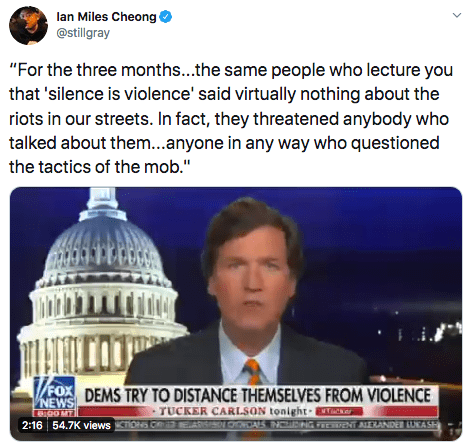
Democrats are physically attacking private citizens. Seen this before when the NAZIs took over Germany.
Disarmament of the German Jews
Few German citizens owned, or were entitled to own firearms in Germany in the 1930s. The
Weimar Republic had strict gun control laws. When the
Third Reich gained power, some aspects of gun regulation were loosened, such as allowing firearm ownership for Nazi party members and the military. The laws were tightened in other ways. Nazi laws systematically disarmed "unreliable" persons, especially
Jews, but relaxed restrictions for so-called "ordinary" German citizens. The policies were later expanded to include the confiscation of arms in occupied countries.
yes, the nazis are very much like their sister socialists, the democrats.
The National Socialists biggest enemy in Germany and Europe were the Communists.
Yes, they have competing Socialist visions. Your thoughts on the Hitler Stalin pact that laid the groundwork for the outbreak of WWII.
For the first twenty-two months of World War II, the Third Reich and the Soviet Union were allies and divided up the European continent between themselves. Almost two years later, on June 22, 1941, the pact was violated, when Hitler invaded Russia.
Thanks to the Hitler-Stalin Pact both perpetrated campaigns of violence, acting not only independently of each other but also coordinated their actions in some areas. SS servicemen and high-ranking NKVD officers met more than once and exchanged visits on the occupied territories. For example, in December 1939 they discussed actions to crack down on the Polish resistance and coordinated large-scale resettlement operations. In 1940 the German-Soviet Refugee Commission was set up for the purpose of curbing refugee flows.
The catastrophic consequences of the Hitler-Stalin Pact were not limited to Poland, Belarus and Ukraine, in the spring of 1940, Hitler launched his Blitzkrieg campaigns across Western Europe. Large-scale supplies from the Soviet Union provided the German military machinery with raw materials, such as oil and iron. In return, Germany, based on an economic agreement reached with the USSR in February, sent eastward factory and industrial equipment. With the Germans' entry into Paris and the fall of France in June 1940, the Nazi expansion in Western Europe reached its climax. It would not have been possible without the Hitler-Stalin Pact.
After Stalin watched Germany swallow much of Western Europe,Stalin occupied and annexed the Baltic countries of Estonia, Latvia, and Lithuania.
It wasn't until the Soviet Union went after Bessarabia and Northern Bukovina, that the aims of the two conquering Socialist aggressors conflicted. You see, Hitler was interested in those Romanian regions too. Hitler wanted Romania’s oil fields and agricultural resources in order to fulfill his plans for southeastern Europe. Stalin ended up with Bessarabia and great distrust entered the alliance. Both powers started hunting for new partners. Stalin woo'd Britain’s ambassador-at-large in Moscow while Hitler signed the Tripartite Pact between the Germany, Italy, and Japan.
November 1940 the Soviet people’s commissar of foreign affairs was in the German capital. Hitler began moving military units eastward and to Finland. Hitler suggested that Stalin take India as compensation for leaving Finland and southeastern Europe to Germany. Stalin refused to give up his designs on Finland.
Hitler went on to invade Russia the next summer, which cost him everything. Stalin often lamented that had Hitler kept the Alliance, they would have been invincible.


 www.thegatewaypundit.com