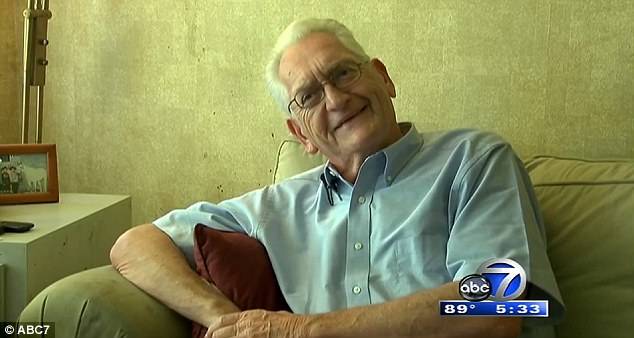
It could be that Joe's firing is a result of age discrimination. Cracker Barrel seems to have a history of discrimination:
Racial and sexual discrimination
During the 1990s, the company was the subject of controversy for its official stance against gay and lesbian employees and for discriminatory practices against African American and female employees. A U.S. Department of Justice investigation found Cracker Barrel discriminated against minority customers; patrons complained of racially segregated seating and service quality. In an agreement with the Department of Justice, Cracker Barrel has implemented non-discrimination policies, and pledged to focus on improving minority representation and civic involvement, particularly in the black community. Company shareholders added sexual orientation to the company's non-discrimination policy in 2002.
In July 1999, a discrimination lawsuit was filed against Cracker Barrel by a group of former employees, who claimed that the company had discriminated against them on the grounds of race.[73][74] In December 2001, twenty-one of the restaurant's customers, represented by the same attorneys, filed a separate lawsuit, alleging racial discrimination in its treatment of guests.[75][76][77] Regarding both accusations, Cracker Barrel officials disputed the claims and stated that the company was committed to fair treatment of its employees and customers.[74][76][78]
In 2004, an investigation by the U.S. Justice Department found evidence that Cracker Barrel had been segregating customer seating by race; seating or serving white customers before seating or serving black customers; providing inferior service to black customers, and allowing white servers to refuse to wait on black customers.[79] The Justice Department determined that the firm had violated Title II of the Civil Rights Act of 1964. The company was required to sign a five-year agreement to introduce "effective nondiscrimination policies and procedures". The terms included new equal opportunity training; the creation of a new system to log, investigate and resolve complaints of discrimination; and the publicizing of its non-discrimination policies. They were required to hire an outside auditor to ensure compliance with the terms of the settlement.[80]
In 2006, Cracker Barrel paid a $2 million settlement to end a suit alleging race and sexual harassment at three Illinois restaurants.[81][82] Cracker Barrel stores subsequently began displaying a sign in the front foyer explaining the company's non-discrimination policy,[79] and added the policy and details of how to make a complaint to its menu and website.[83]
Since the early 2000s, Cracker Barrel has provided training and resources to minority employees, to improve its image on diversity. These efforts involved beginning outreach to minority employees, along with testing a training plan to help employees whose first language is Spanish to learn English.[52] As of 2002, minorities made up 23 percent of the company's employees, including over 11 percent of its management and executives.[53] Cracker Barrel is on the Corporate Advisory Board for the Texas Conference of the National Association for the Advancement of Colored People (NAACP),[84] and is a corporate sponsor of the NAACP Leadership 500 Summit, where three of its officials were moderators and panelists in May 2011.[85] The company has been praised for its gender diversity, particularly on its board of directors, which includes three women out of eleven total board members.[86] Its chief executive officer, Sandra Cochran, is the second woman in Tennessee to hold that office in a publicly traded company.[86]
MORE:
Cracker Barrel - Wikipedia, the free encyclopedia