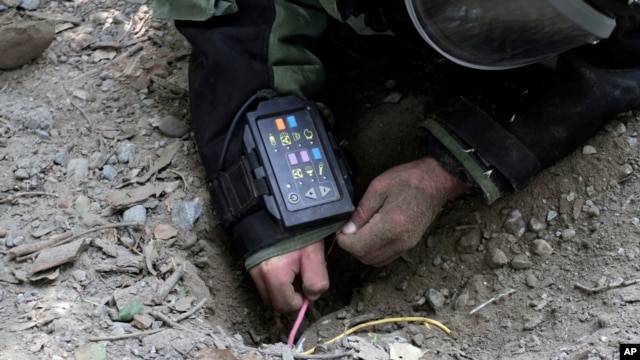
"I went down to see if any help was needed at the scene," he said, "as there were a lot of civilian casualties.” The attack happened in a residential area built by the Soviets, killing 12 people and injuring 66 others. It was carried out by a vehicle-borne improvised explosive device, a type of IED that is used by insurgents to target the Afghan National Security Forces and their NATO counterparts but often affects innocent civilians. Ordinary Afghans are bearing most of the brunt of the current conflict, which is in its 15th year.
Nicholas Haysom, the U.N. secretary-general’s special representative and head of the U.N.'s assistance mission in Afghanistan, said in a report in August that Afghans had suffered a lot and that it was time for the violence to end. “Afghan civilians have suffered far too long from this destructive conflict," he said. "The devastating consequences of this violence against civilians as documented in this report should serve to strengthen the broad conviction that peace is urgently needed.”
An Afghan Army soldier searches for land mines with a metal detector during an exercise on defusing improvised explosive devices in Jalalabad, east of Kabul, Afghanistan.
Development deterred
The Taliban are active across Afghanistan but are most visible in the country’s south and east. Local and international organizations are reluctant to implement development projects in areas where the Taliban have a powerful presence, fearing attacks and roadside bombs. Shahab Hakimi, director of the nongovernmental Mine Detection Dog Center in Afghanistan, said IEDs are a hurdle for development in in the country. Last Thursday, he said, "two engineers who wanted to go and help build a clinic in Charkh district of Maidan Wardak province drove over an IED and died. The project was postponed after the incident.”
A resident of the Shajoy district of Zabul province who did not want to be named for security reasons told VOA that a lot of bridges have been blown up on the Kabul-Kandahar highway by the insurgents and that noncombatants suffer as a result, especially during the flooding season. According to the U.N. report released last month, in the first half of this year alone, more than 4,900 civilian casualties have been documented — nearly 1,600 deaths and about 3,300 wounded. Nearly the same number of people were also killed and injured during the same period in 2014. According to the report, IEDs contribute to 90 percent of the civilian casualties in Afghanistan.
Blind weapons