Navigation
Install the app
How to install the app on iOS
Follow along with the video below to see how to install our site as a web app on your home screen.
Note: This feature may not be available in some browsers.
More options
Style variation
You are using an out of date browser. It may not display this or other websites correctly.
You should upgrade or use an alternative browser.
You should upgrade or use an alternative browser.
Arab Imperialism Unmasked: The Hypocrisy Behind the Anti-Israel Agenda
- Thread starter rylah
- Start date

rylah
Gold Member
- Jun 10, 2015
- 24,355
- 5,238
- 290
- Thread starter
- #182
Lebanon and Qatar's Kafala SlaveryToday, an investigative judge in Beirut has rejected the right of MH, the victim in the landmark slavery case challenging the Kafala system in Lebanon, to participate in court proceedings. MH requested reasonable time to return to Lebanon while she cared for her sick mother and to make complex travel arrangements to return from Ethiopia. The judge disagreed with the justifications provided and closed the investigation phase of the case without hearing from its essential witness. MH will appeal the decision, demanding that the investigative judge’s decision be overturned and a new hearing date set. Refusing the victim’s participation is an egregious miscarriage of justice, not only for MH, but for the hundreds of thousands of migrant workers living under the oppressive conditions that characterise the Kafala system.
At the last hearing date on 29 February 2024, the investigative judge also refused to allow MH to testify remotely, even though remote hearing procedures have been permitted in Lebanese courts, particularly during Covid. In rejecting the request for a remote hearing, the judge dismissed the immense hardships MH faces in traveling to Lebanon and insisted that she appear in person. The judge gave MH a mere two months and four days to solve these issues and be present in court in Lebanon without providing any provisions for her security. MH wanted to comply with the judge’s order, despite the difficulty that it entailed. Over the past two months, MH has taken every step to try to overcome the obstacles preventing her travel. But she faces very real threats of retaliation, including the threat of malicious prosecution.
“The Judge’s decision has denied MH, a victim of slavery, slave trading and racial and gender discrimination, the opportunity to speak in court. It is the equivalent of investigating a serious crime without speaking to the victim. MH is the first woman who has had the courage to speak out against the Kafala system and is representative of tens of thousands of women who cannot speak for themselves, not only in Lebanon but across the region,” said Antonia Mulvey, Executive Director of LAW. “The Judge has silenced the victim and has sent a message to others that their voices will not be heard. We cannot accept this and must stand up for all the MH’s worldwide and fight against this.”
PRESS RELEASE: Enslaved Migrant Worker Is Denied Her Right To Testify – Legal Action Worldwide
www.legalactionworldwide.org
Mutabaruka On Arabs, Muslims, And Colonization Of The Continent
In this reasoning Rastafari dub poet, musician, actor, educator,
and radio host Mutabaruka speaks about the impact
of Arab imperialism and colonization of Africa.

Arab states: prevalence of modern slavery by country| Statista
The Middle East is one of the most vulnerable regions to modern slavery.
 www.statista.com
rylah
Gold Member
- Jun 10, 2015
- 24,355
- 5,238
- 290
- Thread starter
- #183
Qatar's slave economy then and now The Honest Truth about Qatar. Qatar has a controversial history and “come up” story. Explore Doha with us and learn hard and difficult truths about one of the richest countries in the world.
Qatar has been describing itself as a "modern Arab country" and yet even as it positions itself as an ally of the West, behind the scenes all is not what it seems.
Arab(Muslim) slave master, Black African slaves
Find out the latest from University of Michigan Black Student Union
issues with the Arab Muslims in campus
issues with the Arab Muslims in campus
rylah
Gold Member
- Jun 10, 2015
- 24,355
- 5,238
- 290
- Thread starter
- #184
Join Nova Peris as she hikes Masada with Nate Buzz, sharing a powerful conversation about her unwavering support for Israel during the recent conflict. Discover the profound connections between the Aboriginal and Jewish peoples, as they discuss their shared struggles as indigenous peoples and enduring ties to their lands.
Why ABORIGINAL Australians Stand with ISRAEL
Nova Peris, an Olympic gold medalist, politician, and advocate for Aboriginal rights, draws compelling parallels between her community's experiences and the resilience of the Jewish people in the land of Israel. This is an inspiring conversation on solidarity, identity, and the unbreakable bonds forged through shared histories.
rylah
Gold Member
- Jun 10, 2015
- 24,355
- 5,238
- 290
- Thread starter
- #185
Slavery in the Arab League

Modern Day Slavery: the Kafala System in Lebanon
"Two hundred and fifty thousand workers under the Kafala system in Lebanon are currently struggling to survive in an exploitative system."hir.harvard.edu
Kafala in Lebanon - legal slavery?
The Kafala system is a form of worker sponsorship that allows private citizens and companies almost total control over the employment and immigration status of foreign workers.Lebanon has some 250,000 foreign workers, most of them women from Africa and Asia. The labour laws don't provide any protections to the workers, like a minimum wage or pay for overtime, limits on their working hours, or a day off.
The Kafala system is one of virtual slavery and exploitation. In this episode, Michel Khneifes explores the dynamics of Kafala in Lebanon.
rylah
Gold Member
- Jun 10, 2015
- 24,355
- 5,238
- 290
- Thread starter
- #187
Slavery in the Arab League
Modern Day Slavery: the Kafala System in Lebanon
"Two hundred and fifty thousand workers under the Kafala system in Lebanon are currently struggling to survive in an exploitative system."
Indian film ‘The Goat Life’ courts controversy across the Arab world
Although this Indian full-length feature has been a global hit on Netflix, it has gotten the goat of Saudi Arabian authorities and soured the kingdom’s relations with Algeria.
The Goat Life gives viewers a close look at the practice of the modern Kafala slavery
an oppressive system of sponsoring immigrant workers in many Arab countries
that binds them to a specific employer without any rights or legal protections.
Last edited:

rylah
Gold Member
- Jun 10, 2015
- 24,355
- 5,238
- 290
- Thread starter
- #196
Lebanon and Qatar's Kafala SlaveryToday, an investigative judge in Beirut has rejected the right of MH, the victim in the landmark slavery case challenging the Kafala system in Lebanon, to participate in court proceedings. MH requested reasonable time to return to Lebanon while she cared for her sick mother and to make complex travel arrangements to return from Ethiopia. The judge disagreed with the justifications provided and closed the investigation phase of the case without hearing from its essential witness. MH will appeal the decision, demanding that the investigative judge’s decision be overturned and a new hearing date set. Refusing the victim’s participation is an egregious miscarriage of justice, not only for MH, but for the hundreds of thousands of migrant workers living under the oppressive conditions that characterise the Kafala system.
At the last hearing date on 29 February 2024, the investigative judge also refused to allow MH to testify remotely, even though remote hearing procedures have been permitted in Lebanese courts, particularly during Covid. In rejecting the request for a remote hearing, the judge dismissed the immense hardships MH faces in traveling to Lebanon and insisted that she appear in person. The judge gave MH a mere two months and four days to solve these issues and be present in court in Lebanon without providing any provisions for her security. MH wanted to comply with the judge’s order, despite the difficulty that it entailed. Over the past two months, MH has taken every step to try to overcome the obstacles preventing her travel. But she faces very real threats of retaliation, including the threat of malicious prosecution.
“The Judge’s decision has denied MH, a victim of slavery, slave trading and racial and gender discrimination, the opportunity to speak in court. It is the equivalent of investigating a serious crime without speaking to the victim. MH is the first woman who has had the courage to speak out against the Kafala system and is representative of tens of thousands of women who cannot speak for themselves, not only in Lebanon but across the region,” said Antonia Mulvey, Executive Director of LAW. “The Judge has silenced the victim and has sent a message to others that their voices will not be heard. We cannot accept this and must stand up for all the MH’s worldwide and fight against this.”
PRESS RELEASE: Enslaved Migrant Worker Is Denied Her Right To Testify – Legal Action Worldwide
Ghanaian woman on surviving slavery in Lebanon
Arab states: prevalence of modern slavery by country| Statista
The Middle East is one of the most vulnerable regions to modern slavery.
www.statista.com
rylah
Gold Member
- Jun 10, 2015
- 24,355
- 5,238
- 290
- Thread starter
- #198
Slavery in the Arab League
Modern Day Slavery: the Kafala System in Lebanon
"Two hundred and fifty thousand workers under the Kafala system in Lebanon are currently struggling to survive in an exploitative system."
‘The Goat Life’ Sparks Debate Over Saudi Labor System
The film has ignited debate over Saudi Arabia’s “Kafala” or sponsorship system for foreign workers, which has faced long-standing criticism from humanitarian organizations and international human rights groups for its potential abuses of workers’ rights and fundamental human rights.Claiming to be based on the true story of an Indian worker named “Najeeb,” who immigrated to Saudi Arabia in the early 1990s. He found himself under the control of a fictitious sponsor, leading to three years of slavery and inhumane living conditions in the desert before he managed to escape.

The film has generated controversy on social media in Saudi Arabia and other Arab countries, particularly in the Gulf region. Supporters argue that it highlights the realities faced by foreign workers and the shortcomings of the sponsorship system in Saudi Arabia.
On the other hand, critics claim that the film is a fictional narrative designed to tarnish Saudi Arabia’s image and criticize it at a sensitive time, as the country prepares to host significant global events, including the 2034 World Cup.

Controversial Film ‘The Goat Life’ Sparks Debate Over Saudi Labor System
“This film does not offend any country, people, society, or race,” is the opening statement of the Indian film “The Goat Life,” currently streaming on Netflix.
 www.moroccoworldnews.com
rylah
Gold Member
- Jun 10, 2015
- 24,355
- 5,238
- 290
- Thread starter
- #199
Ghanaian woman on surviving slavery in Lebanon
Arab states: prevalence of modern slavery by country| Statista
The Middle East is one of the most vulnerable regions to modern slavery.
rylah
Gold Member
- Jun 10, 2015
- 24,355
- 5,238
- 290
- Thread starter
- #200
Arab Imperialism and Modern Anti-Israel Rhetoric: A Tale Of Bloody Hypocrisy
In discussions about the Arab-Israel conflict, anti-Israel rhetoric often frames Israel as a colonial oppressor. However, if we apply this same lens to the history of Arab conquests and the spread of Islam, a stark hypocrisy emerges.
Arab Imperialism
Historically, Arab conquests in the 7th century led to the imposition of Islam and Arab culture across vast regions, including the Levant and vast part of Africa. These conquests involved significant cultural, religious, and political changes imposed on indigenous cultures, fitting the definition of imperialism. This point is underscored by Yasser Arafat’s vision of a unified Arab state from Morocco in Africa to Aden in Arabia, highlighting the goal of exclusive Arab domination over the Middle East.
Double Standards
Anti-Israel campaigns accuse Israel of being a foreign minority, while ignoring the imperialist history of Arab expansion. The same standards applied to Israel would paint an even harsher picture of Arab conquests and their long-lasting impacts on the indigenous nations of the region.
- Why is there a double standard in the way history and current conflicts are framed?
- How do we leverage the hypocrisy in the anti-Israel narrative to engage potential allies, threatened by the same imperialist ideology ruining what has become most of the "Arab world"?
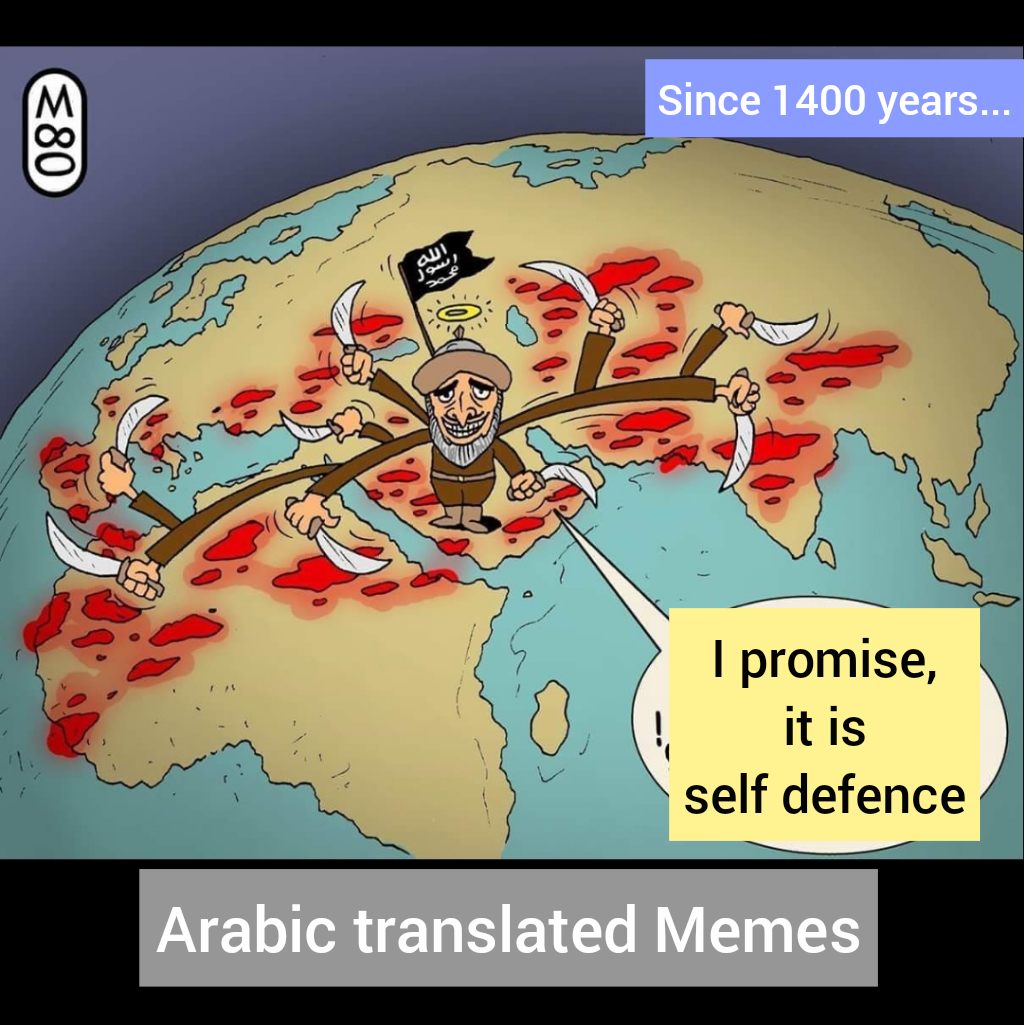

Arab Colonialism and the Roots of the Golden Age of Islam
The spread of Arab colonial conquest in the 8th to 12th century developed the colonial integration of diverse cultures, including the Greek, Roman, Persian, and
papers.ssrn.com
Similar threads

- Replies
- 5
- Views
- 541


- Poll
- Replies
- 7
- Views
- 1K

- Replies
- 121
- Views
- 9K

- Replies
- 106
- Views
- 5K

New Topics
-
 Sounds like being in a relationship or married is overrated
- Started by fbj
- Replies: 1
-
 CNN analyst Christine Brennan expressed her surprise that Southerners are nice people
- Started by TroglocratsRdumb
- Replies: 3
-

-

-


