Arab Imperialism Unmasked: The Hypocrisy Behind the Anti-Israel Agenda

Do you think the term 'colonialism' applies to Arab conquests?

  • Yes

    Votes: 11 78.6%
  • No

    Votes: 2 14.3%
  • Unsure

    Votes: 1 7.1%

  • Total voters
    14

Why ABORIGINAL Australians Stand with ISRAEL

Join Nova Peris as she hikes Masada with Nate Buzz, sharing a powerful conversation about her unwavering support for Israel during the recent conflict. Discover the profound connections between the Aboriginal and Jewish peoples, as they discuss their shared struggles as indigenous peoples and enduring ties to their lands.

Nova Peris, an Olympic gold medalist, politician, and advocate for Aboriginal rights, draws compelling parallels between her community's experiences and the resilience of the Jewish people in the land of Israel. This is an inspiring conversation on solidarity, identity, and the unbreakable bonds forged through shared histories.


Islam - Arab Imperialism

How Arabs Use the religion for their own benefits.
From the documentary: Islam - What the West Needs to Know


Arab Domination: The True Apartheid in the Middle East

Remember Arafat's vision of an Arab state stretching from Morocco to Aden? This isn’t about justice or peace; it’s about absolute hegemony. Exclusive Arab domination over the Middle East isn't just about land—it's about a system that oppresses millions.

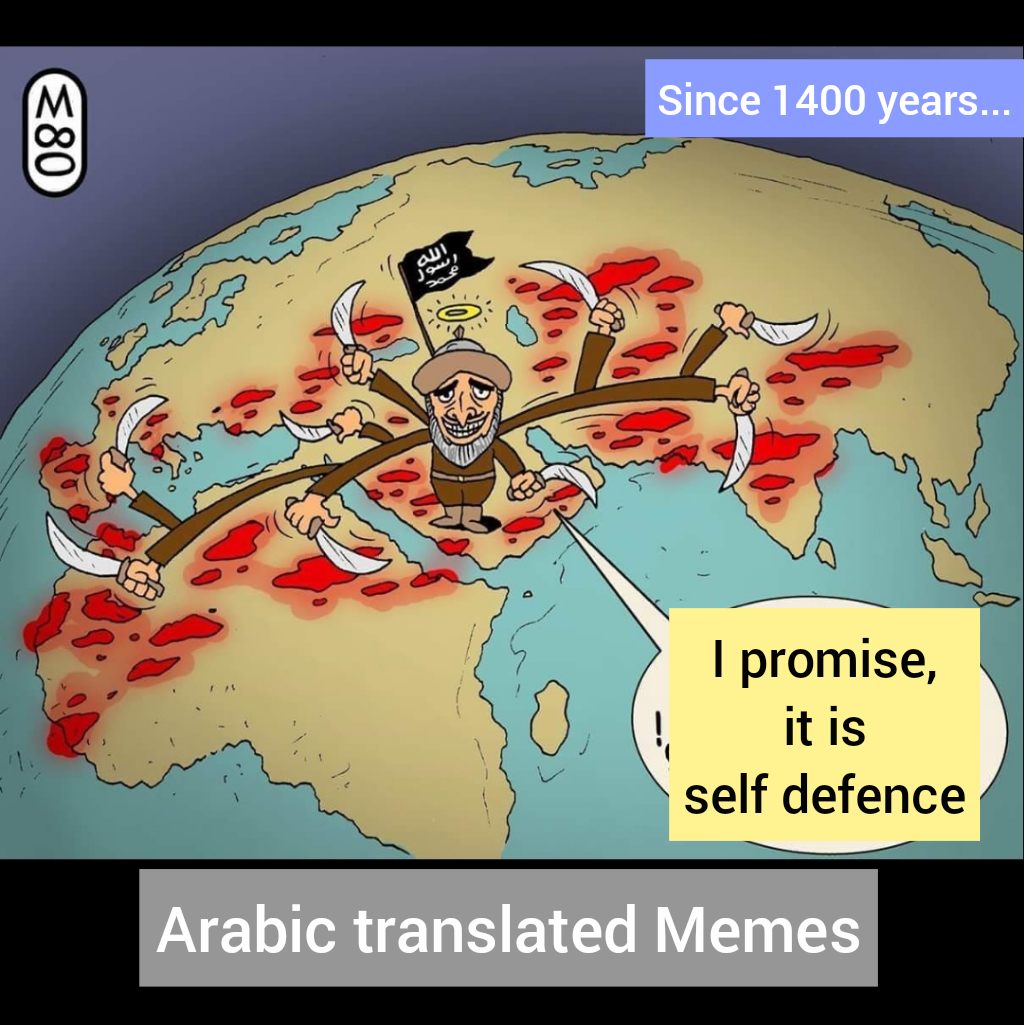
The term 'apartheid' is often misused in the context of Israel. Let's explore the true history of Arab domination and its implications. Throughout history, Arab conquests have aimed for exclusive domination over the Middle East. This form of apartheid has had lasting impacts on the region's demographics and politics.

While the world turns a blind eye, real apartheid and modern slavery are thriving in the Arab world: in 2021, an estimated 1.7 million men, women, and children were living in modern slavery in the Arab States. Despite having the lowest number of people living in modern slavery across all regions, once population was considered, the Arab States have the highest prevalence of modern slavery.

modern-slavery.png

The hypocrisy is glaring. How can those who perpetuate real apartheid accuse Israel of what they practice daily?

Read the full article - Arab States: Walk Free


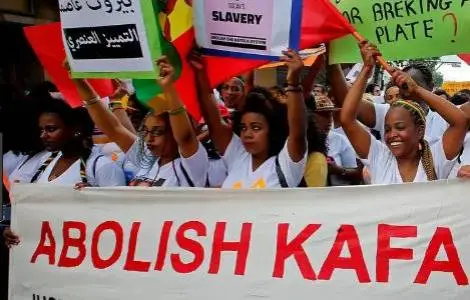
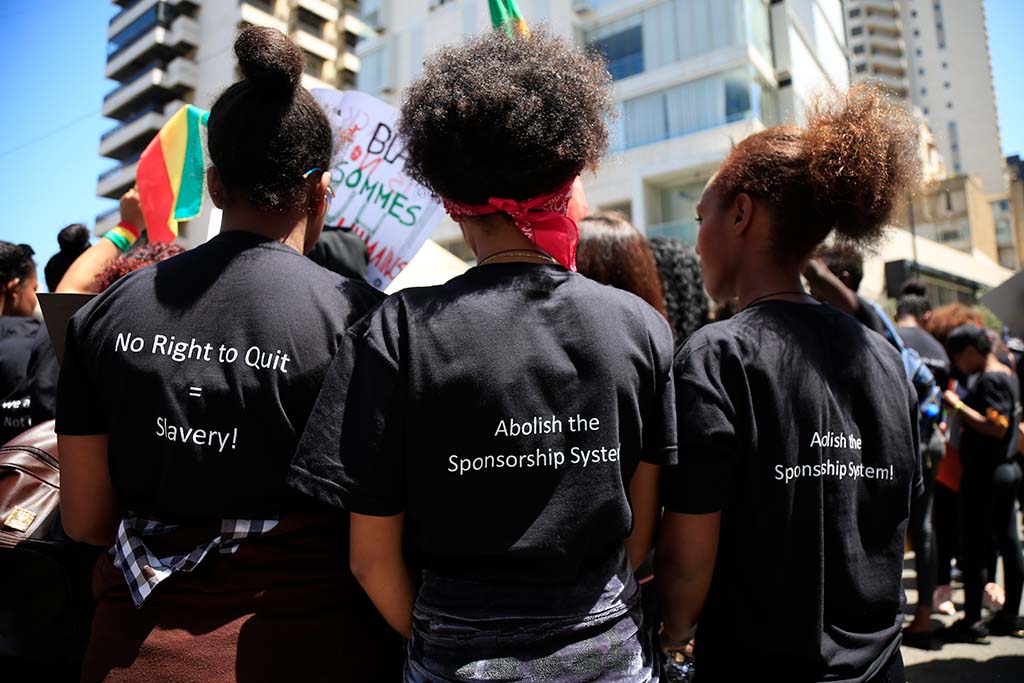
#AbolishKafala: Slavery in Lebanon


29 Nigerian Girls Rescued From Domestic Slavery In Lebanon


After months of agitations and negotiation between the Federal government and the Government of Lebanon, about twenty-nine Nigerian girls held captive for forced domestic labour have finally arrived in the country.


#AbolishKafala Slavery

 
Lebanon and Qatar's Kafala Slavery
Today, an investigative judge in Beirut has rejected the right of MH, the victim in the landmark slavery case challenging the Kafala system in Lebanon, to participate in court proceedings. MH requested reasonable time to return to Lebanon while she cared for her sick mother and to make complex travel arrangements to return from Ethiopia. The judge disagreed with the justifications provided and closed the investigation phase of the case without hearing from its essential witness. MH will appeal the decision, demanding that the investigative judge’s decision be overturned and a new hearing date set. Refusing the victim’s participation is an egregious miscarriage of justice, not only for MH, but for the hundreds of thousands of migrant workers living under the oppressive conditions that characterise the Kafala system.

At the last hearing date on 29 February 2024, the investigative judge also refused to allow MH to testify remotely, even though remote hearing procedures have been permitted in Lebanese courts, particularly during Covid. In rejecting the request for a remote hearing, the judge dismissed the immense hardships MH faces in traveling to Lebanon and insisted that she appear in person. The judge gave MH a mere two months and four days to solve these issues and be present in court in Lebanon without providing any provisions for her security. MH wanted to comply with the judge’s order, despite the difficulty that it entailed. Over the past two months, MH has taken every step to try to overcome the obstacles preventing her travel. But she faces very real threats of retaliation, including the threat of malicious prosecution.

“The Judge’s decision has denied MH, a victim of slavery, slave trading and racial and gender discrimination, the opportunity to speak in court. It is the equivalent of investigating a serious crime without speaking to the victim. MH is the first woman who has had the courage to speak out against the Kafala system and is representative of tens of thousands of women who cannot speak for themselves, not only in Lebanon but across the region,” said Antonia Mulvey, Executive Director of LAW. “The Judge has silenced the victim and has sent a message to others that their voices will not be heard. We cannot accept this and must stand up for all the MH’s worldwide and fight against this.”

 
Abolish Kafala Slavery in Lebanon

In this episode, Stephani takes on understanding the Kafala System in Lebanon with the insight and knowledge of This is Lebanon. Together, they dive deep into the history, policies and horrific stories of what we call today, the modern-day slavery, Kafala System.


#AbolishKafala - Slavery in Lebanon

 
Arab Imperialism and Modern Anti-Israel Rhetoric: A Tale Of Bloody Hypocrisy

In discussions about the Arab-Israel conflict, anti-Israel rhetoric often frames Israel as a colonial oppressor. However, if we apply this same lens to the history of Arab conquests and the spread of Islam, a stark hypocrisy emerges.

Arab Imperialism

Historically, Arab conquests in the 7th century led to the imposition of Islam and Arab culture across vast regions, including the Levant and vast part of Africa. These conquests involved significant cultural, religious, and political changes imposed on indigenous cultures, fitting the definition of imperialism. This point is underscored by Yasser Arafat’s vision of a unified Arab state from Morocco in Africa to Aden in Arabia, highlighting the goal of exclusive Arab domination over the Middle East.


Double Standards

Anti-Israel campaigns accuse Israel of being a foreign minority, while ignoring the imperialist history of Arab expansion. The same standards applied to Israel would paint an even harsher picture of Arab conquests and their long-lasting impacts on the indigenous nations of the region.

  • Why is there a double standard in the way history and current conflicts are framed?
  • How do we leverage the hypocrisy in the anti-Israel narrative to engage potential allies, threatened by the same imperialist ideology ruining what has become most of the "Arab world"?
photoeditor_20190222_082203219.jpg


Holding Arab Culture Accountable


This is the first article in a two-part series. Next week, Prof. Mohammad Dajani presents the view that the region's challenges are primarily political rather than cultural.

James Clapper, Director of National Intelligence, recently claimed that the United States “can't fix” the Middle East region. Clapper is right on the money. The region’s fundamental problems are not political but rather cultural, therefore the United States and its military might is unable to fix them.

Culture matters because it is the foundation for the behavior and organization of any society. The current chaos in the Middle East has many roots, but some of the conflict’s deepest draw on an Arab culture and identity that lacks internal and external empathy, favors authoritarianism over autonomy, and opts for zero-sum solutions. Unless Arabs take a self-critical look at their values, violence in the Middle East will continue.

In establishing the tenants of a culture or set of cultures, it is vital to examine the culture’s sense of morality to determine the society’s behavioral ideals. The Arab moral code values revenge over compromise, men over women, and groups over individuals. Collective Arab identity is based on tribalism, submitting to paternalistic authority, a sense of honor linked to women’s virginity, and an ossified sanctification of custom and tradition. There is a glorification of the past along with a refusal to take responsibility for the present and the hope that the future will miraculously be better.

This is not to say that individual Arabs are a carbon copy of their culture. To the contrary, interaction with average members of Arab societies demonstrate a generally decent, generous, and tolerant demeanor. Nor is Arab culture without many positives. Nevertheless, these positives have not developed into a progressive sociopolitical belief system. The collective culture does not necessarily celebrate political freedom , personal autonomy, or respect for women.

The contemporary Arab world also often lacks self-reflection and self-directed criticism. Conversations with Moroccans, Egyptians, Tunisians, Jordanians, and Gulf Arabs repeatedly demonstrate an overall narrative of victimization and blaming the other. This most notably manifests into a plethora of conspiracy theories, such as the suspicion that ISIS is an American-Israeli invention manufactured to destroy the region, or that the Arab Spring was a Western plot to hand the region over to Islamists.

This type of thought process reveals a deep-seated aversion to accountability and responsibility that makes gestures such as the condemnation of terrorism against Christians, Yazidis, Jews, or Shia individuals perfunctory. Meanwhile the outside world—Iran, Israel, the United States, colonialism, or other Arabs’ failure to live up to "true Islam"—has become the bogeyman of any internal societal failures. This trend has lead to the ultimate irony: Arab troubles are constantly blamed on external forces, which are then expected to solve them.

This observation is not to exempt Western powers. The West’s continuous support of Arab dictators has certainly contributed to the perpetuation of antiquated priorities and democratic deficits. Nevertheless, continuously relying on emphasizing the West’s regional failures to avoid self-examination and reform is intellectually dishonest. Tribalism ‎and ‎disrespect for individual autonomy cannot be characterized and excused as a byproduct of colonialism and Western interventions.

By all measures, Arab countries have a statistically weak showing when compared to the rest of the world, factually documented in various UNDP Arab development reports. For example, a 2002 report highlighted a shortage in the Arab world of three traits recognized as essential by the international community: freedom, knowledge, and female empowerment. One can and should blame Arab governments and regimes for these deficits; but this only addresses half of the issue.

Individual liberty is not a cornerstone of Arab culture, learning is emphasized as a process of transmission rather than questioning, and women are often not seen as full citizens, regardless of their legal status. An anecdotal example: when an educated Arab acquaintance’s wife tried scheduling an appointment for a cesarean section, the hospital sought his approval. according to the 2015 Global Gender Gap Report, statistical evidence suggests that of the fifteen countries with the lowest rates of women’s participation in the labor force, thirteen are in the Middle East. The report further details that only 18% of working-age Arab women have jobs, and that in 2015 the unemployment rate among young women in Arab states was almost 44 percent, compared to 22.9 percent of male youth.

One can argue about the role that different strains of Islam have played in forming such values, or Islam’s attempt to root out tribalism and ethnocentrism to no avail. whatever the case maybe, the combination of tribalism and religion has been deadly, the chaos in the region being a case in point. For the time being, Arab obsession with Israel has expanded into an obsession with Iran, coupled with a rampant moral amnesia regarding the Syrian refugees’ catastrophe. There is no lack of financial resources in the Middle East, yet certain Arab states spend billions of dollars on weapons while unwilling to allow Syrian refugees in their countries, placing even greater burdens on the refugees themselves and the countries already hosting millions. Arabs are cheering the Saudi led coalition in Yemen, but make no effort to rebuild the country or settle the displaced Yemenis.

Today, Arab media, politicians, and the common people are busy condemning Iran and Shiites for the destruction in the region. Iran’s pernicious behavior is counterproductive; yet pretending Iran’s intervention in "Arab affairs" is the source of all ills in the region is a fallacy. Informed observers would argue the political turmoil has been in the making for decades, driven by a brutal combination of authoritarian leadership, limited social progress, and a dismal economic record. It is now time for Arab intellectuals to seriously examine the political, social, and economic circumstances that led to this state of affairs, in order to begin advocating for a real path forward.


It took them 3 days to understand pagers don't work,

maybe pigeons mellow them down...

 
Last edited:

THE ROLE OF ARAB-MUSLIM IMPERIAL-COLONIALISM ON THE CURRENT CONFLICT WITH THE JEWS

The reason why the Arab world, and the Muslim-Arab world in particular, find Israel categorically unacceptable goes back to the doctrine of Dar al Harb, Dar al Islam. The land between the river and sea became a key part of the exploding Arab-Muslim empire – Dar al Islam – in the 7th century. Fast forward some 14 centuries, and the dissolution of the Caliphate in 1924 (the first ‘Nakba’) put an end to Dar al Islam formally. In the eyes of the West, Islam, the millennia-long foe, had been put in its place.

But this triumphalist vision of a world ultimately entirely submitted to Allah (through Islam) lived on, taking on a more modern form, more powerful and effective than the Ottoman basket case. Hassan al-Banna formed the Muslim Brotherhood (1927), a multi-generational plan to revive true Islam, fight the forces of secular modernity making inroads in the Arab world whose progress al-Banna saw as a regression to the ‘Jahaliyya,’ i.e. the ‘Ignorance’ of the pre-Islamic Arab world. He sought a long-term, multi-generational goal of a new salvific and eventually global Caliphate in which Muslims ruled according to Sharia: Where there was Dar al Harb, there shall be Dar al Islam.

For al-Banna, his triumphalist followers and sympathisers, the demotion of Islam in the eyes of the nations that had occurred through the military and cultural success of Western imperial-colonialists, threatened the very religion itself: ‘a declaration of war on all shapes of Islam.’ For them, Islam must dominate. Few forces today that seek global hegemony are so open about their imperial ambitions.

In the minds of supremacists like al Banna, therefore, the creation of Israel was a further catastrophe in this long war on Islam, the loss of territory in the heart of what was and should be dar al Islam, and a denial of Muslim imperial claims. The core of the Arab-Muslim irredentist demand that Israel be destroyed, is a direct expression of this imperialist Islam from its first century. Free infidels are anathema to Islam’s triumphalist sovereignty. ‘We cannot concede a grain of sand to Jews.’ For Abul A’la al-Maududi, the most systematic thinker of modern Islam explained, Jews must exist in the state of submission. ‘The purpose for which the Muslims are required to fight is … to put an end to their sovereignty and supremacy.’[1] To have the dissolution of the Caliphate followed two decades later by a Jewish state in the heart of what should be Dar al Islam was a continuation of the same war ‘against all shapes of Islam.’ For triumphalist Muslims like al-Banna, Islam necessitated dominion. Its demotion on the world stage was an existential threat. Hence, losing the battle with the Jews threatened to be an unmitigated disaster, utter humiliation on a global scale in response to which, in complete confidence in their impending victory, the Arab League promised historic massacres. To lose would fatally wound triumphalist Islam’s need for visible dominion. To Muslims such as these, Israel was a blasphemy against the Prophet (PBUH). An intolerable degradation. Another nakba. Indeed, The Muslim Brotherhood, initially a weak movement, only came into its own in the fight against Zionism.[2]

THE NAKBA

This hard zero-sum mentality – if you win (anything) I lose; in order for me to win you must lose (everything) – has characterised one of the dominant currents in Arab attitudes towards Jews in the modern period. It’s not that more egalitarian, mutually respectful relations didn’t exist. The large influx of both Jews and Arabs in the first half of the 20th century, with far greater growth where Jews and Arabs lived together (Haifa) than where Arabs lived alone (and dominant), attests to the possibility of civil, voluntary relations between the two populations.[3] The current situation in Israeli hospitals is a rare case of a large Muslim minority integrated into the workings of professional democratic institutions. Israel has better relations with its Arab-Muslim citizens than any European country currently, despite having twice as large a population as any other democracy.

The Zionists put great importance on that reciprocity, and unlike European imperialism (which they saw themselves as explicitly rejecting), they purchased and worked the land, and played by the prevailing rules rather than conquering and then settling the land of displaced populations. They understood that their ability to live in the (former) Dar al Islam (i.e. among Muslim-majority nations), depended on that civil, demotic model of non-coercive, contractual relations prevailing. Their declaration of independence makes it clear that they operated in the liberal-progressive tradition of egalitarianism and self-determination rather than authoritarian imperialism.

The Great Arab Revolt of 1936-39, in which the Muslim Brotherhood played an important role, asserted the hard zero-sum triumphalist position. People who participated in the assault on both the British imperialists and the Zionists, did so to restore Arab honor. The Peel Commission made a point of asking Arab rioters how come, if things had so dramatically improved since the arrival of the Zionists, were they attacking Jews? Responded one rioter: ‘You say we are better off: you say my house has been enriched by the strangers who have entered it. But it is my house, and I did not invite the strangers in, or ask them to enrich it. Better a mat of my own than a shared house.’ In other words, ‘I prefer poverty as a member of the dominant group, to sharing in wealth’. One might call it a lose-lose: I can only ‘win’ (live in poverty) if you lose.

What we have here is a good example of what, mutatis mutandis, became of the spirit of Muslim imperial-colonialism over the many centuries in the land between the river and the sea. By the later Ottoman period, this was a classic case of so many prime-divider societies where the ruling elites dominate the vast majority of commoners living in poverty, and the backwater of a failing system: Muslim peasants – fellahin – and other commoners were in dire shape, impoverished by natural conditions, Bedouin raids, exploitative absentee landlords, and heavy state taxation, living at the edge of subsistence.

Their condition was far from the glorious triumphalism of their ancestors, but that apparently did not mean they renounced the proud sense of superiority appropriate to the conquest, but now threadbare … A mat of my own. When the Muslim Brotherhood and the Arab Nationalists denounced Western imperial-colonial aggression, they did so accurately: both sides were engaged in la raison du plus fort. But what they opposed to that aggression was their own, robust, millennia-long, imperial-colonialism, the so-called ‘resistance’ was imperial competition for dominion.

This framework clarifies the Muslim stakes in Israel’s creation. Nothing could be more catastrophic than the Jews, historically the weakest and most cowardly of the dhimmi, establishing an autonomous state in the heart of (what should be) Dar al Islam. (Scholars of shame-honor cultures note that as long as a humiliating fact [e.g. a wife’s infidelity] isn’t made public, it is bearable.) A Jewish state in Palestine was just such a public announcement of Muslim impotence.

And yet, that is precisely what happened. And the response to the catastrophe was to imprison the refugees from Palestine in ‘refugee camps’ (where most still live) and swear eternal enmity to the ‘Zionist entity.’ Here one finds the key triumphalist response among Arabs to Israel’s inexplicable and blasphemous success, a response that has dominated Arab leaders with few exceptions, to present: make your own people suffer as a way to promote the war you won’t admit you lost. Hamas explains:

The day the enemies conquer some part of the Muslim land, jihad becomes a personal duty of every Muslim. In the face of the Jewish occupation of Palestine, it is necessary to raise the banner of jihad. This requires the propagation of Islamic consciousness among the masses, locally [in Palestine], in the Arab world and in the Islamic world. It is necessary to instill the spirit of jihad in the nation, engage the enemies and join the ranks of the jihad fighters.

Read more:

Flag-of-Palestine.jpg


Arab Imperialism and Modern Anti-Israel Rhetoric: A Tale Of Bloody Hypocrisy

In discussions about the Arab-Israel conflict, anti-Israel rhetoric often frames Israel as a colonial oppressor. However, if we apply this same lens to the history of Arab conquests and the spread of Islam, a stark hypocrisy emerges.

Arab Imperialism

Historically, Arab conquests in the 7th century led to the imposition of Islam and Arab culture across vast regions, including the Levant and vast part of Africa. These conquests involved significant cultural, religious, and political changes imposed on indigenous cultures, fitting the definition of imperialism. This point is underscored by Yasser Arafat’s vision of a unified Arab state from Morocco in Africa to Aden in Arabia, highlighting the goal of exclusive Arab domination over the Middle East.


Double Standards

Anti-Israel campaigns accuse Israel of being a foreign minority, while ignoring the imperialist history of Arab expansion. The same standards applied to Israel would paint an even harsher picture of Arab conquests and their long-lasting impacts on the indigenous nations of the region.

  • Why is there a double standard in the way history and current conflicts are framed?
  • How do we leverage the hypocrisy in the anti-Israel narrative to engage potential allies, threatened by the same imperialist ideology ruining what has become most of the "Arab world"?
photoeditor_20190222_082203219.jpg

The Psychosis Case: Pan-Arabism

GX34WOSWgAE_IvB
 
What's in a Name? The Case of 'P-alestine'
Did you know that most Arabs can't even pronounce the name 'P - alestine'? Let's explore the linguistic and historical implications of this curious fact, and what it means for the authenticity of the Palestinian narrative.

The term 'Palestine' has a rich history, but interestingly, the letter 'P' does not exist in Arabic, leading to a unique pronunciation challenge. This raises questions about the authenticity of the Palestinian narrative and its historical roots.

Historically, the name 'Palestine' itself was a Roman invention, used to rename the region of Judea after the Bar Kokhba revolt in 135 CE. The pronunciation challenge is not just a linguistic quirk but also a symbol of deeper issues of cultural and historical authenticity.

These stark contrasts highlight the moral and ethical complexities surrounding the Palestinian identity and the broader Arab-Israeli conflict.

Imagine a scenario where someone demands custody over a child whose name they cannot even pronounce. Now, imagine an ideology celebrating strapping someone's children in suicide vests for the promise of a land they cannot even pronounce.


(QUESTION)
How does the inability to pronounce the name reflect on the territorial claims
of those who advocate so fervently for it, sometimes to extreme measures?

Israel and Arab Colonialism


68346216_1007030869688782_2219326446428487680_n.jpg


15th post
Arab slave trade and invasion of Africa


"Free Palestine" or exclusive Arab domination
over the Middle East and Africa?


Last edited:
Back
Top Bottom