A series of questions made by a curious human which deserves our close consideration.
For those who are so sure that "Palestine", the country, goes back through "most of recorded history", I expect you to be able to answer a few basic questions about that country of Palestine, and its respective citizens who demand so many rights and privileges...
When was it founded and by whom?
What were its borders?
What was its capital?
What were its major cities?
What constituted the basis of its economy?
What was its form of government?
Can you name at least one Palestinian leader before Arafat or the Grand Mufti?
Was Palestine ever recognized by a country whose existence, at that time or now, leaves no room for interpretation?
What was the language of the country of Palestine?
What was the name of its currency?
Choose any date in history and tell what was the approximate exchange rate of the Palestinian monetary unit against the US dollar, German mark, GB pound, Japanese yen, or Chinese yuan on that date?
And, finally, since there is no such country today, what caused its demise and when did it occur?
The old Hasbara questions about Palestine gambit. You know that you should change the wording a little to try to hide the fact that it comes from a Hasbara propaganda generation site.
You know that all those questions, as silly as they are, have been answered.
When was it founded and by whom?
135 AD, Emperor Hadrian
What were its borders?
See map below:
What was its capital?
Aelia Capitolina
What were its major cities?
See map above.
What constituted the basis of its economy?
Here is a summary, you can read about the economy of Palestine by downloading the pdf, the link is provided below.
The economy of Palestine should not be understood in isolation; de- 514 PHILIP A. HARLAND 02-039 Ch 22 6/19/02 11:38 AM Page 514 spite regional peculiarities that may be identified, this region was part of the larger economic world of the Roman Empire, and social-economic conditions in the region have their counterparts elsewhere in many respects. First, the ancient economy of Palestine was an underdeveloped, agrarian economy based primarily on the production of food through subsistence-level farming by the peasantry. The peasantry, through taxation and rents, supported the continuance of a social-economic structure characterized by asymmetrical distribution of wealth in favor of the elite, a small fraction of the population. Peasants made up the vast majority of the population (over 90 percent; see Kreissig 1970: 17–87; Fiensy 1990: 155–76). The peasantry included small landowners who worked their own land for the subsistence of their families, tenants who worked the land of wealthy landowners and paid rent, and a variety of landless peasants who either worked as wage laborers on large or medium-sized estates or resorted to other activities such as banditry. The elites, consisting of the royal family, aristocrats, religious leaders, and some priests, drew their primary source of income from medium-sized and large estates.
http://www.philipharland.com/publications/Harland 2002 Economy Palestine.pdf
What was its form of government?
Propraetorian legaturam ( Emperial Legate executive and locally elected administrators) and feudal hierarchy (Latin Kingdom).
Can you name at least one Palestinian leader before Arafat or the Grand Mufti?
Pontius Pilate, Sophronius, Heraclius, Bladwin, Milisende
Was Palestine ever recognized by a country whose existence, at that time or now, leaves no room for interpretation?
Regnum Hierosolimitanum
What was the language of the country of Palestine?
Latin was the official language of court, although Aramaic, French and Italian were widely spoken.
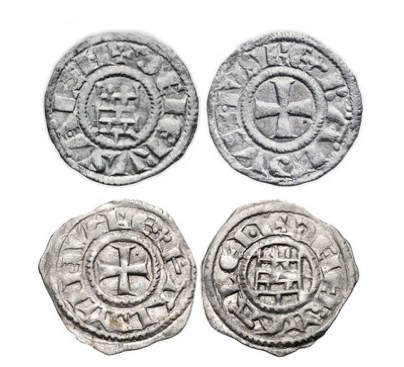
What was the name of its currency?
Denier
Choose any date in history and tell what was the approximate exchange rate of the Palestinian monetary unit against the US dollar, German mark, GB pound, Japanese yen, or Chinese yuan on that date?
From 135 AD through the Muslim conquest in early 600 AD, the denarius (unified Roman) and solidus (Eastern Roman Empire-Byzantine). They were the only currencies in the empire so there was no "conversion" rate.
Between 1099-1200, the Latin Kingdom denier was roughly equal to the Anglo-Saxon penny or about 1,000 to a Saracen gold dinar.
And, finally, since there is no such country today, what caused its demise and when did it occur?
The fall of Acre to the Muslims, 1291 AD.