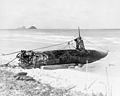
I sure can good sister ...
PEARL HARBOR: FDR KNEW
Churchill wrote in his Nobel Prize winning series on WWII that FDR knew about the Japanese plans to attack Pearl Harbor. The following is from pages 602-603 of THE GRAND ALLIANCE, c1950. Churchill makes these points about his good friend and colleague FDR, accusing him of treason while knowing that the facts would eventually come out:
Hawaii's commanders did not get proper warning.
Churchill was not going to judge what FDR did at Pearl Harbor.
FDR and he were very afraid that the US could not come into the war unless Japan attacked the U.S.
Pearl Harbor was worth the price.
FDR "knew the full and immediate purpose" of the Japanese at Pearl Harbor.
FDR welcomed the attack.
And this amazing statement: "Nor must we allow the account in detail of diplomatic interchanges to portray Japan as an injured innocent..." That is an admission, granted forced by the facts, that Japan WAS the injured innocent, maneuvered into firing the first shot, as Secretary of War Stimson put it. Cabinet Minister Sir Oliver Lyttelton, expressed the same point on June 20, 1944, to the American Chamber of Commerce: "Japan was provoked into attacking the Americans at Pearl Harbor. It is a travesty on history ever to say that America was forced into the war. Everyone knows where American sympathies were. It is incorrect to say that America was ever truly neutral even before America came into the war on a fighting basis."
PEARL HARBOR: FDR KNEW
Churchill Offers Toil and Tears to FDR
On the following day, Roosevelt responded that he could not commit to any course of action without congressional approval. At the time, there was widespread isolationist sentiment among the American people; he was about to run for an unprecedented third term and could not risk alienating a large constituency. Nor was Roosevelt yet inclined to trust the prime minister. Churchill thanked Roosevelt anyway in a message of five sentences, two of which are telling: I do not need to tell you about the gravity of what has happened. We are determined to persevere to the very end, whatever the result of the great battle raging in France may be.
Two days later Churchill wrote again to Roosevelt, including these ominous words: Members of the present Administration would likely go down during this process should it result adversely, but in no conceivable circumstance will we consent to surrender. If members of the present administration were finished and others came in to parley amid the ruins, you must not be blind to the fact that the sole bargaining counter with Germany would be the Fleet; and if this country was left by the United States to its fate no one would have the right to blame those then responsible if they made the best terms they could for the surviving in-habitants. . . . Excuse me, Mr. President, for putting this nightmare bluntly. Evidently I could not answer for my successors who in utter despair or helplessness might well have to accommodate themselves to the German will. However, there is happily no need at present to dwell on such ideas. Few understood at the time what Churchill knew implicitly: Roosevelt believed that should Britain fall, its fleet would cross the Atlantic for Canadian and American ports.
---
One disaster followed another. While the British army at Dunkirk was largely saved, the Germans marched into Paris a fortnight later, and France fell. Only now did Churchill invoke the United States. In a speech, he said: If we fail, then the whole world, including the United States [authors italics], and all that we have known and cared for, will sink into the abyss. . . . U.S. support for intervention in Europe remain mixed. In 1940 Herbert Hoover, Joseph Kennedy, Charles Lindbergh, and other influential Americans opposed entering the war. Roosevelt would come to understand Churchills perspective, but not yet.
The desperate French Premier Paul Reynaud had begged FDR to enter the war, but the president declined. On June 15 Churchill wrote to Roosevelt again, urging him to consider the consequences: Although the present Government and I personally would never fail to send the Fleet across the Atlantic if resistance was beaten down here, a point may be reached in the struggle where the present Ministers no longer have control of affairs and when very easy terms could be obtained for the British Islands by their becoming a vassal state of the Hitler Empire. . . . If we go down you may have a United States of Europe under Nazi command far more numerous, far stronger, far better armed than the New World.
AmericanHeritage.com / Churchill Offers Toil and Tears to FDR
I highly recommend reading all of this account .. but there are many many more accounts that all tell the same story. England was on the verge of defeat and Roosevelt desperately searched for ways to get in the war in spite of the fact that Americans had no taste for it.
FDR provoked the Japanese to attack .. then allowed it to happen.