This synopsis might help:
Capitalism - Wikipedia the free encyclopedia
That is, we have capitalists controlling the means of production, from which goods and services are created by a labor market, then sold by a goods and financial market to the same laborers. In short, investors, managers, and workers who are also consumers.
A similar phenomenon can be seen in the origins of modern capitalism:
The Agrarian Origins of Capitalism
That is, commons from which peasants grew food are eventually enclosed by those with physical power to control peasants. Peasants are soon allowed to grew food on land now controlled by others, but instead of receiving part of the food that they grew, they are paid in scrip. The land owners (at some point, control of the land is legitimized by government) sell the food in markets for a profit. Peasants can use their scrip to buy food there.
Obviously, in order to profit, capitalists (those who control the means of production, which in this case is enclosed land) have to sell food at prices higher than they pay peasants. It's either that, or peasants have to work harder or use technology to grew more food given the same amount of labor. In any case, with no control of the means of production (i.e., land) peasants can only sell their labor in exchange for food, while capitalists have to make peasants more productive in order to profit from their labor.
What complicates matters further is competition between capitalists. In light of that, they can lower wages, increase prices, or keep wages the same or increase them but make workers more productive through technologies and other means, and so on. In the end, the first two options work against them because workers are also the same consumers of goods and services sold. Thus, the best option is to increase productivity while keeping costs as low as possible.
This explains why productivity rises while wages not much. This also explains why markets have to keep expanding, in order to absorb increasing production of goods and services.
The problem is that as more expensive goods and services are sold (such as passenger vehicles, etc.) workers whose wages barely go up are not able to afford them. That's where banks come in: they provide credit to workers, who in turn will be able to buy all of the nice things they produce, but must be more productive and work for many years in order to pay off their loans.
For richer countries, more credit can be created to allow more workers to move to service industries while lower-paying jobs are outsourced to poor nations, where workers might go through the same process: save enough to reach middle class status, and then outsourcing leading to the shift from Main Street to Wall Street, followed by financial speculation and economic crashes.
Banks will not hesitate in extending credit because, like other businesses, they have to provide more goods and services each time to maintain operations. In this case, they have to lend more each time in order to earn more interest, which in turn is churned back into the system and re-lent to growing markets.
This explains why not only material resources and energy used to produce more goods and services are growing but also credit levels. Put simply, more money is created as more goods and services are made and sold, leading to more money in the form of interest earned or profit created, leading to more money invested in business to produce more goods and services, etc.
Since those who already have a large financial base from the start receiving percentage returns much higher than others, then the gap between capitalists and workers grows, and eventually the former controls the economy and even government.
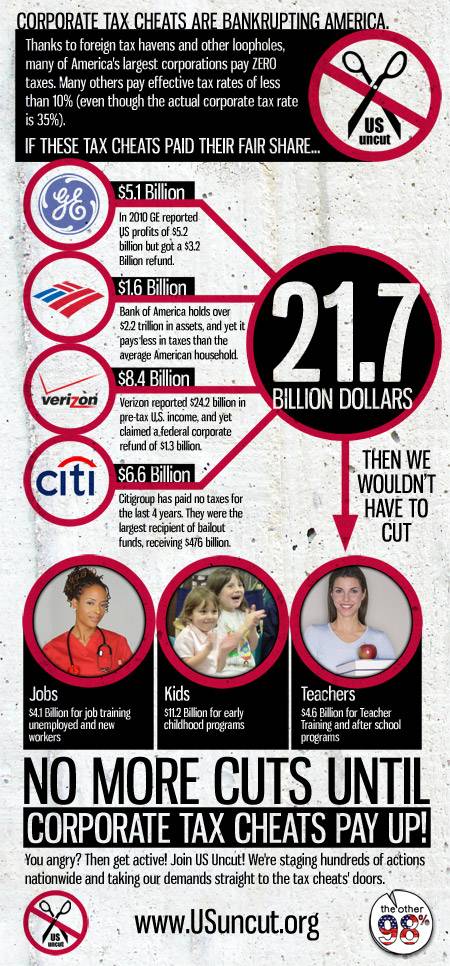
This explains why the Fed, which is a private consortium of commercial banks, was formed, why policies governing the country are generally pro-business, why the government without hesitation bailed out Wall Street when financial speculation led to a crash, why citizens are paying for those bailouts plus military costs and others while receiving entitlements and credit to purchase houses, cars, etc., why both consumer spending and debts have been rising, and why the global economy is essentially controlled by mega-corporations, especially financial businesses.
Finally, the same global capitalist economy should be able to continue growing indefinitely as long as one can safely assume that the biosphere is unlimited in terms of material resources and energy. But since that is not the case:
Limits to Growth was right. New research shows we re nearing collapse Cathy Alexander and Graham Turner Comment is free The Guardian
then it is likely that not only will class warfare will become more prominent in the future, multiple crises will kick in and amplify each other.