Why support Israel?

Status
Not open for further replies.
Israel is a parasite to the United States
Remember the US can survive without Israel
But Israel cannot survive without the United States/

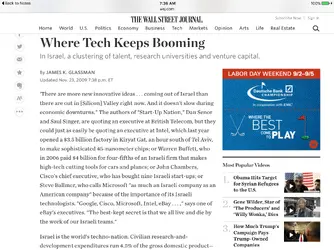
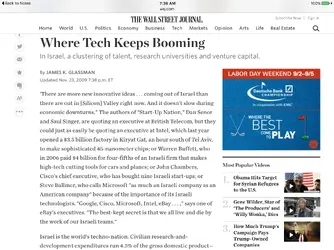
US technology industry, and, thus, the American economy, depend on Israel

Those jobs would be in the U.S, if Israel didn't do it cheaper.
 

True , sex would be more exciting this afternoon. However , becoming jew wise is essential for White survival. Jews will not replace us.


Funny: You cannot use a computer without Jews LOL Let a billion chips bloom: Intel Israel celebrates 40 years

Would be like saying you can not use a car without Mexico, because Mexico manufactured it.

US technology industry depends on Israel

I won't argue that U.S technology gains more from Israel, than the Muslims.

But, I will however argue with your claims that the U.S technology industry depends on Israel.

That's bogus propaganda.

US tech execs: We live by Israel’s technology innovations
 

Attachments

  • 17ED1417-2F2A-43D0-93A4-9A84CAAE059C.webp
    17ED1417-2F2A-43D0-93A4-9A84CAAE059C.webp
    215.3 KB · Views: 21

Attachments

  • D6EFADC0-A08F-41FB-8A82-E3D223E4D224.webp
    D6EFADC0-A08F-41FB-8A82-E3D223E4D224.webp
    215.3 KB · Views: 23
True , sex would be more exciting this afternoon. However , becoming jew wise is essential for White survival. Jews will not replace us.


Funny: You cannot use a computer without Jews LOL Let a billion chips bloom: Intel Israel celebrates 40 years

Would be like saying you can not use a car without Mexico, because Mexico manufactured it.

US technology industry depends on Israel

I won't argue that U.S technology gains more from Israel, than the Muslims.

But, I will however argue with your claims that the U.S technology industry depends on Israel.

That's bogus propaganda.

US tech execs: We live by Israel’s technology innovations

In most cases it's Israel feeding off of U.S tech, and U.S companies.
 
Funny: You cannot use a computer without Jews LOL Let a billion chips bloom: Intel Israel celebrates 40 years

Would be like saying you can not use a car without Mexico, because Mexico manufactured it.

US technology industry depends on Israel

I won't argue that U.S technology gains more from Israel, than the Muslims.

But, I will however argue with your claims that the U.S technology industry depends on Israel.

That's bogus propaganda.

US tech execs: We live by Israel’s technology innovations

In most cases it's Israel feeding off of U.S tech, and U.S companies.

How Israel Saved Intel How Israel saved Intel
 
Israel is a parasite to the United States
Remember the US can survive without Israel
But Israel cannot survive without the United States/

US technology industry, and, thus, the American economy, depend on Israel
Enjoy your propaganda

US technology executives: We exist based on Israeli innovation
More anonymous jewish US technology executives...... Names, anonymous sources are useless.
 
Pentagon, GAO Report Israeli Espionage And Illegal Technology Retransfer
By Shawn L. Twing
2016fighter-jet.jpg


The new year started off on a sour note for the controversial U.S.-Israeli "strategic relationship" when two reports from the Department of Defense and one from the General Accounting Office (GAO) highlighted Israel's espionage activities against the United States and Israeli thefts of U.S. military technology secrets, and confirmed that Israel has illegally retransferred U.S. technology from the largely U.S.-funded Lavi fighter program to China.

The first round of revelations began with a report in the February issue of Moment, a Jewish monthly published in Washington, DC. The magazine described a Defense Investigative Service (DIS) warning to U.S. defense contractors about espionage by U.S. allies. One of the counterintelligence profiles provided with the memo detailed Israeli "espionage intentions and capabilities" aimed at the United States (see p. 113 for the full text of the DIS Counterintelligence Profile). The memo was sent to defense contractors last October by the Syracuse, NY-based agency responsible for issuing security clearances to Department of Defense employees and defense contractors.

Shortly after the Moment story appeared, Anti-Defamation League (ADL) executive director Abraham Foxman protested that the profile "impugns American Jews and borders on anti-Semitism" because of its reference to the potential security threat posed by individuals having "strong ethnic ties" to Israel, a euphemism for American Jews.

The Pentagon responded to Foxman by canceling the memo and promising not to issue a similar one in the future. In a letter to Foxman, Assistant Secretary of Defense for military intelligence Emmett Paige, Jr. wrote that, "The content of [the DIS counterintelligence profile] does not reflect the official position of the Department of Defense." He added that, "We have instructed appropriate personnel that similar documents will not be produced in the future."

Within days after the DIS warning became public, however, the General Accounting Office, the investigative arm of Congress, released a declassified report which also included numerous revelations about espionage against the United States by its allies. The report, "Defense Industrial Security: Weaknesses in U.S. Security Arrangements With Foreign-Owned Defense Contractors," claimed that "Country A" (publicly identified as Israel in the Feb. 22 Washington Times) "conducts the most aggressive espionage operation against the United States of any U.S. ally." The list of espionage operations described in the report included the following:

  • "An espionage operation run by the intelligence organization responsible for collecting scientific and technologic information for [Israel] paid a U.S. government employee to obtain U.S. classified military intelligence documents. [This is a reference to the 1985 arrest of Jonathan Pollard, a civilian U.S. naval intelligence analyst who provided Israel's LAKAM espionage agency an estimated 800,000 pages of classified U.S. intelligence information.]
  • "Several citizens of [Israel] were caught in the United States stealing sensitive technology used in manufacturing artillery gun tubes.
  • "Agents of [Israel] allegedly stole design plans for a classified reconnaissance system from a U.S. company and gave them to a defense contractor from [Israel].
  • "A company from [Israel] is suspected of surreptitiously monitoring a DOD telecommunications system to obtain classified information for [Israeli] intelligence.
  • "Citizens of [Israel] were investigated for allegations of passing advanced aerospace design technology to unauthorized scientists and researchers.
  • "[Israel] is suspected of targeting U.S. avionics, missile telemetry and testing data, and aircraft communications systems for intelligence operations.
  • "It has been determined that [Israel] targeted specialized software that is used to store data in friendly aircraft warning systems.
  • "[Israel] has targeted information on advanced materials and coatings for collection. An [Israeli] government agency allegedly obtained information regarding a chemical finish used on missile re-entry vehicles from a U.S. person."
 
How Israel took American jobs away from Intel, and Microsoft through outsourcing***************

How Israel Saved Intel How Israel saved Intel

The U.S spawned Intel, Pentium chips, and so forth.
So, where would Israelis who get those jobs be without those, huh?

It would be much better if those jobs by Intel were in the U.S, BTW.

Intel: “What Israel has done for computing & the world is amazing!” Let a billion chips bloom: Intel Israel celebrates 40 years
 
Pentagon, GAO Report Israeli Espionage And Illegal Technology Retransfer
By Shawn L. Twing
2016fighter-jet.jpg


The new year started off on a sour note for the controversial U.S.-Israeli "strategic relationship" when two reports from the Department of Defense and one from the General Accounting Office (GAO) highlighted Israel's espionage activities against the United States and Israeli thefts of U.S. military technology secrets, and confirmed that Israel has illegally retransferred U.S. technology from the largely U.S.-funded Lavi fighter program to China.

The first round of revelations began with a report in the February issue of Moment, a Jewish monthly published in Washington, DC. The magazine described a Defense Investigative Service (DIS) warning to U.S. defense contractors about espionage by U.S. allies. One of the counterintelligence profiles provided with the memo detailed Israeli "espionage intentions and capabilities" aimed at the United States (see p. 113 for the full text of the DIS Counterintelligence Profile). The memo was sent to defense contractors last October by the Syracuse, NY-based agency responsible for issuing security clearances to Department of Defense employees and defense contractors.

Shortly after the Moment story appeared, Anti-Defamation League (ADL) executive director Abraham Foxman protested that the profile "impugns American Jews and borders on anti-Semitism" because of its reference to the potential security threat posed by individuals having "strong ethnic ties" to Israel, a euphemism for American Jews.

The Pentagon responded to Foxman by canceling the memo and promising not to issue a similar one in the future. In a letter to Foxman, Assistant Secretary of Defense for military intelligence Emmett Paige, Jr. wrote that, "The content of [the DIS counterintelligence profile] does not reflect the official position of the Department of Defense." He added that, "We have instructed appropriate personnel that similar documents will not be produced in the future."

Within days after the DIS warning became public, however, the General Accounting Office, the investigative arm of Congress, released a declassified report which also included numerous revelations about espionage against the United States by its allies. The report, "Defense Industrial Security: Weaknesses in U.S. Security Arrangements With Foreign-Owned Defense Contractors," claimed that "Country A" (publicly identified as Israel in the Feb. 22 Washington Times) "conducts the most aggressive espionage operation against the United States of any U.S. ally." The list of espionage operations described in the report included the following:

  • "An espionage operation run by the intelligence organization responsible for collecting scientific and technologic information for [Israel] paid a U.S. government employee to obtain U.S. classified military intelligence documents. [This is a reference to the 1985 arrest of Jonathan Pollard, a civilian U.S. naval intelligence analyst who provided Israel's LAKAM espionage agency an estimated 800,000 pages of classified U.S. intelligence information.]
  • "Several citizens of [Israel] were caught in the United States stealing sensitive technology used in manufacturing artillery gun tubes.
  • "Agents of [Israel] allegedly stole design plans for a classified reconnaissance system from a U.S. company and gave them to a defense contractor from [Israel].
  • "A company from [Israel] is suspected of surreptitiously monitoring a DOD telecommunications system to obtain classified information for [Israeli] intelligence.
  • "Citizens of [Israel] were investigated for allegations of passing advanced aerospace design technology to unauthorized scientists and researchers.
  • "[Israel] is suspected of targeting U.S. avionics, missile telemetry and testing data, and aircraft communications systems for intelligence operations.
  • "It has been determined that [Israel] targeted specialized software that is used to store data in friendly aircraft warning systems.
  • "[Israel] has targeted information on advanced materials and coatings for collection. An [Israeli] government agency allegedly obtained information regarding a chemical finish used on missile re-entry vehicles from a U.S. person."
With friends like Israel who needs enemies!
 
Rating: ( 0 Rating )


Washington Report on Middle East Affairs, June 2000, page 46

Trade and Finance

The U.S.-Israel Free Trade Agreement: Israel Keeps Up Barriers, U.S. Companies Lose Sales
By Colin MacKinnon
As part of its annual review of foreign trade barriers, the U.S. Trade Representative (USTR) has issued a sharp report detailing Israeli reluctance to implement the U.S.-Israeli Free Trade Area Agreement. The FTAA, signed in 1985, was supposed to reduce trade barriers between the two countries. And, in fact, out-and-out tariffs on U.S. goods going to Israel have been eliminated, as have U.S. tariffs on Israeli goods.

But Israel maintains a slew of non-tariff barriers that treat U.S. goods differently from Israeli goods, and getting these barriers eliminated has been a glacially slow process. These barriers, says USTR, are costing American companies as much as $500 million a year in lost sales and unevenly applied fees. The worst area of loss is software, videos and CDs, where Israeli piracy coupled with lax Israeli law enforcement is costing U.S. companies up to $200 million a year.

Thanks partly to such Israeli trade practices, the U.S. trade balance with Israel is chronically in deficit, a deficit that is constantly growing. Last year it was $2.2 billion, up from $1.7 billion the year before. Total U.S. exports to Israel in 1999 were $7.7 billion, up 10.3 percent from 1998. The U.S. imported $9.9 billion worth of goods in 1999, up 14.4 percent from 1998.

What sorts of barriers do the Israelis use other than tariffs? The range is both wide and surprising.

Take product standards. According to the USTR, Israel enforces standards on domestic products in a “spotty” manner, but not on imports. That means that Israeli goods can elude standards enforcement, while foreign goods may face unfairly tough requirements. Sometimes simply the way standards are written gives a leg up to local manufacturers. In 1990 Israel promised to harmonize its standards treatment for all goods, but 10 years later still hasn’t done so. So far the Knesset has voted no new funds for a systematic effort to overhaul the system.

Then there is the matter of taxation. Israel throws various taxes on goods, foreign and domestic, but applies them unevenly. The most egregious example is the country’s system of purchase taxes. Israel puts a purchase tax ranging from 25 to 95 percent on some—not all—goods sold in the country. Automobiles, refrigerators, cigarettes and alcoholic beverages are typical items so taxed.

The U.S. trade balance with Israel is chronically in deficit.
To calculate the purchase tax, Israel uses a system known as “TAMA” to assign a value to an imported item for taxation. Theoretically TAMA is an attempt to approximate the local wholesale value. But how Israeli officials go about calculating TAMA is highly opaque and seems to vary from industry to industry and product to product. The net result, though, is often to put a higher valuation, and hence higher taxes, on imported goods than on those that are domestically produced.

And Israel can apply purchase taxes to foreign products even when no such products are produced locally. Result: an import duty under another name.

Yet another area of discrimination is wharfage and port fees. The Israelis put a percentage charge on goods going into and out of the country to pay for port costs. Fair enough. But it’s 1.5 percent for imports and 0.2 percent for exports. Which is to say, foreign goods subsidize Israeli exports. Israel promised to equalize these fees in 1995. It is now 2000 and Israel still has not done so.

International long distance fees are another problem area. The main Israeli telecommunications carrier, Bezeq, puts a discriminatory charge on calls to North America, higher than on traffic to any other part of the world. These fees are supposed to be phased out in two years. We’ll see.

The one area where official, direct tariffs and quotas remain is agricultural trade, which is covered by a separate agreement signed by the U.S. and Israel in 1995. Under this agreement the Israeli market is supposed to open up gradually to U.S. food and agricultural products. But there has been little progress here.

According to USTR, the Israelis maintain “extensive restrictions on food and agricultural imports”—import bans, quotas, prohibitive tariffs and the like—in order to protect the country’s politically powerful agricultural interests.

High Levies
To calculate the levies it puts on agricultural imports, the Israeli government—as it does with TAMA—estimates the domestic costs in Israel of what it would cost to produce the foreign food product and, on the basis of that estimate, throws a tax on the import. The taxes can be very high, and outsiders are clueless as to how the taxes are calculated. Curiously, despite a 28 percent decline in the shekel against the dollar that began in 1996, the imposed reference prices, dreamed up by bureaucrats, have gone up 20 percent since that year. How come?

Furthermore, some imports—processed foods, modified starches, pasta, dried fish and the like—are treated as agricultural goods and have levies put on them when under agreements with the U.S. they should not be. Israel taxes such goods in violation of the FTAA.

U.S. meat exports face especially stiff resistance since Israel’s “Meat and Meat Products Import Law” in effect forbids the import of any meat or meat product not carrying a kashrut certificate issued by Israel’s Chief Rabbinate. But Israel allows domestic production of non-kosher products like pork, shellfish and non-kosher beef. This, too, is a direct violation of the FTAA, since restrictions based on religion are supposed to be implemented in accord with national treatment.

Let us not forget the problem of government procurement. Government agencies and corporations “make extensive use of selective tendering procedures,” according to USTR. That is, they discriminate against foreign companies. The USTR singles out for particular criticism in this regard the Ministry of Defense, an entity that, shall we say, has gotten a bit of aid from the U.S.

Readers who want to see the full report, National Trade Estimate Report on Foreign Trade Barriers, can access it on the Internet at <https://www.ustr.gov/reports/>.

Colin MacKinnon is contributing editor to the Washington, DC-based Middle East Executive Reports. âť‘

The U.S.-Israel Free Trade Agreement: Israel Keeps Up Barriers, U.S. Companies Lose Sales
 
Pentagon, GAO Report Israeli Espionage And Illegal Technology Retransfer
By Shawn L. Twing
2016fighter-jet.jpg


The new year started off on a sour note for the controversial U.S.-Israeli "strategic relationship" when two reports from the Department of Defense and one from the General Accounting Office (GAO) highlighted Israel's espionage activities against the United States and Israeli thefts of U.S. military technology secrets, and confirmed that Israel has illegally retransferred U.S. technology from the largely U.S.-funded Lavi fighter program to China.

The first round of revelations began with a report in the February issue of Moment, a Jewish monthly published in Washington, DC. The magazine described a Defense Investigative Service (DIS) warning to U.S. defense contractors about espionage by U.S. allies. One of the counterintelligence profiles provided with the memo detailed Israeli "espionage intentions and capabilities" aimed at the United States (see p. 113 for the full text of the DIS Counterintelligence Profile). The memo was sent to defense contractors last October by the Syracuse, NY-based agency responsible for issuing security clearances to Department of Defense employees and defense contractors.

Shortly after the Moment story appeared, Anti-Defamation League (ADL) executive director Abraham Foxman protested that the profile "impugns American Jews and borders on anti-Semitism" because of its reference to the potential security threat posed by individuals having "strong ethnic ties" to Israel, a euphemism for American Jews.

The Pentagon responded to Foxman by canceling the memo and promising not to issue a similar one in the future. In a letter to Foxman, Assistant Secretary of Defense for military intelligence Emmett Paige, Jr. wrote that, "The content of [the DIS counterintelligence profile] does not reflect the official position of the Department of Defense." He added that, "We have instructed appropriate personnel that similar documents will not be produced in the future."

Within days after the DIS warning became public, however, the General Accounting Office, the investigative arm of Congress, released a declassified report which also included numerous revelations about espionage against the United States by its allies. The report, "Defense Industrial Security: Weaknesses in U.S. Security Arrangements With Foreign-Owned Defense Contractors," claimed that "Country A" (publicly identified as Israel in the Feb. 22 Washington Times) "conducts the most aggressive espionage operation against the United States of any U.S. ally." The list of espionage operations described in the report included the following:

  • "An espionage operation run by the intelligence organization responsible for collecting scientific and technologic information for [Israel] paid a U.S. government employee to obtain U.S. classified military intelligence documents. [This is a reference to the 1985 arrest of Jonathan Pollard, a civilian U.S. naval intelligence analyst who provided Israel's LAKAM espionage agency an estimated 800,000 pages of classified U.S. intelligence information.]
  • "Several citizens of [Israel] were caught in the United States stealing sensitive technology used in manufacturing artillery gun tubes.
  • "Agents of [Israel] allegedly stole design plans for a classified reconnaissance system from a U.S. company and gave them to a defense contractor from [Israel].
  • "A company from [Israel] is suspected of surreptitiously monitoring a DOD telecommunications system to obtain classified information for [Israeli] intelligence.
  • "Citizens of [Israel] were investigated for allegations of passing advanced aerospace design technology to unauthorized scientists and researchers.
  • "[Israel] is suspected of targeting U.S. avionics, missile telemetry and testing data, and aircraft communications systems for intelligence operations.
  • "It has been determined that [Israel] targeted specialized software that is used to store data in friendly aircraft warning systems.
  • "[Israel] has targeted information on advanced materials and coatings for collection. An [Israeli] government agency allegedly obtained information regarding a chemical finish used on missile re-entry vehicles from a U.S. person."
With friends like Israel who needs enemies!

Google Chairman: Israel’s genius transforms the world The Next Google Could Come From Israel
 
Rating: ( 0 Rating )


Washington Report on Middle East Affairs, June 2000, page 46

Trade and Finance

The U.S.-Israel Free Trade Agreement: Israel Keeps Up Barriers, U.S. Companies Lose Sales
By Colin MacKinnon
As part of its annual review of foreign trade barriers, the U.S. Trade Representative (USTR) has issued a sharp report detailing Israeli reluctance to implement the U.S.-Israeli Free Trade Area Agreement. The FTAA, signed in 1985, was supposed to reduce trade barriers between the two countries. And, in fact, out-and-out tariffs on U.S. goods going to Israel have been eliminated, as have U.S. tariffs on Israeli goods.

But Israel maintains a slew of non-tariff barriers that treat U.S. goods differently from Israeli goods, and getting these barriers eliminated has been a glacially slow process. These barriers, says USTR, are costing American companies as much as $500 million a year in lost sales and unevenly applied fees. The worst area of loss is software, videos and CDs, where Israeli piracy coupled with lax Israeli law enforcement is costing U.S. companies up to $200 million a year.

Thanks partly to such Israeli trade practices, the U.S. trade balance with Israel is chronically in deficit, a deficit that is constantly growing. Last year it was $2.2 billion, up from $1.7 billion the year before. Total U.S. exports to Israel in 1999 were $7.7 billion, up 10.3 percent from 1998. The U.S. imported $9.9 billion worth of goods in 1999, up 14.4 percent from 1998.

What sorts of barriers do the Israelis use other than tariffs? The range is both wide and surprising.

Take product standards. According to the USTR, Israel enforces standards on domestic products in a “spotty” manner, but not on imports. That means that Israeli goods can elude standards enforcement, while foreign goods may face unfairly tough requirements. Sometimes simply the way standards are written gives a leg up to local manufacturers. In 1990 Israel promised to harmonize its standards treatment for all goods, but 10 years later still hasn’t done so. So far the Knesset has voted no new funds for a systematic effort to overhaul the system.

Then there is the matter of taxation. Israel throws various taxes on goods, foreign and domestic, but applies them unevenly. The most egregious example is the country’s system of purchase taxes. Israel puts a purchase tax ranging from 25 to 95 percent on some—not all—goods sold in the country. Automobiles, refrigerators, cigarettes and alcoholic beverages are typical items so taxed.

The U.S. trade balance with Israel is chronically in deficit.
To calculate the purchase tax, Israel uses a system known as “TAMA” to assign a value to an imported item for taxation. Theoretically TAMA is an attempt to approximate the local wholesale value. But how Israeli officials go about calculating TAMA is highly opaque and seems to vary from industry to industry and product to product. The net result, though, is often to put a higher valuation, and hence higher taxes, on imported goods than on those that are domestically produced.

And Israel can apply purchase taxes to foreign products even when no such products are produced locally. Result: an import duty under another name.

Yet another area of discrimination is wharfage and port fees. The Israelis put a percentage charge on goods going into and out of the country to pay for port costs. Fair enough. But it’s 1.5 percent for imports and 0.2 percent for exports. Which is to say, foreign goods subsidize Israeli exports. Israel promised to equalize these fees in 1995. It is now 2000 and Israel still has not done so.

International long distance fees are another problem area. The main Israeli telecommunications carrier, Bezeq, puts a discriminatory charge on calls to North America, higher than on traffic to any other part of the world. These fees are supposed to be phased out in two years. We’ll see.

The one area where official, direct tariffs and quotas remain is agricultural trade, which is covered by a separate agreement signed by the U.S. and Israel in 1995. Under this agreement the Israeli market is supposed to open up gradually to U.S. food and agricultural products. But there has been little progress here.

According to USTR, the Israelis maintain “extensive restrictions on food and agricultural imports”—import bans, quotas, prohibitive tariffs and the like—in order to protect the country’s politically powerful agricultural interests.

High Levies
To calculate the levies it puts on agricultural imports, the Israeli government—as it does with TAMA—estimates the domestic costs in Israel of what it would cost to produce the foreign food product and, on the basis of that estimate, throws a tax on the import. The taxes can be very high, and outsiders are clueless as to how the taxes are calculated. Curiously, despite a 28 percent decline in the shekel against the dollar that began in 1996, the imposed reference prices, dreamed up by bureaucrats, have gone up 20 percent since that year. How come?

Furthermore, some imports—processed foods, modified starches, pasta, dried fish and the like—are treated as agricultural goods and have levies put on them when under agreements with the U.S. they should not be. Israel taxes such goods in violation of the FTAA.

U.S. meat exports face especially stiff resistance since Israel’s “Meat and Meat Products Import Law” in effect forbids the import of any meat or meat product not carrying a kashrut certificate issued by Israel’s Chief Rabbinate. But Israel allows domestic production of non-kosher products like pork, shellfish and non-kosher beef. This, too, is a direct violation of the FTAA, since restrictions based on religion are supposed to be implemented in accord with national treatment.

Let us not forget the problem of government procurement. Government agencies and corporations “make extensive use of selective tendering procedures,” according to USTR. That is, they discriminate against foreign companies. The USTR singles out for particular criticism in this regard the Ministry of Defense, an entity that, shall we say, has gotten a bit of aid from the U.S.

Readers who want to see the full report, National Trade Estimate Report on Foreign Trade Barriers, can access it on the Internet at <https://www.ustr.gov/reports/>.

Colin MacKinnon is contributing editor to the Washington, DC-based Middle East Executive Reports. âť‘

The U.S.-Israel Free Trade Agreement: Israel Keeps Up Barriers, U.S. Companies Lose Sales
Google Chairman: Israel’s genius transforms the Internet How Israel is Becoming a Global Leader in the Internet of Things
 
15th post
Did Israel deliberately allow 241 American Marines to die?
by Joseph Sobran

Yes, says Victor Ostrovsky, a former Israeli secret agent. In his book, By Way of Deception: (Published 1990) A Devastating Insider's Portrait of the Mossad, Mr. Ostrovsky says the Israelis had advance notice of the suicide attack that killed 241 Marines in Beirut in October 1983 but withheld the information from the United States in the hope that the attack would poison American Arab relations.
The Israeli government is desperately trying to block publication of the book, which also says the Israelis are "actively spying, recruiting, organizing and carrying out covert activities mainly in New York and Washington, which they refer to as their playground."

Although it can hardly succeed and will probably back fire, the censorship attempt enjoyed initial success in both the U.S. and Canada. Obliging courts in both countries have ordered that the book be at least temporarily suppressed When it comes to Israel, freedom of speech and of the press is considerably less than total, even in America.

Mr. Ostrovsky says Israeli agents heard he had written the book and tried to bribe and threaten him to dissuade him from going into print. He is now in hiding.

More than 17,000 copies of By Way of Deception are in print, and many reviewers have already received copies. If the book divulges sensitive information, as the Israelis' lawyers say, it's too late to stop other governments from getting it. The only purpose of the censorship is to stop Americans from reading Mr. Ostrovsky's account of how Israel allowed U.S. Marines to be slaughtered

Books are rarely suppressed in America (at least not by direct government intervention), and by the time you read this, By Way of Deception will almost certainly be unshackled. Then the Israelis will have to either discredit the author or argue, as they did in the case of the spy Jonathan Pollard, that the decision to let the Marines be killed was a "rogue" action.

Mr. Ostrovsky's allegations should be shocking. Letting the troops of a benefactor nation be blown up in their own compound is hardly the act of a "reliable ally," as Israel is said to be.

But you have to wonder whether anyone will really be shocked. The act would be consistent with a long pattern of reprehensible Israeli behavior toward the U.S. Some of it has been widely publicized; no doubt the largest part of it has never been discovered.

If anyone ought to be stunned, it's the many pundits who echo Israeli propaganda to the effect that Israel is America's only valuable and trustworthy ally in the Middle East. If they mean what they say, they should be publicly changing their minds, or at least demanding a thorough investigation into Israeli conduct toward this country.

Congress ought to be shocked, too, to the extent that its all-out support for Israel has been sincere rather than venal and cowardly. But how many of our elected representatives will dare, or care, to ask tough questions about whether our ties to Israel have done serious damage to this country's interests?

Such questions are not only long overdue, they are especially urgent right now, when the United States may be on the verge of a full-scale war in the Middle East, and the Israel lobby is eager to see America launch hostilities against Israel's chief enemy, Iraq.

The path of least resistance is to say nothing, to go on pretending that the interests of the U.S. and of Israel are virtually identical, to keep repeating that Israel is our "reliable ally" and "strategic asset." Any politician or journalist who says otherwise, even for the good of America, does so at risk to his career. That's why there is so little open debate on these matters. Even our press isn't fully free.

And now the Israeli government has mounted a direct attack on press freedom in America itself. It will be instructive to see whether the press corps goes on acting unshocked

Did Israel deliberately allow 241 American Marines to die in Beirut?
 
US Israel Strategic Partnership US Congress passes Israel strategic partnership bill

Did Israel deliberately allow 241 American Marines to die?
by Joseph Sobran

Yes, says Victor Ostrovsky, a former Israeli secret agent. In his book, By Way of Deception: (Published 1990) A Devastating Insider's Portrait of the Mossad, Mr. Ostrovsky says the Israelis had advance notice of the suicide attack that killed 241 Marines in Beirut in October 1983 but withheld the information from the United States in the hope that the attack would poison American Arab relations.
The Israeli government is desperately trying to block publication of the book, which also says the Israelis are "actively spying, recruiting, organizing and carrying out covert activities mainly in New York and Washington, which they refer to as their playground."

Although it can hardly succeed and will probably back fire, the censorship attempt enjoyed initial success in both the U.S. and Canada. Obliging courts in both countries have ordered that the book be at least temporarily suppressed When it comes to Israel, freedom of speech and of the press is considerably less than total, even in America.

Mr. Ostrovsky says Israeli agents heard he had written the book and tried to bribe and threaten him to dissuade him from going into print. He is now in hiding.

More than 17,000 copies of By Way of Deception are in print, and many reviewers have already received copies. If the book divulges sensitive information, as the Israelis' lawyers say, it's too late to stop other governments from getting it. The only purpose of the censorship is to stop Americans from reading Mr. Ostrovsky's account of how Israel allowed U.S. Marines to be slaughtered

Books are rarely suppressed in America (at least not by direct government intervention), and by the time you read this, By Way of Deception will almost certainly be unshackled. Then the Israelis will have to either discredit the author or argue, as they did in the case of the spy Jonathan Pollard, that the decision to let the Marines be killed was a "rogue" action.

Mr. Ostrovsky's allegations should be shocking. Letting the troops of a benefactor nation be blown up in their own compound is hardly the act of a "reliable ally," as Israel is said to be.

But you have to wonder whether anyone will really be shocked. The act would be consistent with a long pattern of reprehensible Israeli behavior toward the U.S. Some of it has been widely publicized; no doubt the largest part of it has never been discovered.

If anyone ought to be stunned, it's the many pundits who echo Israeli propaganda to the effect that Israel is America's only valuable and trustworthy ally in the Middle East. If they mean what they say, they should be publicly changing their minds, or at least demanding a thorough investigation into Israeli conduct toward this country.

Congress ought to be shocked, too, to the extent that its all-out support for Israel has been sincere rather than venal and cowardly. But how many of our elected representatives will dare, or care, to ask tough questions about whether our ties to Israel have done serious damage to this country's interests?

Such questions are not only long overdue, they are especially urgent right now, when the United States may be on the verge of a full-scale war in the Middle East, and the Israel lobby is eager to see America launch hostilities against Israel's chief enemy, Iraq.

The path of least resistance is to say nothing, to go on pretending that the interests of the U.S. and of Israel are virtually identical, to keep repeating that Israel is our "reliable ally" and "strategic asset." Any politician or journalist who says otherwise, even for the good of America, does so at risk to his career. That's why there is so little open debate on these matters. Even our press isn't fully free.

And now the Israeli government has mounted a direct attack on press freedom in America itself. It will be instructive to see whether the press corps goes on acting unshocked

Did Israel deliberately allow 241 American Marines to die in Beirut?
 
If there are sanctions slapped onto Russia for the War in Donbass in Ukraine, I don't see why there shouldn't be sanctions slapped onto Israel for the War against Palestine......

Gee, what could this be, which makes for such hypocrisy?
 
National Coalition of Christian Organizations in Palestine Releases Statement Calling for More Action Against Israel
posted on: Jun 14, 2017


bf5ac3.jpg


Picture: House of Commons Seminar on Plight of Christians Living in Palestine

By Daniel Gil/ Contributing Writer

The National Coalition of Christian Organizations in Palestine released a statement Monday calling for all Christians to condemn Israel’s occupation of Palestine and that they take more active measures in fighting for the rights of Palestinians.

In the open letter addressed to World Council of Churches and the Ecumenical Movement, the NCCOP outlined a list of nine demands which included the recognition of Israeli apartheid, condemnation of the Balfour Agreement and that Christians take a stronger stance against religious extremism.

The NCCOP believes Christian organizations in Israel and abroad haven’t seized an active enough role when it comes to Israeli occupation of the West Bank and Gaza as well as its treatment of Palestinians. The open letter comes as the organization meets in Bethlehem this month and following US President Donald Trump’s visit to Israel in late May.

“We are still suffering because of one political declaration from a Western Empire, based on a twisted theological premise,” the NCCOP said of the western nations supporting Israel.

“Even some churches and few Christian leaders supported the establishment of the colonial state in our land, and totally ignored – even dehumanized – the nation, our people that had already existed here for centuries and paid the price for atrocities committed in Europe.”


images-1.jpg


Among the aforementioned demands, the NCCOP also wants the United Kingdom to formally recognize and ask for forgiveness of the Palestinian people in reference to the Balfour declaration. Named after British foreign secretary Arthur James Balfour, the 1917 declaration send to Baron Lionel Walter Rothschild posited the notion of an ethno-religious state in the middle-east and is largely recognized as the impetus for a British zionist movement following the First World War.

The NCCOP’s statement follows a growing trend over the past couple years in the United States and other western nations in condemning Israel’s treatment of the Palestinian people, which has been characterized by the United Nations as an “apartheid system.”

Father George Shalhoub of the Basilica of Saint Mary Antiochian Orthodox Church in Livonia Michigan spoke to Arab America in response to the NCCOP’s statement saying, “We support the NCCOP and wish to warn the world that unless something happens, the christian conscience will die, and the world will lose its basic humanity. We have heard enough speeches, promises, and agreements. It is the time to act, it is the time of essence not only for good Palestinian christians, but the Middle East in general must take precedence…. The whole region is threatened. So, we send our prayer and support for the NCCOP.”

The NCCOP’s statement also comes a week after the 50 year anniversary of the Six Day War between Israel and surrounding Middle-Eastern countries which established the Israeli borders in Palestine in place today

Palestinian Christians Calling for More Action Against Israel
 
Status
Not open for further replies.

New Topics

Back
Top Bottom