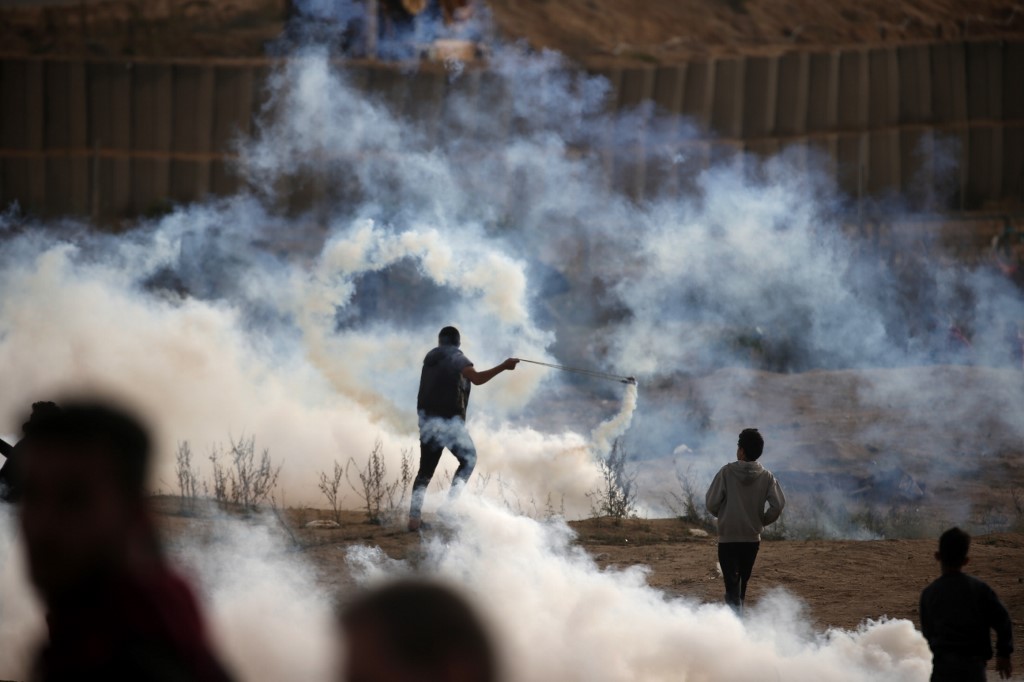
As time has passed, Nakba Day (lit. “Day of Catastrophe”) has become the most actively performed ritual of the Palestinian myth, a myth that has assured for itself the most essential support of the West, a ritual that provokes the hatred that has been aroused throughout the Muslim world.
Each year it revives a flurry of literature, or to put it more crudely, a lie.
Hidden behind the exodus of the Arab population of Mandatory Palestine during the 1948 war, which this ritual commemorates every year, is the effective war of extermination launched by many Arab countries against the Jews in the young state of Israel. The Palestinians were the allies of these countries, and a large number of them left to watch from afar, in safety, as the proclaimed massacre of the Jews was efficiently carried out by the Arab armies. They then expected to enjoy the chance to seize the spoils after the victory that their side anticipated.
The defeat of their armies and their political failure in opposing the partition of Mandatory Palestine are thus rewritten, with the Nakba, as a shocking, congenital injustice of which they are the victims. This injustice is affixed to the very existence of Israel, which, in order to exist, purportedly dispossessed an innocent people of their land so that it could take their place. The Palestinian aggressors became the victims. The extermination of others became self-pity and compassion.
This simplistic image, in purest ideological terms, has become the decisive framework for anti-Zionism, through which some justify the notion of “Israel’s original sin,” a quasi-theological term. This prevailing justification, objectively and morally, has contributed to turning “anti-Zionism” into a new form of anti-Semitism. The depiction of the assumed nature of the Jewish state is similar to that of Jew Süss, the film that Nazi propaganda produced to enhance the hatred of Jews and provide moral and emotional justification for the Nazis’ treatment of them.
(full article online)
Deconstructing the Three Stages of the Nakba Myth