Doesn't it cost manufacturers of ordinary appliances to print an instruction manual in Spanish as well as English?
In an absolute sense, sure, it does. Almost nothing is free. Whatever the cost, it is surely so minimal as to be not much worth considering it material. Why? Because the incremental increase in cost of producing such documents in additional languages, though it's baked into the final selling price of the item, will not, were it omitted, decrease the cost to the point that it would alter customer's price-based buying decisions.
Additionally, producing multilingual user documentation obviates the manufacturer's needing to concern themselves with knowing in advance to what country a given item will be shipped for sale.
As for the translation costs, well, that is by and large automated; thus the incremental cost of adding multilingual text is just that of paper and ink, neither of which comprise a material cost element on a per-unit basis -- the basis that matters because consumers buy, generally, on a per unit basis. You can view a case study of the above in play
here.
Are there situations in which the incremental cost of producing and issuing a single manual in all languages spoken by a producer's potential customers becomes impractical? Yes. Such items are ones for which the actual production cycle and/or sales and distribution processes of the good are country specific. Cars are one such example. Look the size and durability an automobile's owner's manual must have.
Are they afraid of litigation sponsored by the ACLU if an illegal alien who doesn't speak English sticks his tongue in a spinning exhaust fan?
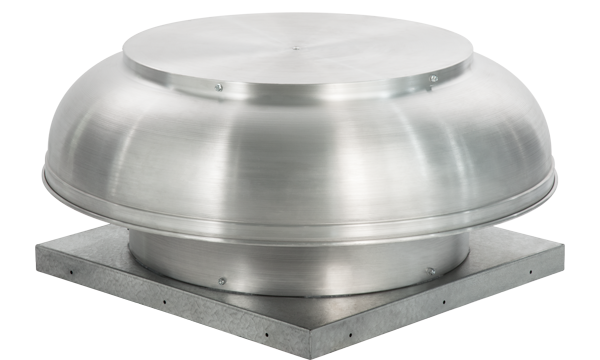
No. They protective attachments and/or warnings affixed to the user accessible sides of items themselves are what they manufacturer includes to stave off culpability for some nitwit sticking his tongue in the, as you say, the exhaust fan. Human body parts are not the only things the producers aim to keep out of, say, exhaust fans. Things like birds, squirrels, children's fingers, leaves and branches, are other objects they intend to keep from entering the fans. They do that so as to minimize for their customers the incidence of myriad objects getting inside the fan and mucking up the works -- damaging the blades and/or blocking the airflow -- and reducing the thing's effectiveness.




The producers of goods that need instructions have the profit motive and customer service in mind, and that is why they print/offer instructions in multiple languages, including Spanish. They anticipate selling the items, not only to non-English speakers in the U.S. but also non-English speakers in countries other than the U.S.
Sample appliance owner's manuals:
- Snow blower
- Blender
- Furnace -- Single language
- Fisher & Paykel washing machine -- Multilingual
- Cooktop -- Multilingual
- Ceiling fan -- Single language
- Wristwatches -- I fully expected to find the first two these produced in multiple languages and the third to be in English only.
- Exhaust fans -- Only because you specifically cited exhaust fans, I looked to see if your rationale and sensibility specifically holds true for exhaust fans. I just Googled for exhaust fans to see who makes the things. Several of the exhaust fan instruction manuals I found aren't offered as one document having instructions in multiple languages. I found some that have multilingual safety warnings and some that don't.
Given the observed variety in user manual content, for both "dangerous" and innocuous appliances, it's safe to say that concerns about misuse and accidents aren't why producers deliver multilingual instructions and safety documentation and that production and content delivery efficiency are. Were warding against potential lawsuits the issue, all manuals would be multilingual for no producer wants to be sued and be found liable over something as silly as mere language insufficiency.


