You obviously have never heard of J.S. Mill's "harm principle." Am I talking to a brick wall? Listen, you cannot hang in this conversation. You lack the intellectual capacity. Everything you’re asking about can be assessed in the op where I have told you where I stand. The problem is that you lack the education to understand that. Please don’t make me step down any further into the land of teaching the ignorant. Go study Mill and Locke before you continue this conversation. You have no clue how lost you are and it is a joke to everyone here who understands what I am talking about. Or perhaps look up Thomas Hobbes who no doubt you agree with assessing the above response.
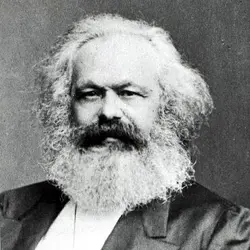
Perhaps you would be better served by studying Cicero. In essence there is no difference between you and Karl Marx except for the positions you are postulating. Both of you argue for
extremism over pragmatism. Both of you ardently believe that only your particular answer is the solution to every problem.
Both of you are equally wrong. Just as communism has been proven to be an abject failure so has your unfettered capitalist dogma. The economic crises of 1929 and 2008 are both the result of fundamentalist capitalism being allowed to run rampant.
Unregulated capitalism always fails because there are no limits on greed and avarice. Your utopian capitalist ideal is an unrealistic delusional fantasy. Reality requires that capitalism be as equally constrained as socialism. Neither can exist without the other. Only fools believe that one is superior to the other. Only idiots advocate for a purist solution. Realists understand that compromise is the only way that both can coexist.
here we are.
Book Discussion on [Bad History, Worse Policy] - C-SPAN Video Library
Bad History, Worse Policy: How a False Narrative about the Financial Crisis Led to the Dodd-Frank Act - Economics - AEI
In 1999, Peter Wallison was quoted in The New York Times to the effect that Fannie Mae and Freddie Mac were going to put American taxpayers at risk. “This is another thrift industry growing up around us,” he said. “If they fail, the government will have to step up and bail them out the way it stepped up and bailed out the thrift industry.''
Now, in his new book, “Bad History, Worse Policy: How a False Narrative about the Financial Crisis Led to the Dodd-Frank Act,” (AEI Press) Wallison argues that the Dodd-Frank Act — the Obama administration’s sweeping financial regulation law — will suppress economic growth for years to come. Based on his essays on financial services issues published between 2004 and 2012, Wallison shows that the act was based on a false and ideologically motivated narrative about the financial crisis. Some prominent conclusions from the book:
•As the economy began to recover from the recession, it was growing at 2.5 percent annually, but since the enactment of Dodd-Frank in July 2010, the average growth rate has been 2 percent, and each year has been slower than the last.
•Large financial institutions — designated under the Dodd-Frank Act as threats to the stability of US financial markets — will be seen as “too big to fail,” receiving lower cost funds from creditors and investors who believe they are less risky than their smaller rivals.
•Because of these benefits, large firms will come to dominate the financial markets, stifling competition and providing a basis for new forms of crony-capitalist cooperation between government big finance.
•The Volcker Rule, when finalized, will reduce liquidity in the financial markets and raise the costs of borrowing for state and local governments as well as every US company that finances itself through the issuance of bonds.
•New requirements for mortgage lending, such as the Qualified Residential Mortgage and the Qualified Mortgage, will make it difficult and substantially more expensive even for people with good credit to obtain mortgage financing.
•The new regulatory scheme for derivatives will add enormous new costs to hedging and risk-management transactions for all financial and non-financial firms.
•The Consumer Financial Protection Bureau will impose substantial new costs on all small businesses, forcing many small companies out of business or into mergers with larger firms, and will reduce innovation in consumer products.
These myriad consequences flow directly from a narrative that blames the financial crisis on deregulation and private-sector risk-taking. In reality, the government itself has escaped blame for housing policies that deliberately degraded mortgage-underwriting standards and built a housing bubble in which half the mortgages were subprime or otherwise low quality.
“I don’t remember any period in modern history when the analysis of historic economic events has been more dominated by the clear thinking of one person. That person’s name is Peter Wallison. He has dispelled more myths and provided more insights than all other scholars and commentators combined. If you want to know what triggered the financial crisis and why Federal policy misdiagnosed both the illness and the appropriate treatment, all you have to do is read this book.”
—Phil Gramm, Former Chairman of the Senate Banking Committee and Senior Partner of US Policy Metrics
“This book is indispensable reading for anyone seeking to understand the actual causes of the financial crisis and why the Dodd-Frank Act should be reconsidered. Peter Wallison reveals how government failures, not market failures, produced the financial crisis. With sound logic and solid evidence, he explains how the Left’s blind faith in unaccountable regulators and its institutionalization of government bailouts have made our financial system less safe. Peter Wallison was right on the dangers posed by the GSEs; in time he will also be proven right on the origins of the
financial crisis and the flaws of the Dodd-Frank Act.”
—Senator Richard C. Shelby (R-AL), Ranking Member of the US Senate Committee on Banking, Housing, and Urban Affairs
“The Dodd-Frank Act is a mind-numbing combination of costly, destructive, and ineffective measures, executed quickly to make maximum use of the political momentum that followed the U.S. subprime crisis. As its practical failures are revealed, the act will have to be reformed. Although future reformers may not agree with everything in Peter Wallison’s Bad History, Worse Policy, they will find the evidence and logic he brings to bear impossible to ignore.”
—Charles Calomiris, Professor, Columbia University