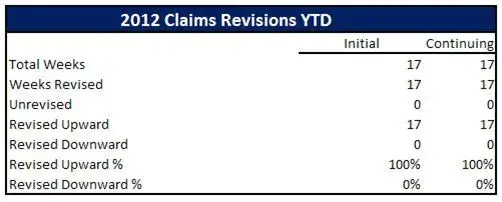
Seems odd doesn't it, that the numbers are ALWAYS revised upwards. What really bugs me though, is the notion that if you stop looking for a job then you don't count as an unemployed person.
Why does that bug you? The purpose of the UE rate is to measure how much available labor is not being used...how difficult it is to actually get a job. If someone is not trying to get a job, they're not available for work, and since of course they won't get hired if they don't try to get a job, they don't tell us how hard it is to get one.
But let's look at examples: A woman is laid off and looks for work. While unemployed, she decides the family is better off if she doesn't work and stays home with the kids. Would you consider her unemployed?
A student goes to college, starts looking for a part time job for extra money, doesn't find anything he likes, and decides he doesn't really need a job anyway and quits looking. Is he unemployed?
I could go on. The point is that there are many many reasons people stop looking for work that have nothing to do with the actual labor market, so it doesn't make much sense to include them as unemployed. There are around 6 million people not classified as unemployed who say they want a job, but over half of them either couldn't take a job if offered to them on a silver platter, or haven't done anything to look for work in over a year. And of those who stopped looking, over half stopped looking for personal reasons: family responsibility, daycare issues, transportation issues, illness, injury, pregnancy, etc.