You forgot the rest of my post, but to your point, the money doesn't "go to nothing," much of it was borrowed to pay for things that will generate FUTURE profits, and savings. It was the long-term approach. Paying up now for things like preventative care - make *now* more expensive, for a less expensive future, for example.
Investing in the sciences of the future make *now* more expensive, for a much more successful future. Most of the time, when you study deeper into these things, there's a "bigger picture" that the headlines don't tell you.
I'll give you an example. I got really peeved one day, because some business out in California was killing some fish or bug or something (don't remember the specifics). So we paid federal dollars to protect said bug or fish (whatever it was). I was so mad about thaT SEEMINGLY WASTED MONEY, IN TIMES LIKE THESE. All the Conservative headlines said something about "2 million to save a dung beetle! (not the exact bug, mind you).
But when I read a study about what would happen to the ecosystem of the coast if said creature died off, the cost of protecting it was a DROP IN THE BUCKET to what it was going to cost the coast when its extinction happened.
That's why people need to be more pragmatic and more visionary, less REACTionary. People are so much faster to foam at the mouth and declare doom and gloom before they invest any time or energy into LEARNING.
At best we are making gambles that those investments are going to pay off. Problem is most of this money has not been invested well to recoup nearly the amount needed. Further, a majority of this money is not going to investments at all. Most of it is going to welfare, military, domestic spending, etc
. Back in the 30s and 40s when countries like Germany and the US invested in roads and schools it had a huge return because there were no roads or schools to start with so those investments got the max amount of return. Now we dont get near those returns because most of the roads and schools needed already exist. Now we just basically increase union workers pay which is not an investment at all.
Are you that blind? There are several areas that must be addressed if we are going to get back to fiscal health and economic competiveness. Perhaps first and foremost is the distribution of energy in this nation. We have a grid that is an antique. Actually, we have three grids that do not intertie in a meaningful way. We have seen Texas shutting down windmills at the very time the East Coast had a major energy shortage. And we have vast areas with excellant wind potential, but no grid there to pick up the energy. Same goes for geothermal and solar.
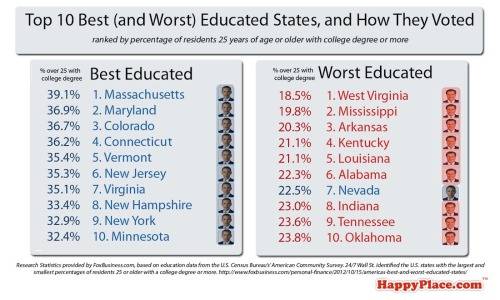
Today, South Korea is graduating more engineers than we in the US are. And China is graduating many, many more. You cannot have a modern technological economy without the educated personel to run it. From engineers to craftsmen, we are way behind countries like Germany, South Korea, and China.
Ramping up our research facilities. R and D are the lifes blood of a technological economy. Shorting these areas is like eating your seed corn. There are areas crying for major breakthroughs. One is battery technology. Build a battery that has 3 times the capacity, and costs one third of the present batteries, and you have a product to sell to the world, plus a we would, in a decade or so, not need to import oil at all.
Now there is money out there. Private equity firms are sitting on several trillion dollars. Their excuse is that the markets are not stable enough to make investments. Yet a good deal of the instability is because of the lack of investment. Perhaps we need something like an inventory tax on money.
And then there is reasonable maintenance on the infrastructure that exists. The bridges on our interstates are in major disrepair. The water systems that many major cities depend on are old and very leaky. Much of our urban grid is very vulneble to storms.
There is no lack of things that need to be done that really are investments in our future, and would have major paybacks. But there is a lack of will among all too many people to see these as investments. All too many, like Romney, see two trillon in defense spending as far more important than two trillion in infrastructure spending. A very poor priority set.