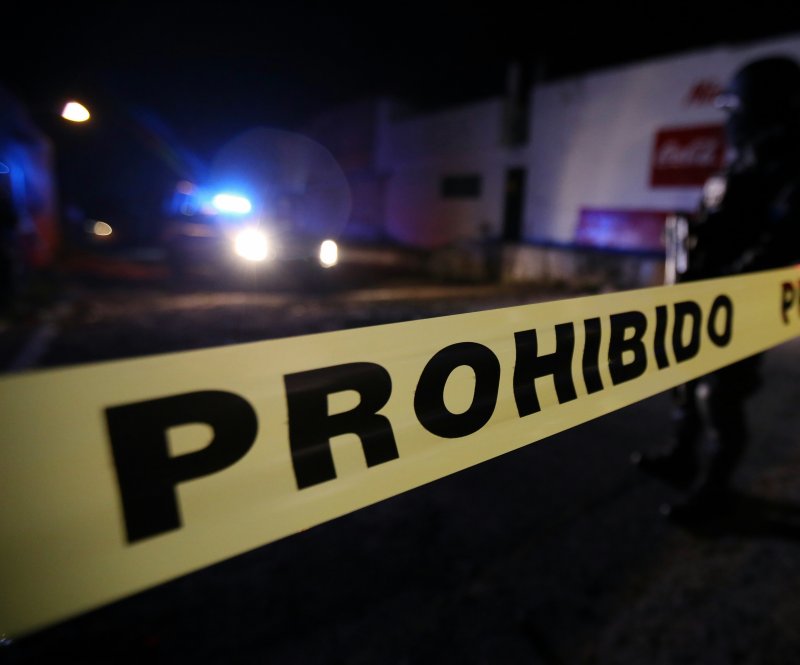
Tijuana sits opposite San Diego, while Ciudad Juarez hugs the border with El Paso. The Mexican cities each have more than one million inhabitants. The 2016 murder rate in Ciudad Juarez is the highest in four years, said Francisco Rivas, director of the citizens’ group Observatorio Nacional Ciudadano which monitors federal crime statistics. The homicide rate in Tijuana, Rivas said, is the highest seen in a decade. According to statistics released by the group, homicide investigations in the state of Chihuahua, where Ciudad Juarez is located, increased by 80.4 percent in October, compared to the average of the previous 12 months. They increased by 14.8 percent in Baja California, home to Tijuana.
Comparable claims have been made by the online publication Animal Politico. Citing federal and local crime statistics, it reported that there were 386 homicides in Ciudad Juarez from January to October of this year, the highest rate seen since 2012. The publication also said the homicide rate in Tijuana was the highest in a decade, with 671 homicides during the past 10 months – the highest of any city in the country. In its latest Mexico travel advisory, the State Department cited “an increase in homicide rates from January to July, 2016” in the state of Baja California. “While most of these homicides appeared to be targeted criminal organization assassinations, turf battles between criminal groups have resulted in violent crime in areas frequented by U.S. citizens,” the advisory said. It also recommended that Americans “exercise caution in all areas” of Ciudad Juarez.
The majority of homicides investigated nationally in Mexico, 1,195 out of 1,860, were committed with a firearm. Organized crime is “undoubtedly a factor” in the rising violence, Rivas said, but the high availability of guns has also made previously non-lethal crimes, like robbery, deadly for victims. The incidence of violence and killings in Mexico has soared since former President Felipe Calderon became the first to expand the use of federal troops to fight organized crime, a decade ago. Rivas said the strategy has not worked. He compared it to cold remedies that treat symptoms but do not cure the underlying illness. Rivas also blamed the proximity to the U.S. border for higher levels of violence, saying that organized crime groups vie for power in border areas where they can then control the activities of other criminal groups.
The government needs to combat the huge profits and resources used by organized crime networks to fund their operations, he said. Last February, a study published by the Economic Commission for Latin America and the Caribbean found that proximity to the U.S. border was a “key factor” in understanding violence and its relation to organized crime in Mexico. The study also found a high correlation between the number of uninhabited homes and the homicide rate. In 2010, Ciudad Juarez had the highest percentage of uninhabited homes. The head of security in the State of Tijuana, Daniel de la Rosa Anaya, blamed the rising homicide rate there on recidivism among convicted criminals who after release from prison, rejoin criminal gangs. Individuals rising through the ranks of organized crime had set off a “wave of violence,” he was quoted as saying.
MORE