
Bleipriester
Freedom!
""Capacity lost forever"
This oil shock will last longer than the Iran war.
A bitter realization is dawning on the stock markets: Even if Donald Trump ends the Iran war tomorrow, its consequences will be felt for at least weeks and months. In the worst-case scenario, it could permanently drive up global energy prices.
Just hours after the first bombs fell on Tehran, the British bank Barclays issued a grim forecast to its clients. The price of oil could climb to $100 per barrel if the security situation in the Middle East deteriorated further. The outcome was completely uncertain, and the oil markets could "face their worst fears."
Barely a week and a half later, this shocking prediction is outdated. On Monday, the price of oil tested the $120 mark in trading before falling back below $100. Meanwhile, Barclays and other banks see it reaching $150 before the end of the month, thanks to Iran's tanker blockade in the Strait of Hormuz – provided the fighting continues. The G7 countries are considering releasing their strategic oil reserves.
Because stock market investors have underestimated the dangers of the oil shock. They bet on a swift end to the Iran war, ignoring the long-term consequences. But now it's becoming increasingly clear: This may not just be a short-term price spike. The Wall Street Journal is already calling the supply shortage "the worst energy crisis since the 1970s." Most importantly, it will have long-term consequences for energy prices, even if Donald Trump ends his attack on Iran tomorrow.
The longer the war lasts, the worse the damage becomes. And it doesn't grow linearly, but exponentially: Every additional week of blockade generates higher costs than the week before. This is because Iran is not only destroying more and more oil facilities in the region, but the producers themselves are also reducing output because their storage facilities are overflowing. This has already happened in Iraq, and Kuwait, the Emirates, and Saudi Arabia are likely to follow .
More than 1,000 ships are already backed up at the Strait of Hormuz . As early as Friday, more than 4 million barrels of oil production capacity could be shut down, and by the end of March, as many as 9 million barrels – almost a tenth of global oil demand, estimates a JP Morgan analyst. For her, the blockage of the Strait of Hormuz is a catastrophic event for the global economy. For decades, traders have feared this scenario could occur. But no one thought it would actually happen, and the risk was priced into the markets accordingly. "It wasn't just the worst-case scenario. It was an unimaginable scenario," the newspaper quotes the analyst as saying. The fact that the Strait of Hormuz is now actually blocked could change the risk assessment in global markets in the long term – and tend to keep prices high.
Even if the war ends tomorrow, the long-term damage has already been done. The production shutdown cannot be quickly reversed: "It's not like a tap that you can just turn back on," as Nobel laureate economist Paul Krugman aptly puts it. Because once the pressure in many of the older oil fields in the Gulf has dropped, it is very difficult to restore it to its previous level.
At best, it will take several weeks for production to return to normal. At worst, the supply will be permanently reduced: Some of the oil will "not just be temporarily stopped. It will be physically blocked and can never be extracted through the well again," Fortune quotes a petroleum engineer from Texas A&M University as saying. "Even when the war is over, this production capacity could be lost forever, permanently reducing global supply and increasing energy prices in the long term."
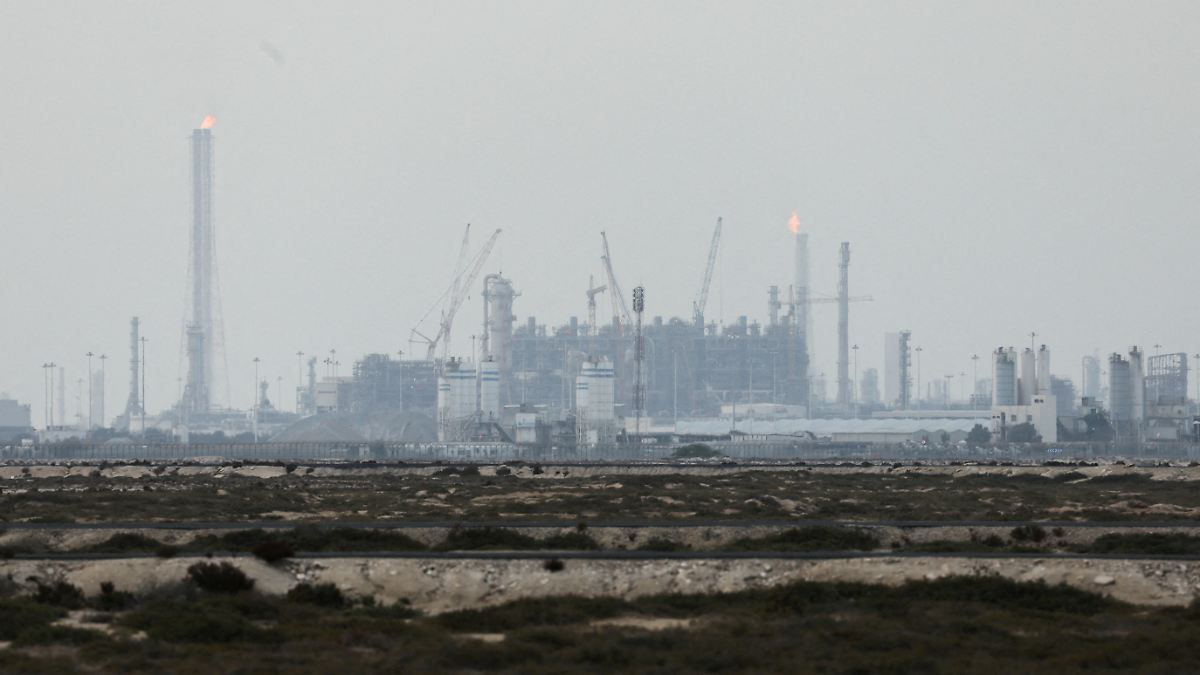
The situation is similar with liquefied natural gas (LNG): Fearing Iranian drone attacks, Qatar has completely shut down its production. The liquefaction plants function like a giant refrigerator. According to Reuters sources, restarting them will take at least a month. Gas prices are therefore likely to remain higher than before the war.
And then there are the repairs to the oil facilities themselves that were destroyed by Iran: "We expect that even after the fighting ends, a risk premium will remain on energy prices, as oil and gas facilities in the Gulf will remain out of operation and their repair could take weeks or months," Fortune quoted an analyst as saying.
But the biggest problem is the devastating long-term consequences of the Iran war for shipping in the Gulf, even if Trump ends the airstrikes. Not only is there still no sign of his plan to escort tankers through the strait, even a week later, but even if the US Navy were to eventually provide escort, it cannot intercept every Iranian drone launched just a few kilometers from the mainland.
The prospects for an end to the insurance blockade of tankers in the strait are therefore slim. This could permanently increase transport costs—and thus global oil prices. Now that Iran has already made good on its threat to block the strait once, the hurdle for a repeat in the future is likely to be much lower. There is absolutely no reason for Tehran to refrain from continuing to threaten oil tankers.
The Iran conflict is an asymmetric war: The mullah regime doesn't have to win it. It simply doesn't have to lose. Even a militarily weakened Iran can still threaten the straits in the future. No one can geographically take away its strategic blockade potential. It is the mullahs' greatest bargaining chip. Therefore, they are likely to continue using it to ensure their survival.
Without a change of power in Tehran, nothing will change. And despite Trump's talk of regime change, that is nowhere in sight. In the long term, this threatens a scenario in the Persian Gulf similar to that in the Red Sea, where the Houthis have been crippling shipping for years without attacking a freighter every day. The missiles they use also come from Iran. This instability is likely to continue to weigh on oil transport—and could drive up oil prices in the long run, even after the war ends.""
Dieser Öl-Schock wird länger dauern als der Iran-Krieg
An den Börsen kommt eine bittere Erkenntnis an: Selbst wenn Donald Trump den Iran-Krieg morgen beendet, werden seine Folgen mindestens auf Wochen und Monate zu spüren sein. Schlimmstenfalls könnte er die weltweiten Energiepreise dauerhaft nach oben drücken.


