Since IS was expelled from Kobani in January 2015, at least 100 civilians have been killed and 200 wounded by landmines that IS planted throughout the town and surrounding villages, according to local officials. The trail of IS mines runs through towns and cities across Iraq and Syria. Mines and projectiles left behind make it difficult for liberating military forces to enter and bring stability. Tens of thousands of refugees remain in camps in Turkey, Jordan and elsewhere. They are too afraid to return home because of the mines. Since IS was driven out of the ancient Syrian city of Palmyra in late March, Russian engineers have defused approximately 3,000 bombs that IS planted, Russia's ministry of defense said Tuesday in a statement.
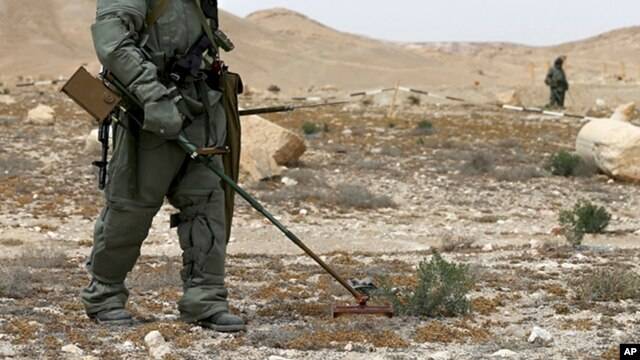
Russian serviceman checks for mines in Palmyra, Syria
In the Iraqi cities of Sinjar and Ramadi, Kurdish and Iraqi authorities have reported that thousands of mines and booby traps were set by IS fighters. Efforts are underway to clear the areas in order to allow civilians to return to their homes. A U.S. de-mining company has been hired to clear Ramadi and train Iraqi troops to dismantle the mines, U.S. officials said this week. Norway will allocate $5 million for de-mining, a U.S. official told Reuters news agency. And the United Nations says it is working on a program to help clear mines from areas formerly held by IS. "We are still in the early-implementation phase and do not presently have comprehensive information to share," said Lee Woodyear, an official at the UN Mine Action Service (UNMAS).
Extensive and deadly
Analysts say the mines left behind by IS are different from those found in war-torn lands such as Afghanistan and the Balkans. "What makes mine cleanup difficult in this case is that IS is very sophisticated in developing many types of IEDs, booby traps and mines," said Bastian Winkler, a German de-mining expert. "They put bombs almost everywhere after they leave. So it's very dangerous to detect them in the old, traditional way." Winkler told VOA that mines are so numerous and their paths so extensive that residents will be dealing with the fallout for many years. "The best thing to do in areas that were formerly held by IS is to start a mine risk-awareness program among locals," he said.
Riddled with explosives