Today, I putzed around in the sewing room until my little spiral rectangular child's quilt was done, after fiddling with it for the last 4 or 5 days or so. It took 160 (or 175?) 2" squares of Depression Era cotton reproduction prints and a little ditzy dot print of several primary and secondary colors that was pale by comparison to most of the cheerful little 30s prints to accentuate the spiral. For some reason, I went to the spare fabric room to see if there was anything that would totally be cool in the last row and found a 30s Salt-and-Pepper Sets print. It reminded me of my mother when I found it 3 or 4 years back in a Quilt shop in Fairview, Texas, which had an entire wall of 30s prints at the time. The next time I went there, the 30s prints group was half the size it had been, and there were still new prints. I hate missing the sale they must have had, or maybe ladies in that area of the state have a love for 30s prints. Anyway, my mother collected salt and pepper shakers, so we always had a different set to look at every day as she changed them daily.
I love the quilt. My son who fixed the computer left with my copier not talking to the computer, and they're still not speaking, so I can't even scan a picture and show it, but I'll see if I can find a similar quilt someone else may have made online. I found an old country one the other day, but its fabrics were dull next to the white. This one almost shouts "yippee!" it's so bright on white.

search engine...searchin', searchin', searchin'....
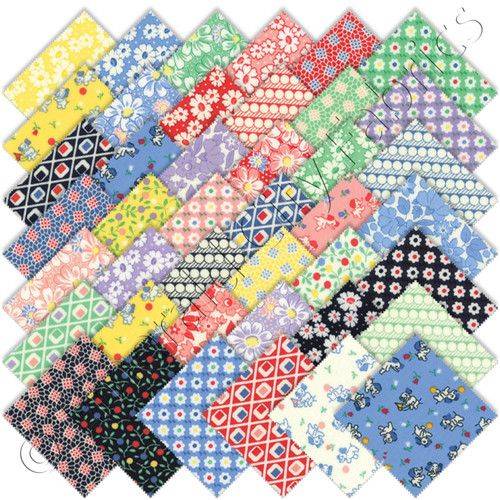
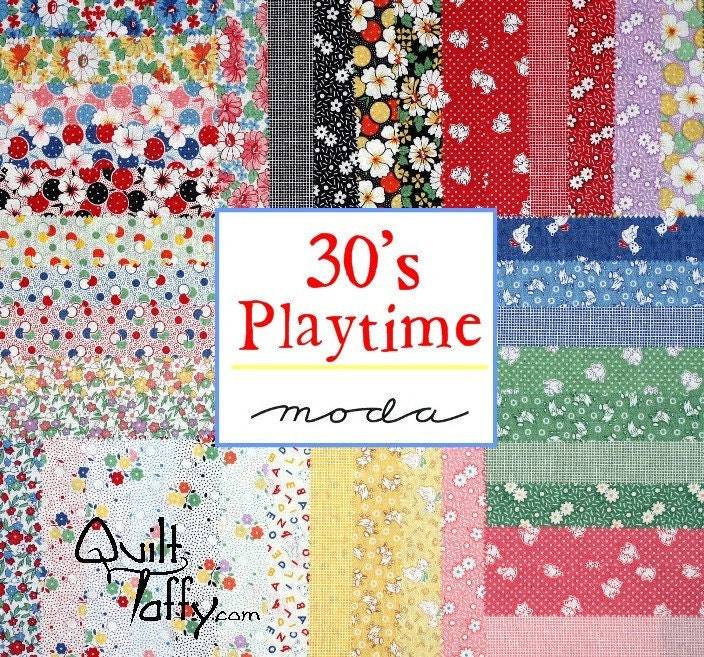
Well, here is a sampling of similar fabrics in my little chrity top...
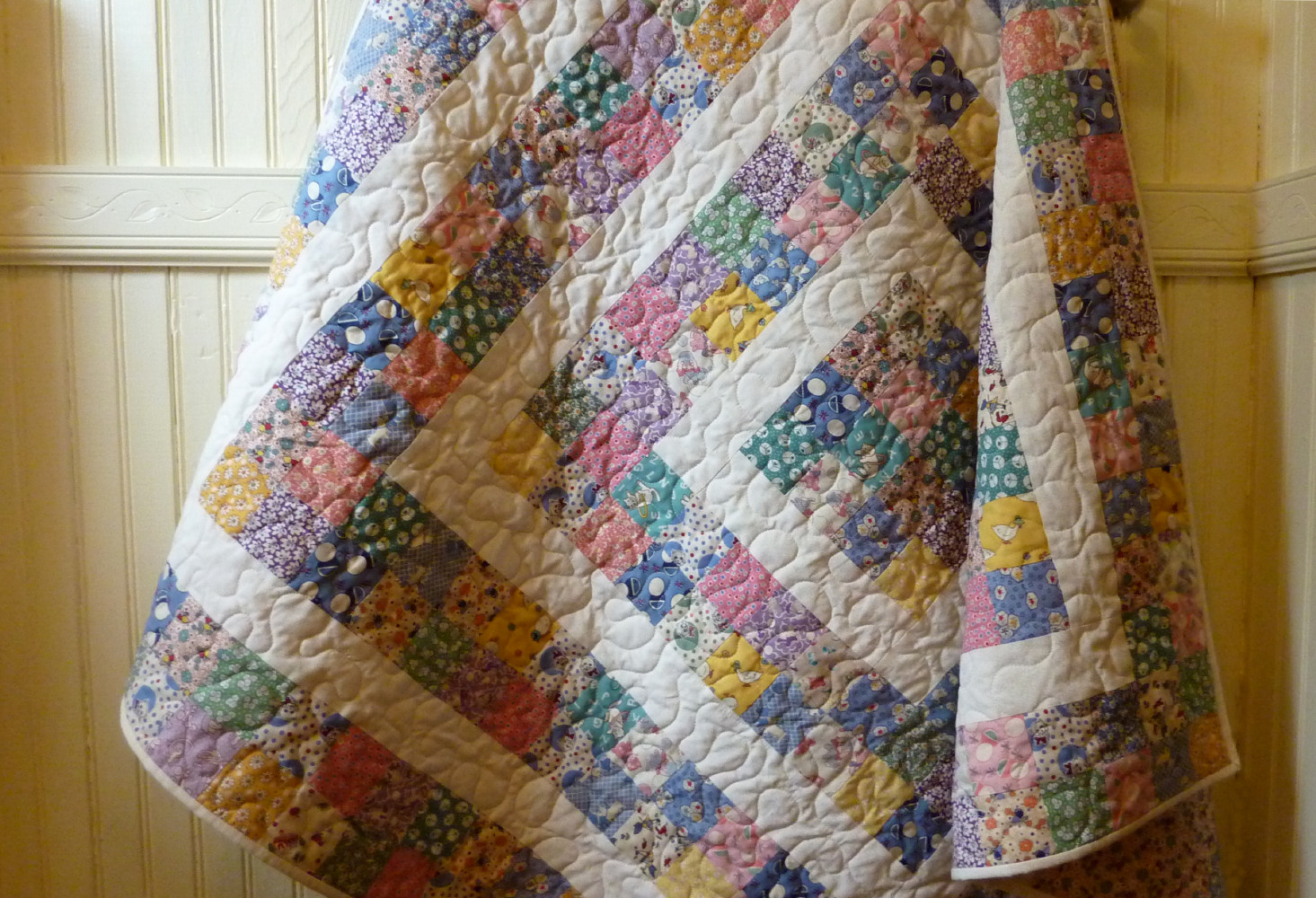
This quilt was made by someone else, but it shows white on 30s, and is possibly made up of one or several charm packs (or not). It is difficult to find 30s or 30s-like prints in black, brown, turquoise, and orange, but I have collected them over years of time and have a lot of different prints, when they're not buried in a stack, that is.


Mine differs from her in its arrangement, which begins in the center with 6 squares longer on the center length to start with so the quilt will be ten inches longer than it is wide, whatever number of spirals go around. After 4 spirals all the way around of single square rows divided by strips of the light dot-like print, the quilt measured 34 x 44" before outer borders were made, and 44 x 56" afterward, because I added wider borders top and bottom to make it just a little longer to cover wee toes of a toddler. The green salt and pepper fabric was a green that hadn't been used on the top, but it just worked, and it's too bad one of the sides was put on with the police bobby salt shakers in their black uniforms were upside down. All you have to do is let your concentration slip for one millisecond and POW!!! Error!!! Eh, will just chalk it up to being the obvious flaw on this quilt, although there was something else that was goofy. Oh, yes. The cats on a little red and black print were sitting on their ears because oops! I forgot to look when piecing it to the next square and whether it was a horizontal or vertical row. (It makes a difference). There are probably other flaws not caught by me, but I'll leave it to the quilter to decide whether she wants to rip and redo the 56" strip to the outer light row, to make the bobbies right-side-up. There will still be at least one obvious flaw left.
Early American women left their flaws sewn to show that they were human in contrast to the good Lord, who is perfect by comparison to us.
Early native American weavers in and around the 4-Corners region of the US always let one line of color go to the border to flaw an otherwise perfect geometric or pictoral schema, because they believed if you worked too hard making something absolutely perfect, you would go crazy. So in order to keep themselves sane about labor, they made sure there was an errant thread that found its way to the border, disregarding the pattern until it reached the final edge.
Oh, and here's another shot, showing hard-to-find brown 30s print/woven fabrics